
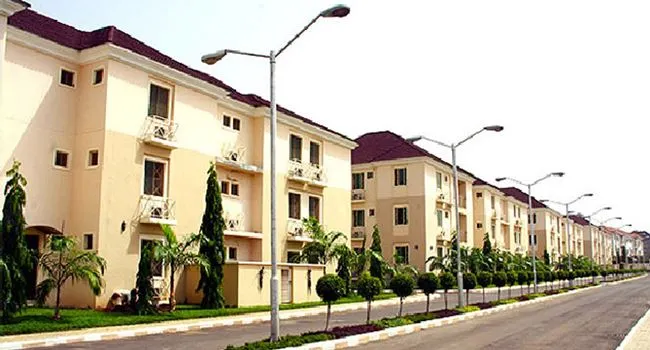
Residents of Apapa GRA are asking the Lagos State Government to freeze approvals for warehouses and other commercial projects in the estate, warning that the developments could permanently change the character of the historic residential neighbourhood.
The Apapa GRA Residents Association alleged that commercial warehouse projects have been approved within the low-density estate despite existing concerns over flooding, drainage, deteriorating roads and increased heavy-duty traffic.
In an opinion article submitted for publication, the residents called for the disputed approvals to be suspended and subjected to greater public scrutiny.
Residents Raise Alarm Over Commercial Expansion
The association said its concern is not simply about individual developments but about what it described as a broader shift from residential use to warehousing and logistics.
Among the projects identified by the residents is an electric vehicle assembly facility, which they said is owned by Fouani Group.
The association also alleged that several warehouse projects are linked to Lebanese-owned or Lebanese-affiliated companies. However, it did not provide a list of the companies or documentary evidence establishing their ownership in the material submitted.
“Apapa GRA was never conceived as an industrial park. It was designed as a residential enclave,” the association said.
The residents accused the Lagos State Physical Planning Permit Authority (LASPPPA) of approving commercial developments without adequately addressing residents’ concerns or consulting them.
Roads and Flooding at the Centre of the Dispute
The association pointed specifically to Oduduwa Road and Park Lane, which it said are state-controlled roads already struggling with poor conditions.
According to the residents, sections of the estate face deteriorating road surfaces, inadequate drainage and recurring flooding.
They fear the arrival of more warehouses could compound those problems by bringing substantially more trucks and other heavy vehicles into an area they say was designed primarily for residential use.
“They are killing Apapa GRA,” a spokesperson for the association said, arguing that residents already contend with flooding and neglected roads.
The association questioned the planning rationale behind introducing additional truck-intensive activities into the neighbourhood without first resolving existing infrastructure problems.
Were Residents Consulted?
Another major issue raised by the residents is public participation.
The association alleged that residents were neither adequately consulted nor invited to a town hall meeting before the disputed permits were issued.
The submission referenced Lagos-based urban planning consultant Tpl. Kunle Ogunleye, who was cited as saying that changes to planning arrangements can be permitted under Lagos State’s urban planning framework, provided the relevant procedures—including stakeholder engagement and environmental considerations—are followed.
The residents also questioned how effectively conditions attached to planning approvals would be monitored once construction is completed.
They specifically raised concerns about requirements relating to parking, drainage and building setbacks.
Fears Over the Estate’s Future
For the residents, the issue extends beyond traffic and infrastructure.
They argued that a major expansion of logistics operations could increase noise, pollution, flooding and road damage, while potentially affecting property values and the residential identity of Apapa GRA.
The association questioned why warehouse and logistics facilities could not instead be concentrated in locations specifically designated for industrial or logistics activities.
Its position is that economic development and residential planning should not be treated as competing priorities.
“We deserve a state government that remembers urban planning is for people, not just ports,” the association said.
Residents Demand Public Hearing
The association is calling for the immediate suspension of the disputed permits and a public hearing involving residents and the relevant government agencies.
It said greater transparency is needed whenever planning decisions have the potential to significantly alter established residential communities.
However, several claims in the submission could not be independently verified from the material provided. These include the number and ownership of the warehouses, the precise zoning status of the affected properties and whether all approvals complied with applicable planning requirements.
The submission also did not contain responses from LASPPPA, the Lagos State Ministry of Physical Planning and Urban Development, or Fouani Group to the allegations.
The dispute therefore leaves a central question unresolved: can Apapa GRA accommodate growing commercial activity without sacrificing the residential environment its residents say the estate was created to protect?