
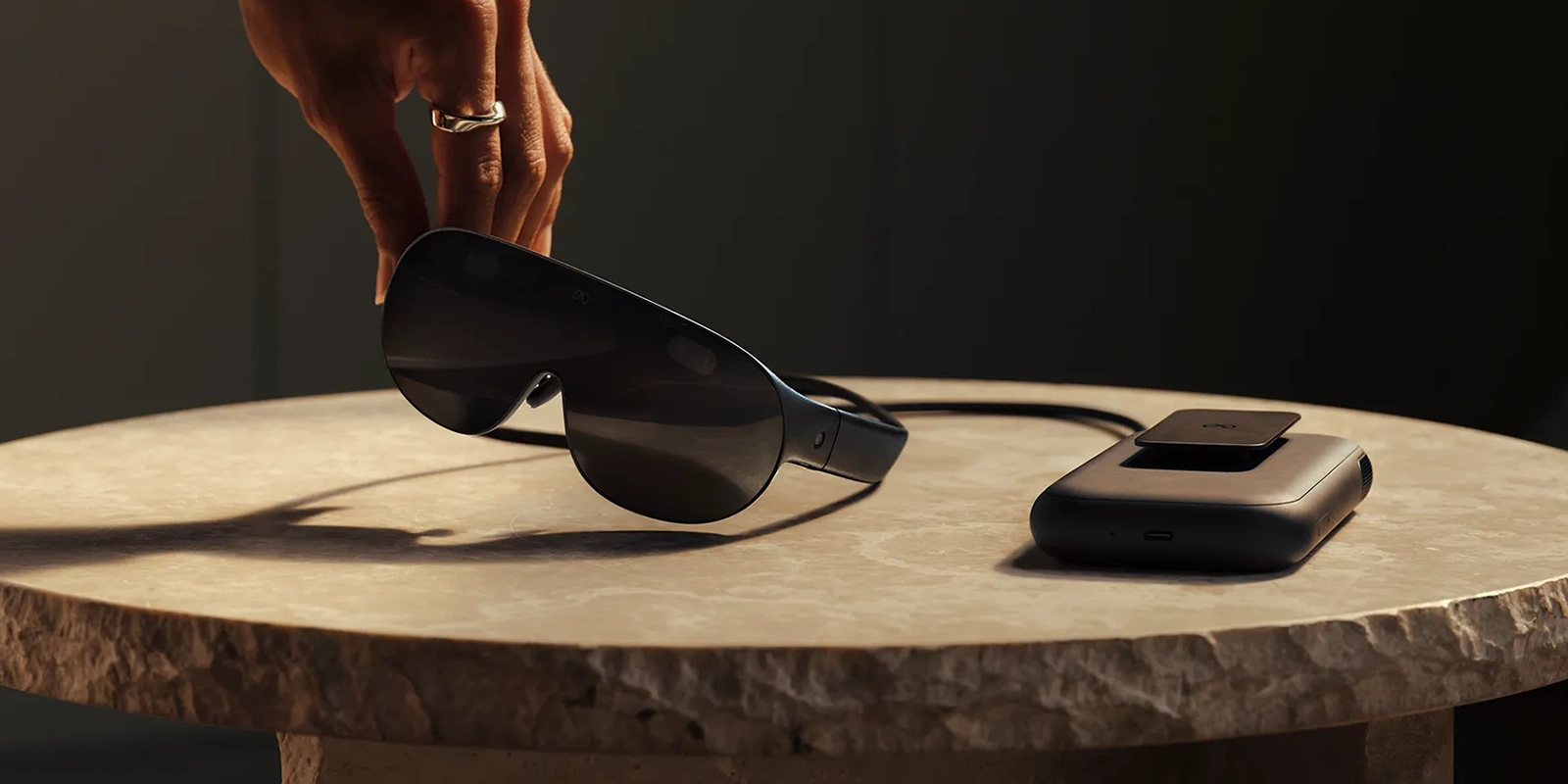
Meta is making another attempt to bring virtual reality closer to the mainstream with a new pair of VR glasses that look considerably different from the company’s previous headsets.
The company unveiled Meta VR Glasses at its annual Connect event on Wednesday, announcing that the device will launch next spring with a starting price of $1,299.99.
Meta is positioning the glasses as a major step forward for VR hardware. Instead of the large, heavy headsets typically associated with virtual reality, the new device has been designed to resemble a conventional pair of glasses while still delivering an immersive VR experience.
CEO Mark Zuckerberg described the product as a breakthrough for the company’s VR ambitions.
You Might Want To Read This: Muse Charm AI Wearable: Meta Reveals Keychain-Sized AI Device
Meta Takes a Different Approach to VR
The announcement comes after Meta previously indicated that it would slow down its VR hardware efforts and concentrate on developing fewer devices with more significant technological improvements.
Zuckerberg said the company had recognized that many consumers are interested in augmented reality glasses but are less enthusiastic about wearing traditional VR headsets.
Meta’s new device is intended to bridge that gap by offering immersive visuals and a sense of presence in a much smaller form factor.
The company says the glasses are roughly five times lighter than the Meta Quest 3. Their frames are made from magnesium alloy, helping reduce weight while maintaining a relatively conventional glasses-like appearance.
Under the hood, the device uses Qualcomm’s Snapdragon Reality Elite processor. Instead of putting the entire computing system and battery inside the glasses, Meta has connected them to a separate computing puck. The puck also serves as the battery and can be carried in a user’s pocket.
A 5K Virtual Display Built for Entertainment
Entertainment is at the heart of Meta’s pitch for the new glasses.
The device uses Micro-OLED displays built into the lenses. Meta says the system delivers what it calls a 5K Infinite Display, with 37 pixels per degree.
The glasses also support Dolby Vision and Dolby Atmos, giving users higher-end visual and audio capabilities when watching compatible content.
Users will be able to download and watch movies directly through the device, but Meta is putting particular emphasis on cinematic experiences.
Meta Brings IMAX to VR
One of the most notable announcements involves IMAX.
Meta says the glasses are the first VR device to receive IMAX-enhanced certification. The partnership is intended to let users experience compatible films using the expanded aspect ratios associated with IMAX presentations.
That could make the glasses particularly appealing to movie fans who want a cinema-style viewing experience without having to use a large VR headset.
The combination of a high-resolution display, spatial audio and the lighter glasses-style design is central to Meta’s argument that VR can become more comfortable for longer entertainment sessions.
Disney+ Is Bringing 3D Movies to the Glasses
Meta is also working with Disney to expand the amount of 3D content available on the platform.
Beginning in November, Disney+ subscribers will be able to stream selected films in 3D through the glasses. The lineup is expected to include certain Marvel titles.
But Meta’s plans go beyond simply displaying a 3D movie.
The company says some content will allow viewers to incorporate their physical surroundings into the experience. Their environment can be replaced or enhanced with immersive backgrounds, visual effects, 3D elements and spatial sound.
The result is intended to blur the line between watching a movie and stepping into a virtual experience.
Rather than sitting in front of a conventional virtual screen, viewers could find themselves surrounded by an environment designed to complement the film.
Meta AI Is Built Into the Glasses
The new hardware also includes Meta AI, giving users a way to control parts of the experience through voice commands.
For example, users can ask the glasses to start playing a movie rather than navigating through menus manually.
Meta is also adding hand gestures as another way to interact with the device. That could make it possible to control content without reaching for a separate controller.
The combination of voice and gesture controls is part of Meta’s effort to make the glasses feel less like traditional VR equipment and more like an everyday computing device.
Meta’s VR Gamble Continues
The new glasses represent a significant change in Meta’s approach to virtual reality.
Rather than relying on increasingly powerful but bulky headsets, the company is attempting to shrink the technology into something that looks and feels closer to ordinary eyewear.
The $1,299.99 starting price puts the device firmly in the premium category, so it remains to be seen how broadly consumers will embrace it.
Still, Meta is clearly betting that lighter hardware, high-resolution displays, major entertainment partnerships and built-in AI can make VR more appealing to people who have avoided traditional headsets.
The company may have stepped back from some of its earlier ambitions for the metaverse, but its latest hardware shows that Meta has not abandoned immersive computing. Instead, it appears to be betting that the next phase of VR will be smaller, lighter and much closer to the way people already use everyday technology.