
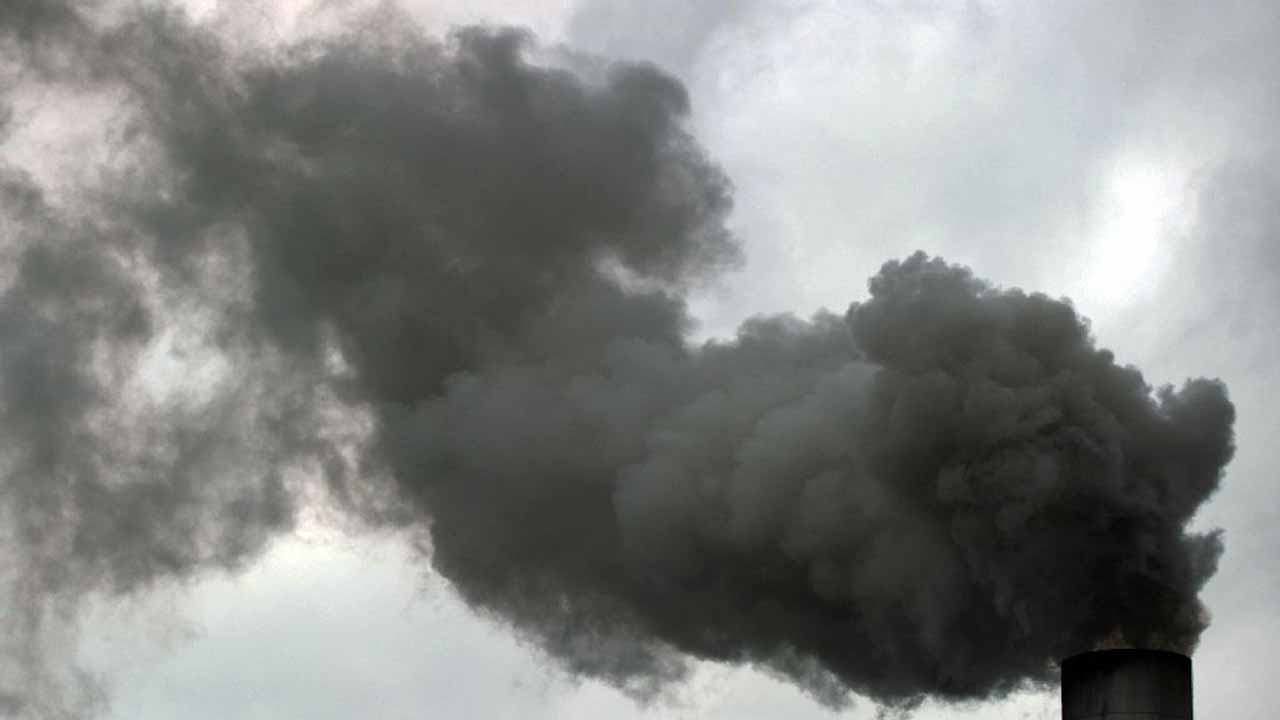
Amazon says it remains committed to reaching net-zero carbon emissions by 2040, but the company does not yet have a complete roadmap for how it will get there.
Kara Hurst, Amazon’s chief sustainability officer, acknowledged the uncertainty during an Axios event on Tuesday, saying the company is still working toward its target but cannot yet identify every step required to achieve it.
The admission highlights one of the biggest challenges facing large corporations with ambitious climate commitments: setting a long-term emissions target is considerably easier than finding a practical path to reach it.
For a company as large and complex as Amazon, the problem is particularly difficult. Its operations span cloud computing, artificial intelligence, transportation, aviation, warehouses, construction and a vast global supply chain.
Amazon Says Its 2040 Commitment Has Not Changed
Amazon established its net-zero target through The Climate Pledge, committing to reach net-zero carbon emissions by 2040.
Hurst said the company still stands behind that commitment.
In written comments following the event, she emphasized that Amazon considers the target its responsibility, while also arguing that large-scale climate progress requires cooperation between businesses and governments.
Amazon has already invested heavily in renewable energy. Hurst said the company has remained one of the world’s largest corporate buyers of clean energy, with about 42 gigawatts in its energy portfolio.
The company has also reported progress in reducing its carbon intensity — the amount of carbon emissions associated with each dollar of revenue.
That measure, however, does not tell the entire story. Amazon’s overall emissions and its carbon intensity can move in different directions depending on the period being examined.
Amazon’s Emissions Stretch Across Multiple Industries
One reason the company’s climate goal is so difficult is the sheer breadth of Amazon’s operations.
Its emissions are not confined to a single business or type of facility. They are connected to data centers, delivery vehicles, aircraft, warehouses, construction projects, electricity consumption and suppliers around the world.
That means Amazon cannot simply switch one part of its business to cleaner energy and consider the problem solved.
The company relies on thousands of suppliers and contractors, many of which operate in industries that are themselves difficult to decarbonize.
Hurst has acknowledged that Amazon cannot accomplish its climate target on its own and will need suppliers, energy companies and governments to play a role.
Amazon’s AI Expansion Complicates the Climate Picture
Amazon’s rapid investment in artificial intelligence adds another challenge.
AI services require large amounts of computing power, which in turn requires data centers and a reliable supply of electricity.
Earlier this year, an investigation reported on Amazon’s plans for a major natural-gas-powered facility intended to provide electricity for an AI data center campus.
The reported project involves 35 gas turbines with a combined capacity of about 7.65 gigawatts. Critics have raised concerns about the potential carbon emissions associated with the development.
The project illustrates a difficult trade-off facing technology companies. AI is becoming an increasingly important source of growth, but expanding computing infrastructure can also increase demand for electricity and, depending on how that power is generated, increase emissions.
Clean Energy Investment Has Its Limits
Amazon’s large renewable-energy portfolio demonstrates that the company is investing in cleaner power.
But the company’s experience also illustrates why buying renewable energy does not automatically eliminate every source of emissions.
Some parts of Amazon’s business are easier to decarbonize than others. Electricity for offices and data centers can increasingly be matched with renewable generation, while aviation, freight transportation, industrial materials and other parts of the supply chain present more complicated challenges.
The rapid growth of AI could make the equation even harder.
As demand for cloud computing rises, Amazon must build additional infrastructure to support customers. If clean power and grid capacity cannot expand quickly enough, companies may turn to other sources of electricity to keep new facilities running.
The Bigger Question for Amazon
Amazon’s sustainability strategy raises a broader question about the role of major corporations in addressing climate change.
The company has enormous resources and has made significant investments in renewable energy, but it also operates at a scale that makes eliminating emissions extremely difficult.
Hurst’s comments suggest that Amazon is still working out some of the details behind its 2040 target rather than following a fully defined roadmap.
That does not mean the company has abandoned its commitment. Amazon continues to say that the goal remains in place.
But it does highlight the gap between announcing a long-term climate target and demonstrating exactly how that target will be achieved.
Amazon’s 2040 Goal Faces a New Test
The next several years will likely be particularly important for Amazon’s climate strategy.
The company is expanding its cloud infrastructure, investing heavily in AI and continuing to build out its logistics network. At the same time, it is expected to increase its use of renewable energy and find ways to reduce emissions across its wider supply chain.
Those priorities do not always point in the same direction.
Amazon says it is still committed to reaching net zero by 2040. The more difficult question is how quickly the company can turn that commitment into measurable reductions while continuing to grow.
For now, even Amazon’s sustainability chief acknowledges that the company does not have every answer. The 2040 deadline remains, but the path to reaching it is still being worked out.