
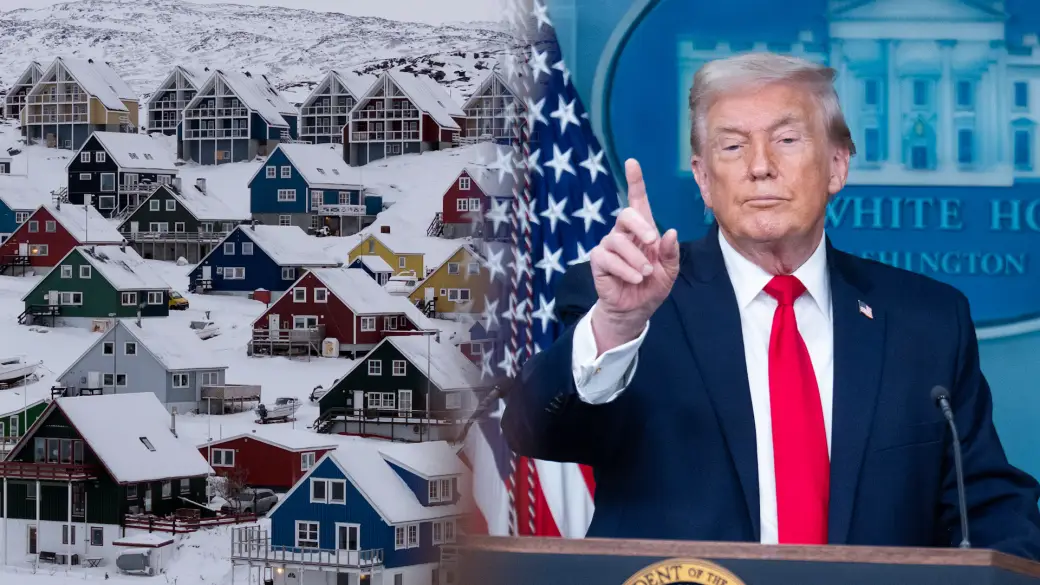
US President Donald Trump has announced a new security agreement with Denmark and Greenland that would expand the United States’ military role on the strategically important Arctic island.
Trump announced the agreement on September 18, saying it would give Washington permanent authority over security-related matters in Greenland and address what he described as long-standing American security concerns.
Under the proposed arrangement, the United States would have broader and long-term access to Greenland for defence and security purposes. The agreement would also seek to prevent countries considered strategic rivals by Washington from establishing military facilities or making sensitive investments on the island without US approval.
Trump has also said the United States plans to expand its military presence in Greenland, with American officials expected to work with Danish and Greenlandic authorities on future military development.
The announcement follows months of diplomatic tension surrounding Trump’s calls for greater American control over Greenland.
Denmark and Greenland Maintain Sovereignty
Despite Trump’s description of the agreement, Danish and Greenlandic officials have stressed that the arrangement does not transfer sovereignty over Greenland to the United States.
Greenland is a self-governing territory within the Kingdom of Denmark. Copenhagen retains responsibility for defence and foreign policy, while Greenland manages most of its domestic affairs.
Danish and Greenlandic authorities have said the proposed agreement recognises Denmark’s sovereignty and Greenland’s right to self-determination.
That distinction is significant because the full details of the agreement have not yet been made public. Until the complete text is released, the precise extent of the new American security rights remains unclear.
US Military Presence Could Grow
The United States already maintains a military installation at Pituffik Space Base in northwestern Greenland.
The facility plays an important role in American missile-warning, missile-defence and space-surveillance operations and is considered strategically important because of Greenland’s location between North America and Europe.
The new agreement is expected to provide a framework for expanding American military activity on the island.
It would also strengthen restrictions on military or strategic activities by countries outside the US-led Western alliance. Preventing China and Russia from establishing military footholds in Greenland is one of the security concerns cited by American officials.
Why Greenland Is Strategically Important
Greenland has become increasingly important in discussions about Arctic security.
Its geographic position gives it major significance for monitoring activity between North America, Europe and the Arctic. The island is also surrounded by waters that are becoming increasingly important as climate change opens new possibilities for shipping, resource exploration and military activity.
The growing strategic competition in the Arctic has increased interest from the United States, Russia, China and European countries.
For Washington, maintaining access to Greenland is closely connected to the defence of North America and the security of the North Atlantic.
Agreement Still Requires Further Steps
The agreement is expected to be formally signed during the United Nations General Assembly in New York.
It will then have to go through the necessary procedures in Denmark and Greenland before it can take effect.
The publication of the full agreement will be closely watched because it should clarify how expanded American military access will operate alongside Danish sovereignty and Greenland’s self-government.
For now, the announcement points to a major expansion of US security involvement in Greenland rather than a transfer of the territory to the United States.
The final balance between American military interests, Danish sovereignty and Greenland’s right to self-determination will depend on the details of the agreement and the procedures that follow its signing.