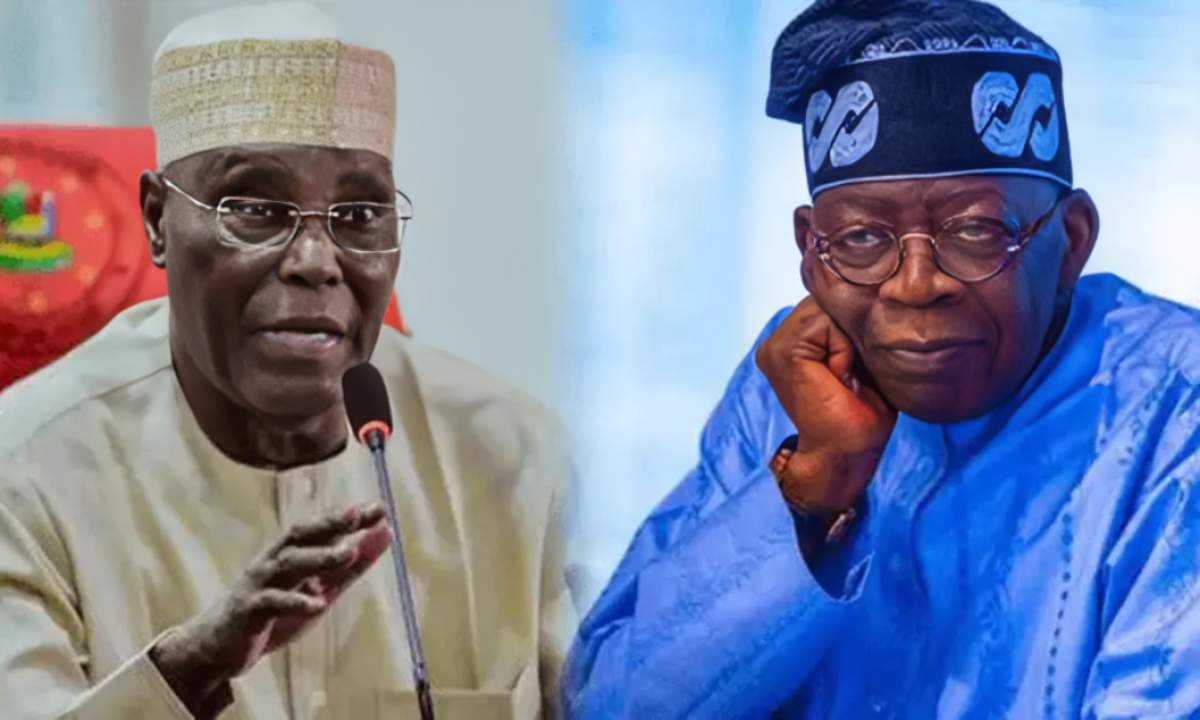
Atiku Abubakar is demanding answers from President Bola Tinubu: where did the money saved from fuel subsidy removal go?
The former vice-president raised the question after the Academic Staff Union of Universities (ASUU) threatened another nationwide strike, arguing that the warning exposes a gap between the government’s promises and conditions in Nigeria’s public universities.
Through his Special Assistant on Public Communication, Phrank Shaibu, Atiku said Nigerians accepted the removal of the petrol subsidy with the expectation that the resulting savings would be redirected into education, healthcare, infrastructure and other essential services.
His argument is simple: if the subsidy has been removed and Nigerians have absorbed the higher costs that followed, the government should be able to clearly account for the financial benefits.
ASUU Issues Fresh Strike Warning
ASUU said on Friday that its members could begin a nationwide strike “within the shortest time possible” unless outstanding issues affecting university lecturers are addressed.
The union’s President, Chris Piwuna, said the warning followed an emergency meeting of its National Executive Council at the University of Abuja.
According to Piwuna, the Federal Government and state governments have yet to fully honour commitments contained in the agreement reached with the union in December 2025.
The union also raised concerns over alleged delays in remitting several deductions, including:
- Pension contributions
- Cooperative society payments
- Check-off dues
The threat has once again placed Nigeria’s university system at risk of disruption.
Atiku Questions the Subsidy Argument
Atiku said the latest ASUU dispute undermines one of the central arguments used to defend subsidy removal.
Nigerians, he noted, have faced significantly higher costs for petrol, transportation, food, electricity and education since the policy change.
His contention is that those sacrifices were presented as necessary because the government would have additional resources to invest in public services.
Now, he wants the administration to show where those resources have gone.
“Where is the money?” is the question at the centre of Atiku’s criticism.
He also challenged claims that increased federal revenue and larger allocations to states should translate into better public services.
If more money is reaching state governments, Atiku argued, Nigerians should be seeing meaningful improvements in schools and universities.
“The House of Cards Is Collapsing”
Atiku accused the Tinubu administration of failing to deliver the improvements Nigerians were promised in exchange for enduring the economic pain caused by subsidy removal.
He pointed specifically to the condition of public universities.
More government revenue, he argued, should eventually mean better classrooms, laboratories, hostels and teaching facilities—not another warning of a nationwide lecturers’ strike.
The former vice-president also questioned the government’s approach to student financing through the Nigerian Education Loan Fund (NELFUND).
His criticism is that the government has increased the cost of living and education while subsequently promoting student loans as a solution for families struggling to meet university expenses.
Atiku described that situation as “government-manufactured poverty”, while accusing the administration of giving greater consideration to powerful interests than to ordinary Nigerians.
NELFUND Becomes Part of the Debate
The student-loan programme has become another point of contention.
Atiku argued that providing loans does not fully address the underlying problem if families are already struggling with higher transportation, food and education costs.
His broader argument is that access to education cannot be separated from affordability.
A financing scheme may help some students pay their fees, but Atiku believes it does not resolve deeper problems involving university funding, staff welfare and the rising cost of living.
What the ASUU Threat Reveals
The latest dispute brings the subsidy debate back to a familiar pressure point: whether the money freed by removing petrol subsidies is producing visible improvements in Nigerians’ daily lives.
For Atiku, the answer is no.
He argues that the return of an ASUU strike threat is evidence that the promised transformation has yet to materialise.
The government, meanwhile, faces a different challenge: demonstrating how increased revenues and allocations are being converted into tangible improvements across critical sectors.
The subsidy has been removed. The question now dominating Atiku’s criticism is whether Nigerians are actually seeing what they were told would come next.