
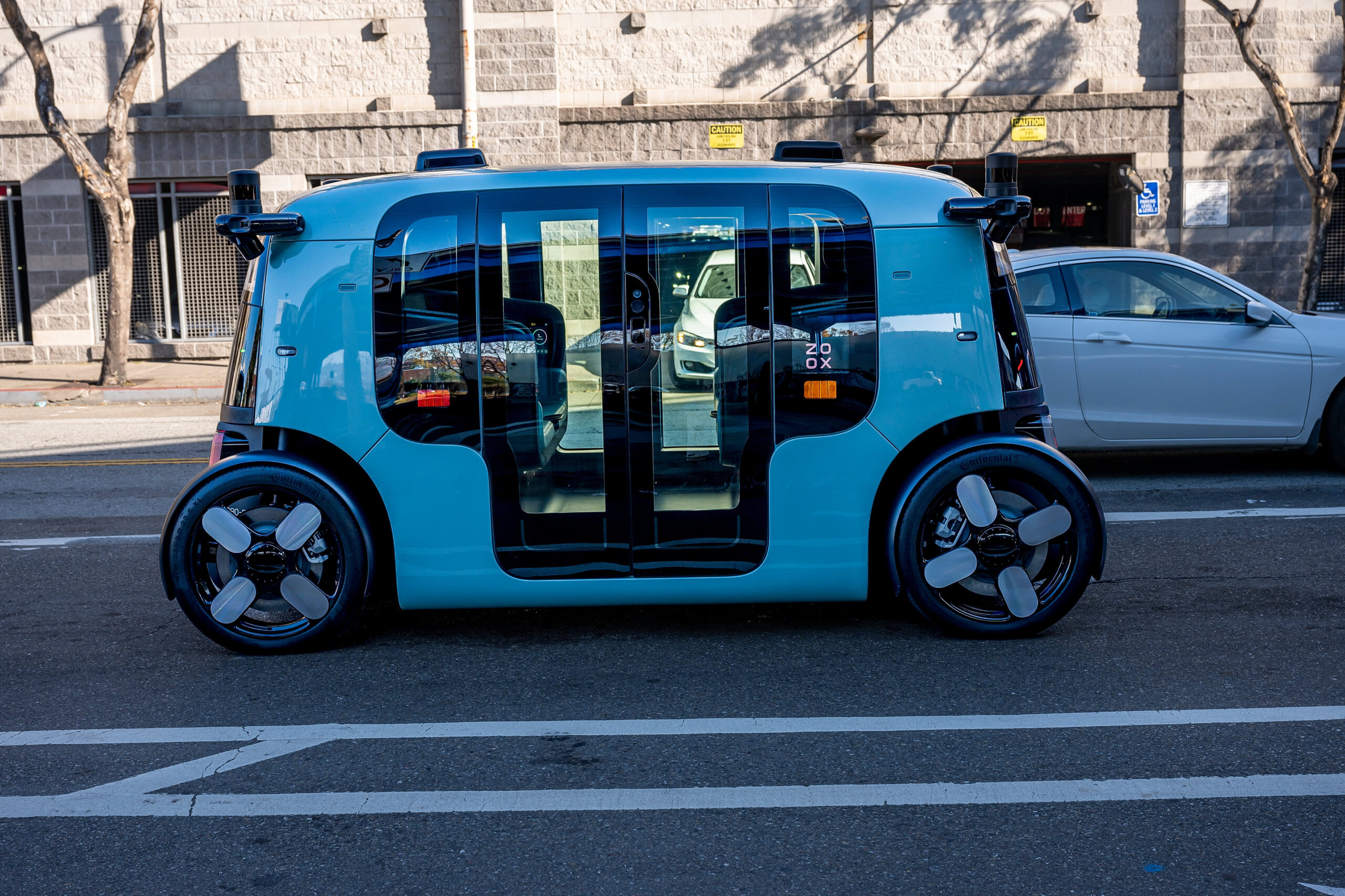
Zoox has suspended testing of its autonomous vehicle fleet in Atlanta after several safety drivers reported symptoms that may have been caused by exposure to potentially harmful gases inside the company’s test vehicles.
The incidents, which occurred last month, prompted one worker to file a complaint with the Occupational Safety and Health Administration. OSHA subsequently opened an inquiry and instructed Zoox to investigate the reported exposures.
According to an OSHA letter reviewed by TechCrunch, as many as 40 workers may have been exposed. Zoox disputes that figure and says the number of potentially affected employees was smaller.
The company has since quarantined the affected test vehicles while it investigates what happened.
Workers Reported Getting Sick Inside Test Vehicles
Several workers told TechCrunch they experienced symptoms including lightheadedness, nausea and vomiting while riding in Zoox’s test vehicles.
One contractor, Jay Davis, said he became ill during a shift in August while riding with three other workers in one of the company’s modified SUVs.
According to Davis, the group initially noticed that something was wrong when the conversation inside the vehicle suddenly stopped and several workers began feeling unwell.
The group eventually stopped at a restaurant during their scheduled break. Davis said one of his colleagues began vomiting after leaving the vehicle, while others complained of feeling lightheaded.
The vehicle was subsequently taken back to Zoox’s Atlanta facility.
Davis said he and his coworkers expected to be removed from active testing for the remainder of the day. Instead, he said, they were placed in another test vehicle and sent back into the field.
Later that day, Davis said he became sick again while eating.
Three of the workers eventually went to an emergency room, where they were evaluated for possible carbon monoxide exposure.
Davis said doctors did not find elevated carbon monoxide levels in his body, but told him and the other workers that their symptoms were consistent with carbon monoxide exposure.
The Exact Gas Has Not Been Established
One of the biggest unanswered questions is what, if anything, the workers were exposed to.
The OSHA complaint refers to possible exposure to carbon dioxide (CO2). Davis and other workers, meanwhile, said they were told at a hospital that their symptoms could be consistent with carbon monoxide exposure.
Zoox says its investigation has not found evidence of carbon monoxide inside the vehicles.
In a September 10 letter to OSHA, the company said it inspected the vehicles for CO2 and replaced their 12-volt batteries.
The batteries became part of the investigation because damaged batteries can potentially produce hydrogen sulfide, a gas known for its distinctive rotten-egg odor.
Several workers told TechCrunch they noticed an unusual smell inside the vehicles.
Zoox later said it had found no battery damage and no evidence of hydrogen sulfide.
The company told TechCrunch that the only gas detected in the affected vehicles was CO2.
Zoox Identified 28 Workers in Six Vehicles
In its response to OSHA, Zoox said it identified 28 employees who had ridden in six test vehicles where an unexplained odor had been reported.
The company said 10 workers voluntarily underwent medical evaluations to determine whether they had experienced an exposure.
Zoox said it received one medical report identifying CO2 exposure.
The company also said it consulted an outside medical expert as part of its investigation.
To reduce the risk of future incidents, Zoox told OSHA it planned to install CO2 monitors in its test vehicles. The company said the monitoring equipment would also be capable of detecting gases such as carbon monoxide and hydrogen sulfide.
OSHA has since closed its inquiry.
Zoox said it has nevertheless stopped operating its test fleet in the Atlanta market while its investigation continues.
Zoox’s Test SUVs Are Different From Its Robotaxis
The incident does not involve Zoox’s purpose-built robotaxis.
Those vehicles are fully electric and therefore do not produce exhaust gases.
Instead, the vehicles involved in the reports are modified Toyota Highlander SUVs used for autonomous-driving development and testing. Unlike Zoox’s eventual robotaxis, these test vehicles use internal-combustion engines.
That distinction is significant because gasoline-powered vehicles can produce carbon monoxide and carbon dioxide.
The gases can enter a passenger compartment if there is an exhaust leak or another problem that allows outside fumes into the cabin.
Zoox said it inspected the exhaust systems of the affected vehicles and performed a smoke test intended to identify potential pathways for gases to enter the passenger compartment.
The company did not disclose whether those tests identified an exhaust leak.
Zoox also removed the vehicles’ 12-volt batteries, inspected them and replaced them.
The Test Fleet Runs for Long Periods
Zoox’s testing practices may also be relevant to the investigation.
The company’s test vehicles can remain running for much of the day. Employees told TechCrunch that this is partly intended to maintain sensor calibration and reduce the time needed for the autonomous-driving computer to restart.
At Zoox’s indoor facilities, the company uses an exhaust-capture system designed to remove vehicle fumes.
The system is similar in concept to equipment used in fire stations to capture exhaust from emergency vehicles.
The Highlander SUVs are also modified with additional sensors and autonomous-driving computers.
Employees told TechCrunch that the vehicles include an interior air duct, or “snorkel,” positioned above the central infotainment area and designed to direct air toward passengers in the rear.
Zoox said it does not modify the vehicles’ ventilation systems.
Still, modifications to a vehicle can potentially create additional opportunities for problems involving cabin sealing or airflow, depending on how the work is performed.
Zoox Is an Exception Among Robotaxi Companies
The incident also highlights a difference between Zoox and several other autonomous-driving companies.
Many major robotaxi developers use electric vehicles for testing.
Waymo, Tesla, Avride and Motional all operate electric vehicles in their autonomous-driving programs. Electric vehicles do not produce combustion exhaust and therefore do not generate carbon monoxide from an engine.
May Mobility operates some hybrid vehicles, while Nvidia uses a small number of gasoline-powered and electric Mercedes-Benz vehicles for testing.
Zoox’s reliance on gasoline-powered Highlanders gives its test fleet a different set of potential environmental risks.
Workers Say Problems Continued for Weeks
According to the workers who spoke with TechCrunch, reports of unusual smells and physical symptoms continued through much of August.
Davis said the incidents became particularly serious on August 14, when four employees were traveling together in a test SUV as part of a training exercise.
After the first vehicle was taken out of service, the workers were placed in another test car.
Davis said the group experienced additional symptoms later that day.
The reports continued until August 22, when a worker became sick enough that someone at the Atlanta facility called 911.
The exact circumstances surrounding that emergency call remain unclear.
Zoox’s Atlanta facility has operated at reduced capacity since then, according to employees familiar with the situation, while the affected test vehicles have remained out of service.
Zoox Says Worker Safety Is Its Priority
Zoox has emphasized that it is treating the reports seriously and has stopped operating the affected test fleet while the investigation continues.
“The safety and well-being of our Zoox test fleet operators is our primary concern in this situation,” the company said in a statement to TechCrunch.
The company said it is taking additional measures to investigate the incidents and support employees who may have been affected.
For Zoox, the timing is particularly notable.
The company is expanding its autonomous-driving operations into additional markets while attempting to challenge Waymo’s position in the robotaxi industry. Rapid expansion means more testing, more vehicles and more safety monitors working around autonomous systems.
Zoox has faced other safety concerns involving its test vehicles. Previous reporting has documented injuries among contractors following unexpected braking and swerving incidents.
The latest episode raises a different question: not whether an autonomous vehicle is behaving unexpectedly, but whether the people helping train and test that technology are being adequately protected while doing their jobs.
Until Zoox determines exactly what caused the reported symptoms and odors, the company is keeping its Atlanta test fleet off the road.