
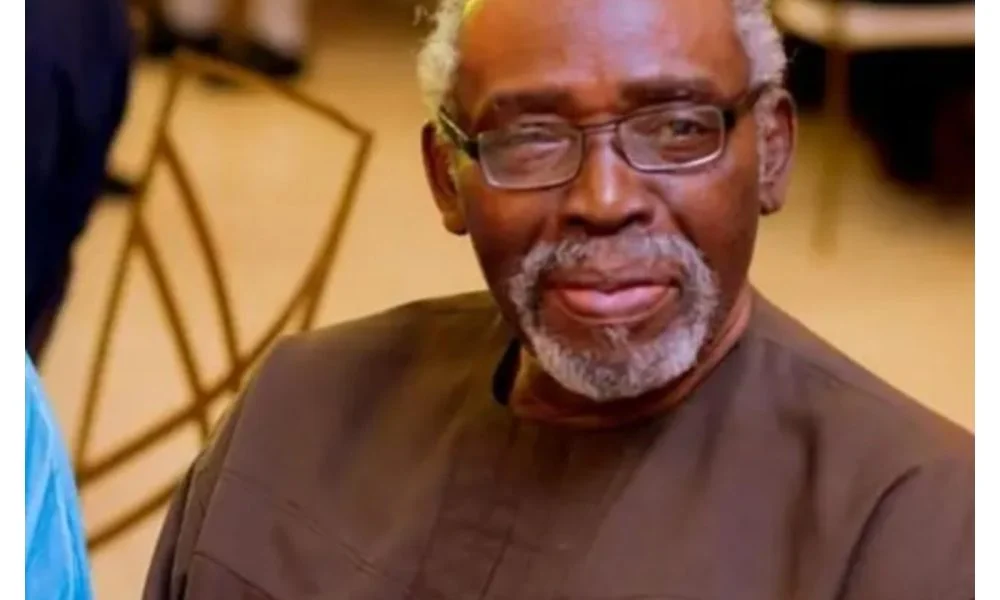
Veteran Nigerian actor and film executive, Oludotun Baiyewu Jacobs, popularly known Olu Jacobs Dies at 84: The Life and Legacy of a Nollywood Icon
His death was announced by his son, Olusoji Jacobs, on Instagram on Wednesday, September 16, 2026.
In a family statement, Olusoji described the late actor as “The Lion of Lufodo” and said the family was announcing his passing “with gratitude to God for a life well lived and fought.”
The family also appealed to bloggers and social media influencers to respect its privacy as relatives mourned the veteran actor.
Born on July 11, 1942, Jacobs built a career spanning more than five decades, working across theatre, television and film in Nigeria and abroad.
His death marks the end of the career of one of the most recognisable figures in Nigerian entertainment.
Early Life
Olu Jacobs was born on July 11, 1942, in Kano, where he spent his early years.
He developed an interest in acting while participating in school drama and debating activities. His passion for the performing arts was further strengthened after he watched a performance by legendary Nigerian theatre practitioner Hubert Ogunde.
The experience helped inspire him to pursue acting professionally.
Training in Britain
Jacobs later travelled to the United Kingdom, where he trained at the Royal Academy of Dramatic Art (RADA) in London.
Following his training, he worked with repertory theatres in Britain and appeared in several television productions.
His British television credits included appearances in The Goodies, Till Death Us Do Part, The Professionals, The Tomorrow People and Barlow at Large.
He also appeared in international films, including The Dogs of War in 1980, Baby: Secret of the Lost Legend in 1985 and Roman Polanski’s Pirates in 1986.
His early international career established him as an actor with experience well beyond Nigeria.
A Career Spanning Generations
After returning to Nigeria, Jacobs became a major figure in the country’s emerging film industry.
His career covered stage, television and cinema, and he appeared in more than 100 films during his long career.
He became particularly associated with roles portraying kings, chiefs, traditional rulers, patriarchs and other authoritative figures.
His distinctive voice, commanding screen presence and theatrical training made him one of the most recognisable veteran actors in Nollywood.
For generations of Nigerian viewers, Jacobs represented an era when theatre-trained actors played a central role in shaping the country’s television and film industries.
Awards and Recognition
Jacobs received several major honours during his career.
In 2007, he won the Africa Movie Academy Award for Best Actor in a Leading Role.
He later received the Industry Merit Award at the 2013 Africa Magic Viewers’ Choice Awards and a lifetime achievement honour in recognition of his contribution to African cinema.
In 2011, the Federal Government conferred on him the national honour of Member of the Order of the Federal Republic (MFR) for his contribution to the arts.
Marriage to Joke Silva
Jacobs was married to fellow veteran actress Joke Silva, with whom he shared both a personal and professional partnership.
The couple were associated with the Lufodo Group and the Lufodo Academy of Performing Arts, through which they contributed to the development and training of performers in Nigeria.
Their partnership became one of the most recognised unions in the Nigerian entertainment industry.
His Later Years
Jacobs spent much of his later years away from the public spotlight as his health declined.
His wife, Joke Silva, had previously spoken publicly about his battle with Lewy body dementia, a progressive condition.
His health had also been the subject of repeated false reports of his death over the years. In 2024, Silva dismissed one such report and said her husband was alive.
The family has now confirmed that Jacobs died on September 16, 2026. He had celebrated his 84th birthday on July 11.
A Lasting Legacy
Olu Jacobs’ influence extended beyond his performances on screen.
His career connected Nigeria’s traditional theatre culture with television and modern cinema, while his years working in Britain gave him an international dimension that distinguished his career.
He also contributed to the development of the performing arts through his work in production and arts education.
Together with other veterans of