
A Nigerian man accused of creating a fictitious government agency, securing office space inside a federal complex and presenting himself to diplomats and investors as a senior government official has pleaded not guilty to eight charges of forgery and impersonation.
The case involving Adeniyi Adeyemi has attracted significant attention in Nigeria because of the apparent access the alleged fake agency obtained within government circles.
Prosecutors allege that Adeyemi began presenting himself in 2024 as the head of the Presidential Foreign Investment Promotion Council, an organisation the government says was never legitimately established.
According to the allegations, he used forged government documents to obtain office accommodation and facilitate the opening of bank accounts while holding meetings with foreign diplomats, government officials, investors and other members of the public.
Adeyemi appeared before the Federal High Court in Abuja on Wednesday and denied all eight charges against him.
The case has raised broader questions about the ability of Nigeria’s government institutions to verify official appointments, government agencies and access to public facilities.
How the Alleged Fake Agency Operated
The allegations against Adeyemi go beyond simply claiming to hold a government position.
Prosecutors say he presented the Presidential Foreign Investment Promotion Council as a legitimate government institution and used documents purporting to come from official channels to establish its credibility.
The alleged agency was reportedly able to secure office space within a federal government complex, despite government officials later insisting that the organisation did not exist.
Adeyemi also allegedly opened bank accounts and conducted activities associated with a functioning public institution.
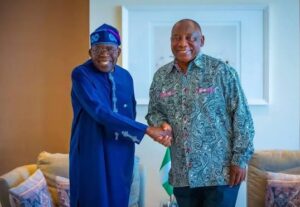
He frequently shared videos and photographs on social media showing himself interacting with government officials, diplomats and foreign investors.
Those public appearances, prosecutors say, helped reinforce the impression that he was genuinely acting on behalf of the Nigerian government.
The controversy intensified because the organisation was apparently able to operate within the wider government bureaucracy before authorities intervened.
Chief of Staff Raised the Alarm
The Nigerian presidency has said the issue came to light after President Bola Tinubu’s Chief of Staff, Femi Gbajabiamila, raised concerns about the alleged organisation.
According to a statement from the president’s spokesman, Gbajabiamila wrote to the police and Nigeria’s domestic intelligence agency in October last year requesting an investigation into what he described as the forgery of official appointment letters.
The letter reportedly warned that individuals associated with the organisation were presenting themselves as representatives of a legitimate government agency and holding meetings with both Nigerians and foreign nationals.
The alleged group had also reportedly requested assistance from the Ministry of Foreign Affairs in facilitating visas to the United States.
The claims suggested that the organisation was attempting to operate across several areas normally associated with a formal government institution.
Adeyemi Denies the Allegations
Adeyemi has rejected the claim that the agency was fraudulent and maintains that he is not a con artist.
At a news conference in June, he made a separate and serious allegation against Gbajabiamila, claiming that he had paid 400 million naira, equivalent to about $300,000 at the time, through an intermediary to secure his appointment.
Adeyemi alleged that the relationship later deteriorated after the Chief of Staff allegedly demanded additional payments.
Gbajabiamila has not publicly responded to the allegation, according to the information available in the case.
The bribery allegation remains separate from the criminal charges Adeyemi is currently facing, and the accusations have not been established in court.
Government Investigation Found No Official Appointment
The government subsequently commissioned an investigation into the alleged appointment and the documents used to support it.
In August, the relevant government commission reportedly concluded that there was no evidence connecting Gbajabiamila to Adeyemi’s purported appointment.
Investigators said they found that the Chief of Staff’s office had never issued appointment letters to Adeyemi and that there was no record of official correspondence between the two men relating to the alleged agency.
The investigation reportedly concluded that the government documents used by Adeyemi had been forged.
That finding forms an important part of the government’s case as prosecutors attempt to establish how the alleged organisation was created and how it managed to gain access to government facilities.
Questions Over Public Money
Perhaps one of the most troubling aspects of the case is the amount of public funding apparently associated with the alleged agency.
Public documents reportedly show that the organisation was allocated nearly $1 million in government funds, despite authorities saying that no money was ultimately released.
The distinction is significant.
While officials maintain that public funds did not actually reach the alleged organisation, the fact that it was apparently included in government financial documents has raised questions about the internal checks used to validate government agencies and spending requests.
The controversy has therefore moved beyond the alleged conduct of one individual and into a wider discussion about administrative controls within Nigeria’s public sector.
How Could a Nonexistent Agency Obtain Office Space?
The alleged use of a federal government building has become one of the most striking elements of the scandal.
For an organisation to operate from a government complex, obtain office facilities and conduct meetings with people from inside and outside the country, it would normally be expected to pass through multiple layers of administrative verification.
The fact that the alleged agency apparently managed to establish itself before authorities intervened has prompted concerns about weaknesses in those procedures.
The case has also highlighted the growing importance of digital verification.
In an environment where photographs, official-looking documents and social media appearances can quickly create an impression of legitimacy, distinguishing genuine government representatives from impostors can become increasingly difficult.
Social Media Added to the Agency’s Apparent Credibility
Adeyemi’s social media activity appears to have played a significant role in projecting the organisation as legitimate.
He posted videos showing meetings and interactions with government officials, diplomats and potential investors.
For members of the public or foreign businesses unfamiliar with Nigeria’s government structure, such appearances could potentially make the organisation appear credible.
That is particularly significant in the context of investment promotion.
A person claiming to represent a presidential or federal investment agency could potentially gain access to businesses, investors and international partners who assume that the individual has official authority.
The allegations have therefore raised concerns about the reputational risks that fake government entities can create for Nigeria.
A Second Fake Agency Raises More Questions
The Adeyemi case is not the only alleged fake-agency scandal to emerge.
In August, President Tinubu ordered an investigation into another organisation known as the National Brands Development and Made in Nigeria Special Project Office.
Government officials said the organisation had also been operating illegally from government premises.
The emergence of a second case has increased scrutiny of how individuals and organisations gain access to government offices and present themselves as official entities.
It also raises questions about whether existing verification systems are sufficiently robust to prevent unauthorised organisations from operating under the appearance of government authority.
What the Case Could Mean for Nigeria’s Government
The allegations against Adeyemi will ultimately have to be determined by the courts.
He has pleaded not guilty, meaning the prosecution will be required to prove the charges against him.
But regardless of the eventual legal outcome, the case has already exposed vulnerabilities that could have consequences beyond one individual.
A fake government agency operating openly could undermine public confidence, confuse foreign investors and create reputational risks for legitimate government institutions.
It could also expose businesses and individuals to financial losses if they enter into agreements with people they believe have official government authority.
For a country seeking to attract foreign investment, the credibility of government institutions is particularly important.
The Bigger Issue Is Institutional Verification
The most important question arising from the scandal may therefore be larger than whether Adeyemi forged specific documents.
It is how an organisation that the government says did not exist could apparently secure office space in a federal complex, appear in public documents, interact with diplomats and investors, and operate long enough to attract official scrutiny.
The answer will likely depend on the findings of the court and any further government investigations.
For now, the case serves as a reminder that government legitimacy depends not only on official appointments and laws but also on strong administrative systems capable of verifying who has the authority to act in the government’s name.
As the prosecution moves forward, Nigerians will be watching closely for answers about how the alleged fake agency was established, how it gained access to government facilities and whether others within the bureaucracy played any role in allowing it to operate.
The scandal has already raised an uncomfortable question for Nigeria’s public institutions: if an agency that officials say never existed could operate so openly inside government structures, how many safeguards failed before anyone noticed?