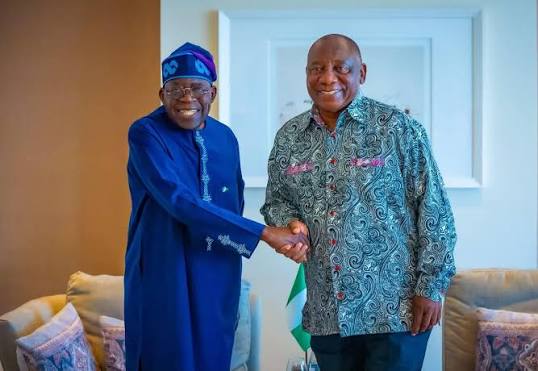
Nigeria and South Africa have reaffirmed the historic ties between the two countries, with South African officials calling for greater unity and people-to-people engagement despite tensions that have occasionally strained relations.
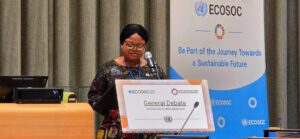
The message was delivered in Abuja by South Africa’s Deputy High Commissioner to Nigeria, Ambassador Lindy Mminele, during the country’s 2026 Heritage Day celebration hosted by the South African High Commission.
Speaking to diplomats, government officials, tourism representatives and South Africans living in Nigeria, Mminele said the two countries should continue to draw strength from their shared African history, cultural connections and common identity.
At the centre of her message was the philosophy of Ubuntu, commonly expressed through the idea that “I am because you are.”
“Therefore, we choose unity. We choose Ubuntu. We choose the ties that bind us together,” she said.
The event, held under the theme “Celebrating Our Living Heritage: Strengthening the Ties That Bind Us,” provided an opportunity to reflect on the historical relationship between Nigeria and South Africa while highlighting the growing role of culture, entertainment and tourism in strengthening bilateral relations.
Nigeria’s Role in the Anti-Apartheid Struggle
Mminele recalled that South Africa’s relationship with Nigeria stretches back to a period before the country’s transition to democracy.
She noted that Nigeria played a significant role in supporting the struggle against apartheid, alongside other African countries and international partners.
“South Africa’s bilateral relations with Nigeria predate our democracy,” she said.
Nigeria’s opposition to apartheid included diplomatic, political and material support for the liberation struggle in Southern Africa.
For South Africa, that history remains an important part of the relationship with Nigeria.
Mminele said the contribution of Nigeria and other countries ultimately helped create the conditions that led to the democratic South Africa that exists today.
That shared history, she suggested, provides a foundation on which the two countries can continue to build their relationship.
From Political Solidarity to Cultural Exchange
While the relationship was once defined largely by political solidarity, it has developed considerably over the years.
Today, music, film, tourism and entertainment have become some of the most visible connections between Nigerians and South Africans.
Mminele singled out Nollywood, Afrobeats and Amapiano as examples of how cultural influence now moves in both directions between the two countries.
Nigerian films have developed a significant audience in South Africa, while South African music has become increasingly popular among Nigerian audiences.
The creative industries have also created opportunities for artists, filmmakers and cultural institutions from both countries to collaborate.
Mminele said cultural institutions in Nigeria and South Africa continue to cooperate under a Memorandum of Understanding on cultural cooperation.
South Africa participates in Nigeria’s Zuma International Film Festival, while Nigerian filmmakers also take part in South African film festivals, including events in Durban.
She described the relationship between the cultural institutions as “tight and ongoing.”
Afrobeats and Amapiano Build a Shared Cultural Space
Perhaps nowhere is the relationship between the two countries more visible than in music.
Nigerian Afrobeats has become widely popular in South Africa, while South Africa’s Amapiano has developed a huge following in Nigeria.
Artists from both countries have increasingly collaborated, producing music that combines elements of their respective sounds and reaches audiences well beyond their national borders.
For younger Nigerians and South Africans in particular, these cultural exchanges can create connections that exist independently of formal diplomatic relations.
The growing popularity of both genres has effectively created a shared entertainment space in which national boundaries are less significant.
Mminele also highlighted Nigeria’s own cultural diversity, describing its heritage as a vibrant mosaic encompassing more than 250 ethnic groups.
Through Nollywood and Afrobeats, she said, Nigerian stories, identities and cultural expressions have gained international visibility.
South Africa Invites More Nigerians to Explore Its Tourism Industry
Tourism was another major focus of the Heritage Day celebration.
Mminele encouraged Nigerians to explore South Africa’s diverse tourism offerings, ranging from natural attractions and wildlife to cultural destinations and major cities.
She highlighted destinations including Table Mountain, the Garden Route and Kruger National Park, as well as South Africa’s beaches, wine regions and cultural sites.
The country also offers adventure activities such as hiking, surfing, safaris and shark cage diving.
“So our offerings of Mpumalanga or any other province of South Africa for tourism are open for business,” she said.
The Deputy High Commissioner also encouraged diplomats and their families stationed in Nigeria to visit South Africa before completing their assignments.
She said South African Tourism was ready to welcome visitors and thanked the organisation for supporting the Heritage Day event.
Tourism Partnerships Strengthen People-to-People Relations
Mminele also recognised Nigerian tourism organisations that contribute to stronger links between the two countries.
Among those acknowledged were the Department of Culture and Tourism, the National Association of Nigerian Travel Agencies (NANTA), the Nigeria Association of Tour Operators (NATOP) and the Federation of Tourism Associations of Nigeria (FTAN).
She described these organisations as important partners in promoting tourism and people-to-people connections.
Such relationships can create economic opportunities while also giving citizens of both countries greater exposure to each other’s cultures.
Tourism therefore serves not only as an economic activity but also as a form of cultural diplomacy.
Heritage Day Reflects South Africa’s Journey
Welcoming guests to “Ekhaya”—meaning home—Mminele described the South African High Commission as South Africa’s “home away from home” and expressed appreciation to the Nigerian government for hosting the country’s diplomatic mission.
She said Heritage Day was an opportunity not only to celebrate South Africa’s diverse traditions but also to reflect on the country’s long and difficult journey towards democracy.
She referred to former President Nelson Mandela’s 2002 Heritage Day address, which emphasised the role of heritage in nation-building and developing a national identity based on unity within diversity.
She also referenced President Cyril Ramaphosa’s recent Heritage Day message, which highlighted South Africa’s languages, music, food, clothing, stories and customs as important expressions of its living heritage.
Shared Heritage Amid Recent Tensions
The call for unity comes against a backdrop of tensions that have occasionally affected relations between Nigerians and South Africans.
Concerns have been raised over the treatment and safety of Nigerians and other African migrants in South Africa, including reports of attacks and deaths involving Nigerian nationals.
Nigerian authorities have repeatedly expressed concerns about the safety of Nigerians in the country.
The South African government, meanwhile, has maintained that it opposes xenophobia, racism and discrimination.
Against this backdrop, Mminele’s emphasis on African identity and shared heritage carried particular significance.
She stressed that South Africa’s identity cannot be separated from the continent.
“South Africa is not just a country in Africa but an African country,” she said.
Her message was that the country’s future remains connected to Africa, just as its history and identity are rooted in the continent.
Ubuntu at the Heart of Nigeria-South Africa Relations
Mminele said South Africa would continue to strengthen relationships that promote national unity, international cooperation and, most importantly, its connections with other African countries.
She concluded by drawing on former President Thabo Mbeki’s 1996 “I Am an African” speech, saying: “I am an African. I recognise myself in you. You recognise yourself in me.”
The message reinforced the central theme of the celebration: that shared identity can serve as a foundation for stronger relations even when political and social challenges arise.
The event itself reflected that philosophy.
Nigerians and South Africans gathered around food, music and cultural traditions, with Afrobeats and Amapiano providing a soundtrack to the evening.
A Relationship Built Beyond Government
The latest Heritage Day celebration demonstrated that Nigeria-South Africa relations extend far beyond official diplomacy.
Their shared history provides the foundation, but contemporary culture is increasingly becoming the bridge.
From Nollywood and Afrobeats to Amapiano, film festivals, tourism and creative partnerships, citizens of both countries are building connections that reinforce the formal relationship between their governments.
For South Africa, the message is one of Ubuntu and African solidarity.
For Nigeria, the relationship represents a connection with one of the continent’s most influential economies and cultural powers.
As both countries navigate the challenges that occasionally test their relationship, the emphasis on shared heritage, cultural exchange and people-to-people engagement could provide an important pathway towards stronger and more durable ties.