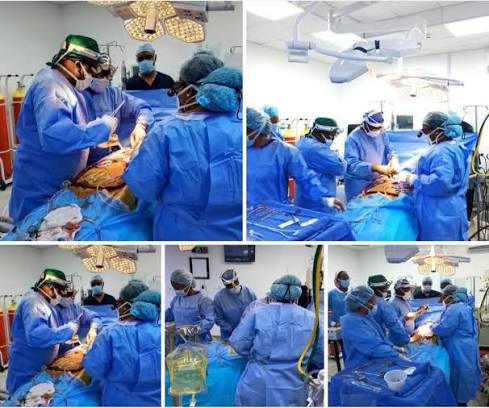
Imo State has entered a new chapter in specialised healthcare after doctors successfully completed the region’s first robotic-assisted surgery.
The procedure was performed on Friday at the Imo Robotics and Oncology Centre (IROC) inside the Imo Specialist Hospital Complex in Umuguma, Owerri.
The milestone brings advanced surgical technology closer to patients in the South-East and signals a broader push to expand specialised medical care within the state.
You might want to read this: Otti Approves N31m Relief Package for Abia Returnees From South Africa
Nigerian, International Specialists Lead Operation
A team of Nigerian and overseas specialists carried out the procedure under the leadership of Professor Kingsley Ekwueme, a UK-based consultant in robotic and laparoscopic surgery who is originally from Imo State.
Following the operation, Ekwueme described it as a success and highlighted the potential of robotic techniques, particularly for patients undergoing surgery for localised prostate cancer.
The technology allows surgeons to operate with greater precision while seeking to preserve critical functions.
Ekwueme said the outcomes associated with robotic cancer surgery, particularly prostate procedures, can significantly reduce the risk of long-term complications affecting urinary and sexual function.
Uzodimma: Healthcare Must Go Beyond Equipment
Governor Hope Uzodimma, who witnessed the procedure, described the operation as an important step towards making specialised healthcare more accessible to people living in Imo.
But he said the centre’s purpose extends beyond treating patients.
IROC is also expected to support early diagnosis, disease prevention and routine medical screening, giving residents greater opportunities to detect health problems before they become more difficult to treat.
For Uzodimma, the real test of the project will be measured by its impact:
- Patients successfully treated
- Medical skills transferred locally
- Specialists trained and developed
- Lives improved
- Greater public confidence in local healthcare
PPP Model to Support Sustainability
The governor said IROC operates through a Public-Private Partnership, with private-sector investors providing most of the funding.
He argued that the arrangement would help maintain the centre’s standards while supporting effective long-term management.
Uzodimma also encouraged residents to enrol in the Imo State Health Insurance Scheme, which he said would help more people afford advanced medical services.
Why Robotic Surgery Matters
Robotic-assisted procedures can offer surgeons enhanced control and precision while using minimally invasive techniques.
Potential benefits include:
- Smaller surgical access points.
- Reduced blood loss.
- Less tissue disruption.
- Faster postoperative recovery.
- Greater precision during complex procedures.
But the governor stressed that purchasing sophisticated equipment was never the end goal.
Technology, he argued, only becomes valuable when skilled professionals can use, maintain and build expertise around it.
“Equipment must be matched with competence, and technology must be matched with training.”
Bigger Upgrade Underway at Imo Specialist Hospital
IROC forms part of a wider expansion of the Imo Specialist Hospital Complex.
The upgraded facility now includes expanded intensive-care capacity, advanced diagnostic services, modern operating theatres, neonatal care and specialised oncology services.
The administration says it plans to continue investing in both medical infrastructure and healthcare professionals, with the broader ambition of making Imo a destination for specialised treatment.
The first robotic-assisted operation is therefore being presented not as an endpoint, but as the opening move in that larger strategy.
Imo has demonstrated that the technology can be deployed locally. The next challenge is making sure patients, doctors and the wider healthcare system can sustain and benefit from it.