Nigeria has received a significant boost to its international credit standing after Fitch Ratings revised the country’s credit outlook from Stable to Positive, citing stronger foreign exchange reserves, moderating inflation and sustained economic reforms.
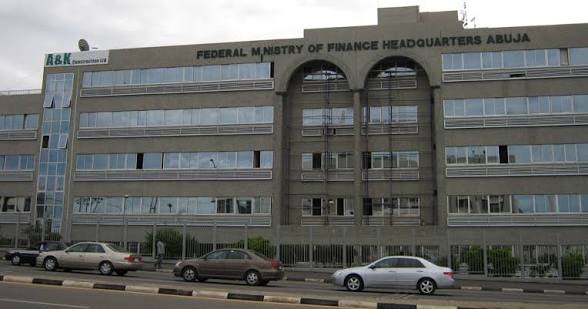
The international credit rating agency affirmed Nigeria’s Long-Term Issuer Default Ratings at ‘B’ but upgraded the outlook to Positive in a decision dated October 9, 2026. The Federal Ministry of Finance announced the development in Abuja on Saturday, describing it as a sign of growing confidence in the government’s economic reform programme.
One of the most notable developments highlighted by Fitch is the sharp increase in Nigeria’s gross foreign exchange reserves, which reached $54.9 billion as of September 25, 2026. This compares with approximately $32 billion in mid-April 2024, reflecting a substantial improvement in the country’s external financial position.
The agency also expects economic growth to accelerate, inflation to ease further and government revenue to benefit from ongoing tax reforms.
However, the Positive outlook does not mean Nigeria has secured a higher credit rating. Rather, it indicates that Fitch sees scope for an improvement in the country’s creditworthiness if current trends continue.
For the Federal Government, the decision provides international recognition of the economic changes implemented in recent years, while highlighting the challenges that remain in translating macroeconomic improvements into better living standards for Nigerians.
Nigeria’s Foreign Reserves Rise to $54.9 Billion
The accumulation of foreign exchange reserves was among the key factors behind Fitch’s decision to revise Nigeria’s credit outlook.
According to the agency, gross foreign exchange reserves increased to $54.9 billion by September 25, 2026, from $32 billion in mid-April 2024.
Fitch attributed the improvement to several factors, including increased transactions through formal foreign exchange channels, strong portfolio inflows, higher export earnings and remittances.
Stronger reserves can help a country meet its external payment obligations, manage pressure on its currency and withstand periods of financial uncertainty.
For Nigeria, the increase is particularly relevant because foreign exchange availability and exchange-rate instability have been major concerns for businesses, investors and policymakers.
Fitch also projected that Nigeria would record a current account surplus equivalent to 6.4 per cent of gross domestic product (GDP) in 2026.
A current account surplus indicates that a country’s receipts from international transactions exceed its payments over a given period. When sustained, it can support external stability and reduce reliance on foreign borrowing to finance international obligations.
The projected surplus, alongside the increase in reserves, suggests that Nigeria’s external position has improved compared with previous years.
Nevertheless, maintaining that progress will depend on the continued performance of exports, remittances, investment flows and the broader foreign exchange market.
Fitch Expects Nigeria’s Economy to Grow by 4.3% in 2026
Fitch expects Nigeria’s real GDP to expand by 4.3 per cent in 2026, compared with 4 per cent in 2025.
The agency also projected that economic growth would remain above 4 per cent in 2027 and 2028, with non-oil activities expected to provide much of the momentum.
The forecast points to a gradual strengthening of economic activity, supported by sectors beyond crude oil.
Diversification is particularly important for Nigeria because fluctuations in international oil prices and production can have significant consequences for government revenue, export earnings and foreign exchange availability.
Growth driven by non-oil sectors could help broaden the country’s economic base and create opportunities across industries such as agriculture, manufacturing, trade and services.
However, headline GDP growth does not automatically translate into improved household incomes or lower living costs. The wider impact will depend on employment creation, productivity, investment and the distribution of economic gains.
Fitch’s projections therefore provide an indication of expected economic performance rather than a guarantee that all Nigerians will experience an immediate improvement in their financial circumstances.
Oil Production and Domestic Refining Support Economic Reforms
Developments in the petroleum sector also contributed to Fitch’s assessment of Nigeria’s economic outlook.
The agency noted that crude oil production had met Nigeria’s Organisation of Petroleum Exporting Countries (OPEC) target of 1.5 million barrels per day since May 2026.
Improved production can support export earnings and government revenue, helping strengthen the country’s external position.
Fitch also highlighted the contribution of increased domestic refining capacity, which is helping to reduce imports of refined petroleum products and the associated demand for foreign exchange.
Greater domestic refining can reduce the need to purchase certain petroleum products from overseas, potentially easing pressure on the foreign exchange market.
The overall economic benefit, however, depends on sustained refinery operations, reliable crude supplies, production efficiency and the relationship between domestic output and demand.
Together, stronger crude production and expanded domestic refining capacity could support Nigeria’s efforts to improve its trade position and reduce vulnerabilities linked to imported fuel.
Inflation Expected to Fall to 15.4% in 2026
Inflation remains one of the most important economic indicators for Nigerian households and businesses, making Fitch’s latest projection particularly significant.
The agency expects average inflation to moderate to 15.4 per cent in 2026, less than half its 2024 level.
A sustained decline in inflation would represent progress in addressing the rapid increases in prices that have placed pressure on household budgets and business operating costs.
Lower inflation can also improve economic planning by making it easier for businesses to estimate expenses and for consumers to manage their spending.
However, declining inflation does not necessarily mean that prices will return to previous levels.
Inflation measures the rate at which prices increase. If the rate slows, goods and services may still become more expensive, but potentially at a more moderate pace.
For Nigerian households, the practical benefit will depend on whether the slowdown continues and whether incomes and employment opportunities improve sufficiently to ease financial pressure.
Fitch’s forecast therefore signals an expected reduction in inflationary pressures, although the agency’s assessment does not eliminate the risk of future price increases.
Tax Reforms Could Strengthen Government Revenue
Beyond foreign reserves and inflation, Fitch identified tax reforms as a potential source of improvement in Nigeria’s public finances.
The agency expects the implementation of tax reforms to increase non-oil revenue, helping the government reduce its dependence on earnings from crude oil.
Nigeria has long faced challenges in mobilising sufficient public revenue relative to the size of its economy. A stronger non-oil revenue base could give the government more resources to finance infrastructure, public services and other development priorities.
Fitch projected that general government debt would average 32 per cent of GDP between 2026 and 2028.
That would remain significantly below the median of 56 per cent for countries rated ‘B’, according to the agency.
The comparison provides some context for Nigeria’s debt position relative to other countries in the same broad rating category.
However, the overall sustainability of public finances depends on more than the debt-to-GDP ratio. Revenue generation, borrowing costs, economic growth and the government’s ability to meet its obligations also matter.
Fitch acknowledged that Nigeria’s government revenue remained low relative to the size of the economy and that debt-servicing costs continued to pose a challenge.
These weaknesses could limit the government’s ability to convert improved macroeconomic conditions into greater public investment and better services.
Stronger Banks and Domestic Debt Market Provide Additional Support
Fitch also recognised the depth of Nigeria’s domestic debt market and the ongoing bank recapitalisation exercise.
The agency noted that many Nigerian banks had capital adequacy ratios above 20 per cent.
Capital adequacy ratios measure a bank’s capital relative to its risk-weighted assets and help indicate its capacity to absorb financial losses.
Stronger capital positions can support confidence in the banking sector and improve banks’ ability to withstand economic shocks, although capital ratios alone do not capture every potential risk.
A developed domestic debt market can also provide the government with a source of financing within the country.
These factors contributed to Fitch’s assessment of Nigeria’s financial system and broader economic resilience.
At the same time, maintaining financial stability will require continued oversight, effective risk management and a banking sector capable of supporting productive economic activity.
Taiwo Oyedele Says Positive Outlook Validates Difficult Reforms
Reacting to Fitch’s decision, Minister of Finance and Coordinating Minister of the Economy Taiwo Oyedele said the revised outlook provided further validation of the difficult but necessary reforms undertaken by President Bola Ahmed Tinubu’s administration.
He identified the removal of the fuel subsidy, the unification of the foreign exchange market and tax reforms as important measures supporting Nigeria’s improving economic outlook.
According to Oyedele, the government’s medium-term ambition is to put Nigeria firmly on a path towards investment-grade credit status.
He stressed, however, that the objective extends beyond securing favourable assessments from international rating agencies.
The broader goal, he said, is to reduce the country’s cost of capital, attract private investment and create decent jobs on a large scale.
A stronger credit profile can potentially improve investor confidence and influence the terms on which a country and its businesses access financing. However, actual borrowing costs also depend on market conditions, currency risks, interest rates and investors’ assessment of specific borrowers.
Oyedele acknowledged the challenges identified by Fitch, including inflation remaining above levels in comparable countries, relatively low government revenue and high debt-servicing costs.
He reaffirmed the government’s commitment to sustaining foreign exchange reforms, improving tax administration, strengthening fiscal governance, diversifying the economy and translating macroeconomic stability into better living standards.
He also highlighted sustained disinflation, stronger external reserves and improved non-oil revenue mobilisation as central elements of the government’s economic strategy.
All Three Major Rating Agencies Take Positive Actions on Nigeria
Fitch’s decision follows favourable developments from other international financial assessment institutions in 2026.
S&P Global Ratings upgraded Nigeria’s credit rating to ‘B’ from ‘B-‘ in May, while Moody’s Ratings revised the country’s outlook to Positive in August.
Separately, FTSE Russell returned Nigeria to Frontier Market status, effective September 21, 2026.
These developments reflect a series of improvements in how international institutions assess Nigeria’s economic and investment environment.
However, the actions are not identical. S&P upgraded Nigeria’s rating, Moody’s revised its outlook, and Fitch affirmed its existing ‘B’ rating while changing the outlook from Stable to Positive.
The distinctions matter because a credit rating and a credit outlook serve different purposes. A rating assesses creditworthiness, while an outlook indicates the direction in which an agency believes the rating could move over time.
Fitch’s latest decision therefore represents an encouraging signal, but not an upgrade in Nigeria’s underlying rating.
What Fitch’s Positive Outlook Means for Nigeria
Nigeria’s revised credit outlook highlights progress in foreign exchange reserves, external balances and efforts to stabilise the economy. It also reflects expectations of stronger growth and improved revenue mobilisation.
Yet significant challenges remain, particularly in reducing inflation, increasing government revenue and controlling the cost of servicing public debt.
The next stage will depend on whether the government can sustain its reforms and ensure that stronger economic indicators translate into tangible benefits for businesses and households.
For investors, the Positive outlook may strengthen confidence in Nigeria’s economic direction, although it does not guarantee lower borrowing costs or an immediate increase in investment.
For ordinary Nigerians, the more important test will be whether economic stability leads to better employment opportunities, more affordable living conditions and improved public services.
Fitch’s decision gives Nigeria a more favourable outlook, but sustaining that confidence will require continued reforms and measurable improvements in the wider economy.