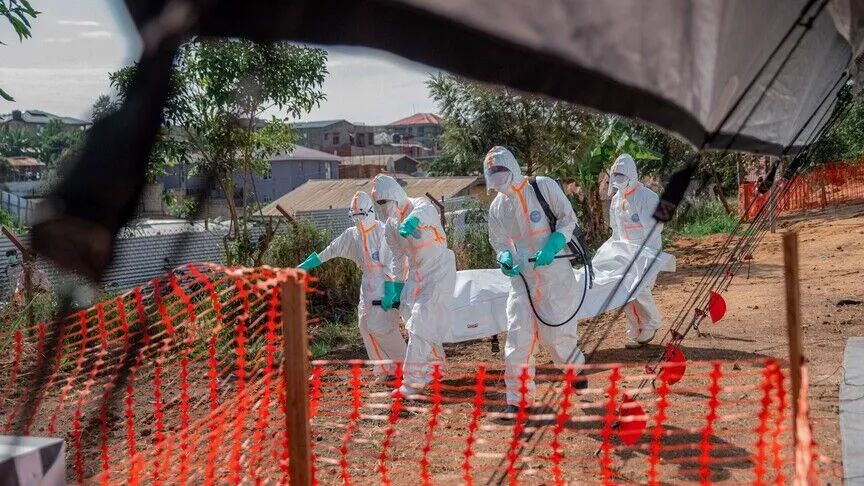
The Democratic Republic of Congo is confronting its largest Ebola outbreak on record, with more than 7,000 cases now reported and nearly 3,400 deaths.
Congolese authorities say 7,022 cases have been recorded since the latest outbreak was detected in mid-May.
Of those, 3,398 people have died, while 1,671 have recovered.
The scale of the outbreak makes it the most severe Ebola epidemic ever recorded in the DRC, according to the latest figures released by authorities.
Outbreak Spreads Into New Province
The epidemic began in northeastern Ituri province before reaching other parts of the country’s conflict-affected east and north.
Those areas present major challenges for disease control.
Many communities are remote. Armed groups have operated across parts of the region for decades, while limited state presence and weak healthcare infrastructure can make it difficult for health workers to identify cases, trace contacts and deliver treatment quickly.
The virus has now reached seven provinces, with South-Ubangi becoming the latest to report a confirmed case.
The province borders both the Central African Republic and the Republic of Congo.
Schools Become a New Source of Concern
Ituri remains the epicentre of the outbreak, and the detection of Ebola among pupils has heightened anxiety as schools reopen following the summer break.
Parents and education workers are particularly concerned about the possibility of transmission between children and their families.
Angele Magani, a mother in Bunia, the provincial capital, told AFP that parents were worried because they did not know the health circumstances of every family connected to the school community.
School officials say preventive measures have been strengthened.
Schools Step Up Precautions
Roger Mungimbo, a school official in Bunia, said students are required to wash their hands with soap.
Schools have also reduced classroom sizes, with a maximum of 30 pupils per classroom at his school.
Children are being repeatedly reminded to:
- Wash their hands regularly
- Avoid unnecessary physical contact
- Avoid handshakes and other greetings involving contact
- Follow school health instructions
The measures are intended to reduce opportunities for transmission while health authorities continue monitoring the outbreak.
Why Ebola Is So Dangerous
Ebola is a highly infectious viral disease that can spread through contact with the bodily fluids of infected people.
Severe infections can cause systemic illness, including bleeding and organ failure.
The disease has killed more than 15,000 people across Africa over the past five decades, making outbreaks a major public-health threat wherever healthcare systems are unable to contain transmission quickly.
The DRC has experienced repeated Ebola outbreaks over the years, but the current epidemic is unfolding on an unprecedented scale.
With transmission now reaching another province and schools emerging as a major source of concern, health authorities face a race against time to identify infections, protect communities and prevent the outbreak from spreading even further.