
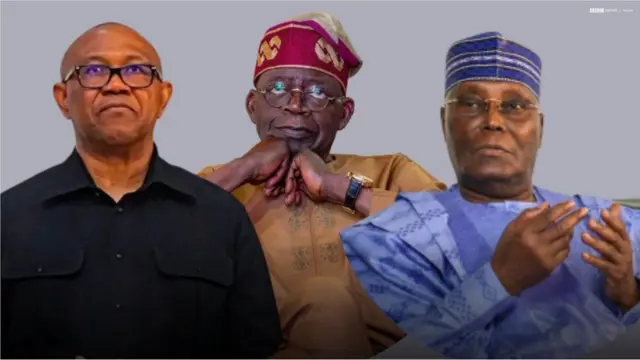
A Nigeria Democratic Congress chieftain has drawn a sharp contrast between Peter Obi and his leading political rivals ahead of the 2027 presidential election.
Ibrahim Abdulkarim, speaking on Channels Television’s Politics Today on Tuesday, argued that Obi is motivated primarily by public service, while describing Bola Ahmed Tinubu and Atiku Abubakar as politicians seeking power.
Abdulkarim presented Obi as a candidate willing to take on the problems that many Nigerians—particularly young people—feel unable to solve on their own.
‘We Are Supporting Ourselves’
According to Abdulkarim, Obi’s appeal is rooted in the belief that Nigerians can use political participation to pursue the changes they want to see.
He argued that many influential Nigerians understand the country’s problems and may even know potential solutions, but lack the willingness or courage to implement them.
His message to young Nigerians was straightforward: supporting Obi, in his view, is ultimately about supporting their own aspirations for the country.
Abdulkarim said he believes Obi has demonstrated the determination required to confront some of Nigeria’s longstanding challenges, which he presented as a key reason for his support.
Northern Inequality Comes Under Spotlight
The NDC chieftain also turned his attention to conditions in northern Nigeria, where he argued that deep social and economic disparities have left many citizens feeling excluded.
He described what he characterized as an informal hierarchy between wealthy elites and poorer Nigerians, arguing that this divide has contributed to frustration and a sense that the country’s opportunities are not equally accessible.
Abdulkarim said his broader objective was to reduce those divisions, expand opportunities for young Nigerians and promote a stronger sense of national unity.
His comments, however, represent his political assessment rather than an independently established description of northern Nigerian society.
The Kind of President He Wants
Abdulkarim also outlined the qualities he would like to see in Nigeria’s next president.
For him, transparency and accessibility are central.
He argued that Nigerians should have a president who is prepared to communicate directly with citizens and regularly explain major government decisions, reforms and policies.
In his vision, presidential communication would not be an occasional exercise—it would be part of governing.
He suggested that a president willing to engage openly with the media and explain government actions could build greater public confidence regardless of political affiliation.
‘By Far’
Asked whether he regarded Obi as superior to the other major contenders, Abdulkarim did not hesitate.
“By far!” he responded.
His confidence reflects the increasingly competitive political environment expected ahead of the 2027 election, with parties and supporters already positioning their preferred candidates for the next presidential contest.
Lessons From 2023
Abdulkarim also argued that supporters of Obi have become more politically aware since the 2023 presidential election.
He said the experience had exposed what he described as weaknesses in the movement’s earlier approach, particularly regarding the realities of electoral politics.
According to him, supporters who may have underestimated the challenges surrounding elections in 2023 are now more alert and prepared.
The message is clear: whatever happens in 2027, Obi’s supporters do not intend to approach the contest with the same assumptions they held four years earlier.
As the next election draws closer, the real test will be whether that heightened political awareness can translate into the organisation, votes and electoral results needed to turn support for Obi into political power.