
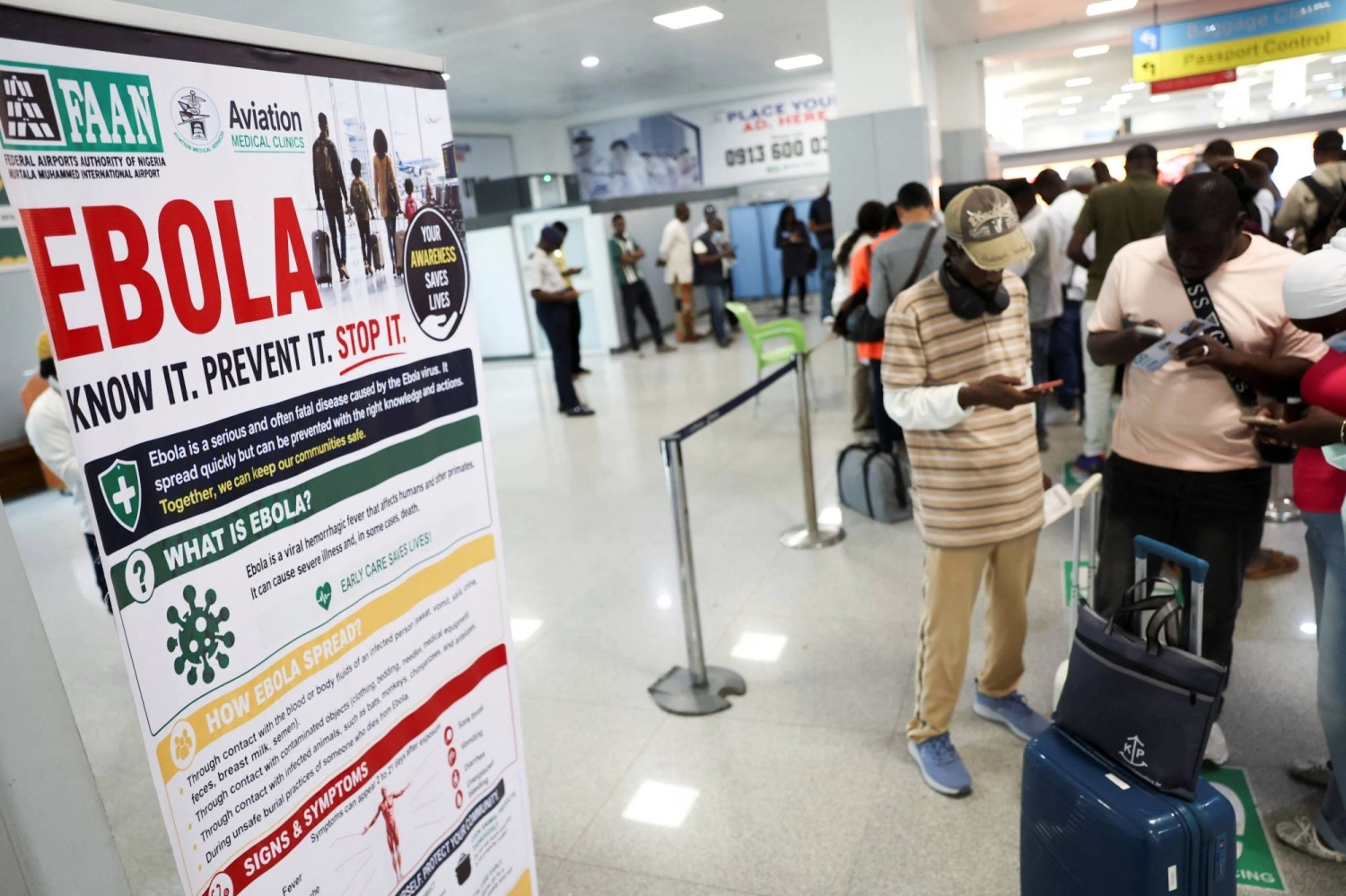
The Federal Government has directed ministries, government agencies, health institutions and other relevant stakeholders to strictly enforce approved Ebola Virus Disease (EVD) entry protocols at all designated points of entry into Nigeria, intensifying efforts to prevent cross-border transmission and protect public health.
The directive follows concerns raised by the Office of the National Security Adviser (ONSA) over reported cases of non-compliance with existing entry procedures.
In a press release dated October 23, 2026, the Federal Ministry of Health and Social Welfare said the order was intended to ensure consistent enforcement of approved health screening measures and strengthen Nigeria’s preparedness against potential public health threats.
The directive comes amid heightened vigilance following the confirmation of an Ebola case in Nigeria, prompting renewed attention to border surveillance, early detection and coordination among government agencies.
Under the new order, relevant institutions must ensure that all prescribed screening procedures, health declaration requirements, surveillance measures and other applicable entry protocols are properly implemented.
The government has also called for stronger accountability, improved communication between responsible agencies and prompt reporting of any actual or attempted breaches.
The measures underscore the Federal Government’s efforts to close gaps in the implementation of existing health safeguards as authorities work to limit the risk of further transmission.
You might want to read this: WHO Sounds Alarm as Ebola Spreads to Nigeria and Kenya, With Nearly 4,700 Deaths Reported in DR Congo
FG Issues Circular Ordering Strict Ebola Entry Protocol Compliance
The Federal Ministry of Health and Social Welfare conveyed the directive through Circular No. PS/FMOH/08/VIII/48, dated October 22, 2026.
The circular was signed by the ministry’s Permanent Secretary, Daju Kachollom, on behalf of the Coordinating Minister of Health and Social Welfare, Professor Muhammad Ali Pate.
According to the ministry, the directive requires all relevant institutions to comply fully with the approved Ebola entry protocols at designated points of entry into the country.
The order covers ministries, government agencies, health institutions and other stakeholders responsible for implementing or supporting the measures.
The government said the objective was to ensure that entry procedures were enforced consistently, effectively and without discrimination.
The directive also makes clear that compliance is not limited to carrying out screening activities. Relevant institutions must ensure that the prescribed procedures are understood, implemented and monitored by the personnel responsible for enforcing them.
The ministry has instructed the immediate and widespread circulation of the circular to relevant departments, units, field offices and personnel to ensure that all concerned parties understand their responsibilities.
This approach is intended to address potential implementation gaps and ensure that the government’s approved health safeguards are applied across designated entry points.
Government Strengthens Ebola Screening and Health Surveillance
A central component of the directive is strict adherence to established screening and surveillance requirements.
Relevant institutions have been instructed to ensure compliance with prescribed health screening procedures, health declarations and other applicable entry measures.
These procedures form part of the broader public health response designed to help authorities identify potential health risks among travellers and respond promptly when suspected cases are detected.
Effective surveillance is particularly important during an infectious disease outbreak because early identification can help health authorities initiate investigations, assess possible exposure and implement appropriate public health measures.
The directive also highlights the need for consistent implementation across designated points of entry, rather than relying on individual agencies or personnel to determine how procedures should be applied.
The government’s emphasis on uniform enforcement is intended to reduce the possibility of gaps that could undermine surveillance efforts.
However, screening measures work most effectively when they are supported by trained personnel, clear reporting procedures, adequate resources and coordination between the agencies involved.
The ministry’s directive addresses these broader operational requirements by calling for stronger communication, information-sharing and monitoring arrangements.
ONSA Raises Concerns Over Non-Compliance
The latest government order follows concerns raised by the Office of the National Security Adviser about reported failures to comply with approved entry protocols.
Although the ministry’s statement did not detail the specific incidents that prompted the concerns, the directive makes clear that the government expects responsible institutions to address implementation shortcomings.
Non-compliance with established procedures can weaken the effectiveness of public health safeguards, particularly when agencies depend on one another to identify, report and respond to potential threats.
The directive therefore calls for closer coordination among the institutions responsible for implementing the measures.
Improved information-sharing can help relevant agencies identify problems, communicate emerging risks and ensure that appropriate action is taken without unnecessary delays.
The government is also seeking to strengthen oversight so that failures to follow approved procedures can be identified and addressed through established channels.
By linking enforcement with monitoring and reporting, the ministry aims to reinforce institutional responsibility for implementing the country’s health protection measures.
Agencies Ordered to Report Protocol Breaches Immediately
The Federal Government has introduced additional accountability requirements as part of the directive.
Concerned institutions must promptly document and report actual or attempted breaches of the approved entry protocols through established reporting channels.
This requirement is intended to ensure that violations are not overlooked and that responsible authorities receive the information needed to investigate and respond to identified shortcomings.
Institutions have also been directed to provide the necessary support to enforcement officials carrying out their duties.
In addition, they must establish effective monitoring mechanisms to identify lapses in implementation and take steps to address them.
These requirements place responsibility on agencies not only to enforce the protocols but also to maintain records, report problems and support corrective action.
The ministry further stressed that personnel responsible for enforcing the measures must be allowed to perform their duties professionally and without undue interference.
The instruction highlights the importance of protecting the operational independence of enforcement personnel within the scope of their assigned responsibilities.
Effective implementation will depend on whether institutions follow these requirements consistently and respond promptly when breaches or other weaknesses are identified.
FG Calls for Stronger Coordination Among Health and Security Agencies
The directive places considerable emphasis on cooperation between institutions responsible for public health, border management and national security.
The ministry said stronger coordination, communication and information-sharing were necessary to improve surveillance, support early detection and ensure timely responses to potential threats.
Cross-agency cooperation is important because managing infectious disease risks at international entry points involves several connected responsibilities.
Health personnel may be responsible for screening and assessing travellers, while other agencies support border procedures, operational coordination and enforcement.
When these functions are not properly coordinated, delays or gaps in information can affect the ability of authorities to respond effectively.
The government’s directive seeks to address this challenge by requiring relevant institutions to work together and ensure that approved procedures are consistently followed.
It also calls for the circular to be distributed widely among the personnel responsible for implementation, reducing the risk that frontline officers or individual departments remain unaware of their obligations.
The ministry urged all affected institutions to treat the directive as a priority.
Why the Directive Matters Following Nigeria’s Ebola Case
The order comes amid heightened public health vigilance following Nigeria’s confirmation of an Ebola case.
The development has increased the importance of surveillance, early detection and preventive measures designed to reduce the risk of further transmission.
Ebola Virus Disease is a serious illness that requires prompt medical assessment and appropriate infection prevention and control measures. Depending on the circumstances, public health authorities may need to investigate possible exposure, identify contacts and monitor individuals who may have been exposed.
Entry screening is one component of a broader response. It must operate alongside clinical assessment, surveillance, timely reporting and coordination between relevant health authorities.
The government’s latest directive focuses on ensuring that the approved procedures at designated entry points are implemented as required.
It does not, by itself, establish that further transmission has occurred. Rather, it reinforces the need for vigilance and consistent enforcement while authorities respond to the identified public health risk.
For travellers, the practical implications will depend on the specific screening and health declaration requirements in force at the relevant point of entry.
The ministry’s statement does not provide a detailed list of new traveller requirements, so individuals should follow current official instructions from the responsible authorities.
Government Says Compliance Is Essential to Protect Public Health
The Federal Ministry of Health and Social Welfare has reiterated that effective implementation, inter-agency coordination and accountability are essential to strengthening Nigeria’s preparedness against cross-border health threats.
The directive seeks to ensure that approved entry procedures are applied consistently, breaches are reported promptly and enforcement personnel receive the support needed to carry out their responsibilities.
Its success will depend on the readiness of the relevant institutions, the effectiveness of monitoring arrangements and the speed with which identified shortcomings are corrected.
The government has therefore called for immediate action to circulate the circular and ensure that all concerned departments, field offices and personnel understand their obligations.
As Nigeria maintains heightened vigilance following its confirmed Ebola case, the enforcement of entry protocols remains part of the country’s wider effort to protect public health and reduce the risk of further transmission.
The central message of the directive is clear: all relevant institutions are expected to enforce the approved Ebola entry protocols consistently, report breaches without delay and work together to strengthen the country’s public health preparedness.