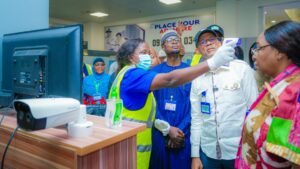
The Nigeria Centre for Disease Control and Prevention (NCDC) has explained why it introduced a ₦100,000 weekly payment for individuals placed under quarantine following an imported Ebola case, revealing that the emergency financial support was never included in the agency’s budget.
According to the NCDC, the decision was driven by humanitarian concerns, financial pressures faced by affected individuals and the need to ensure compliance with public health measures. The agency said the payments were intended to ease the burden on people whose daily routines, businesses and family responsibilities had been disrupted by quarantine requirements.
Speaking during an interview on Channels Television’s Politics Today on Monday night, NCDC Director-General Dr Jide Idris said the agency introduced the temporary intervention after recognising the difficulties confronting people required to remain in quarantine.
Idris explained that the affected individuals had not anticipated being separated from their normal lives and that the government had a responsibility to provide essential support while they complied with public health precautions.
His remarks shed light on the circumstances behind the controversial-looking expenditure, highlighting the challenges health authorities face when emergency disease-control measures impose unexpected financial costs on ordinary citizens.
You might want to read this: NCDC Approves ₦100,000 Weekly Payment for Ebola Contacts in Abuja — Here’s Why the Emergency Support Matters
Why the NCDC Introduced the ₦100,000 Weekly Payment
Idris acknowledged that the financial assistance was an unplanned expense, stressing that the agency had not allocated funds for such payments in its budget.
However, he said the circumstances surrounding the quarantine arrangement made immediate intervention necessary.
“That was not budgeted for. Those people who were in the quarantine area were people who never planned to be there. We took them out of their comfort zones; we put them there for public health reasons, so we are responsible for their feeding, accommodation,” he said.
The NCDC chief explained that quarantine measures, although necessary to protect public health, can place significant pressure on individuals who suddenly find themselves unable to carry out their usual activities.
For those affected, the disruption extended beyond being away from home. Some had families depending on them financially, while others were concerned about losing income because they could not attend to their businesses.
The agency said these concerns informed its decision to provide temporary financial relief while the individuals remained under public health monitoring.
Rather than allowing the financial difficulties to undermine compliance with quarantine requirements, the NCDC opted to help cover immediate needs and reduce the likelihood of affected individuals leaving the facility prematurely.
Families and Businesses Among the Major Concerns
One of the issues raised by people in quarantine was the difficulty of meeting family obligations while being confined to a designated facility.
Idris said some individuals expressed concern about leaving their families without the support they would ordinarily provide. Others worried about the financial losses that could accumulate while they remained away from their businesses.
“Some of them said they had families at home they need to take care of. But one or two said they had businesses. By staying here again, you’re going to lose a lot of money again,” he said.
These concerns presented health officials with a difficult balancing act: protecting the wider population while recognising the economic realities facing people affected by emergency disease-control measures.
For individuals who earn their income through daily business activities, even a temporary interruption can create financial difficulties. Similarly, people responsible for supporting children, spouses or other relatives may struggle to meet household expenses when they cannot work as usual.
The NCDC’s intervention was intended to address some of these immediate pressures.
By offering ₦100,000 per person each week, the agency sought to provide additional assistance during the quarantine period, complementing its responsibility to arrange basic necessities such as accommodation and food.
However, Idris emphasised that the payments were introduced in response to the specific circumstances of the emergency rather than as part of an established financial support programme.
Why Allowing People to Leave Quarantine Could Pose a Public Health Risk
Beyond the financial difficulties experienced by those in quarantine, the NCDC said it was concerned about the possible consequences of individuals leaving the facility before their health status had been conclusively established.
Idris explained that allowing people to leave prematurely could create a public health challenge because health officials could not be certain who might subsequently test positive or develop symptoms.
“If you allow them to leave the place, it’s a public health issue because you don’t know whether they will turn positive or who is ill,” he said.
His comments highlighted the importance of maintaining appropriate monitoring arrangements during an infectious disease response.
When individuals are placed under quarantine because of a potential exposure, health authorities may need to monitor them for a specified period to determine whether they develop signs of infection. Maintaining contact with those individuals and ensuring they comply with public health guidance can be essential to managing potential risks.
Financial concerns, however, can complicate those efforts. People who cannot afford to remain away from their jobs or families may become less willing to comply with restrictions, particularly when they face mounting expenses.
The NCDC’s decision to provide financial assistance was therefore intended not only to relieve hardship but also to encourage those affected to remain at the facility while health officials continued their monitoring activities.
The intervention reflects a broader challenge in public health emergencies: disease-control measures are more difficult to sustain when they impose substantial personal and economic costs on the people required to follow them.
NCDC Says the Payments Are Temporary
While defending the decision, Idris made it clear that the weekly stipend should not be interpreted as a permanent policy or a routine expense of the agency.
He said the NCDC introduced the payments on compassionate grounds after considering the circumstances of those placed in quarantine.
“On compassionate grounds, we said, okay, let’s see how best we can support them. It’s a temporary thing because it’s not something we’ve done,” he explained.
The clarification suggests that the agency viewed the intervention as an exceptional response to an immediate need rather than a standard arrangement that would automatically apply to future quarantine situations.
Because the payments were not included in the budget, the decision also raises questions about how public health agencies respond financially when emergencies create needs that were not anticipated during the normal budgeting process.
Disease outbreaks can require rapid decisions involving accommodation, food, transportation, medical monitoring and other essential services. In situations where affected individuals cannot reasonably cover these expenses themselves, authorities may have to consider additional support to maintain effective public health measures.
In this case, the NCDC said its priority was to prevent financial hardship from interfering with the management of the quarantine process.
Idris Clarifies the Role of State Governments
The NCDC director-general also addressed the question of which level of government should ordinarily be responsible for providing quarantine facilities and related support.
According to Idris, such arrangements generally fall within the responsibilities of state governments rather than the NCDC itself.
He said the agency stepped in because the expected support arrangements had not materialised, leaving the authorities with an immediate situation that required attention.
“In this kind of thing, the quarantine facility, there are the responsibilities of each state government, not any NCDC. But because this is not forthcoming, to avoid this one, just to temper this thing, we decided to step in,” he said.
His explanation suggests that the agency’s intervention was prompted by the need to address an urgent gap in the arrangements for people placed under quarantine.
Rather than allow the situation to deteriorate while the affected individuals struggled with the costs of staying at the facility, the NCDC decided to provide assistance.
The remarks also underscore the importance of coordination between federal and state authorities during public health emergencies, particularly when responsibilities for facilities, logistics and financial support overlap.
Effective coordination can help ensure that people affected by quarantine measures receive the assistance they need without unnecessary delays or confusion over which authority should provide it.
Emergency Support Following an Imported Ebola Case
The ₦100,000 weekly payment was announced after an imported Ebola case was confirmed in the Federal Capital Territory, prompting the placement of affected contacts under isolation or quarantine arrangements.
The intervention followed complaints from individuals about the expenses associated with remaining at the designated facility while complying with public health monitoring requirements.
At a press briefing on Sunday, Idris said the agency was already covering accommodation and feeding costs for those affected. However, some individuals had also requested additional money to help them continue supporting their families during the period.
“We are paying for their accommodation; we are paying for their feeding. Some of them are asking for a stipend to maintain their families,” he said.
The comments clarified that the financial support was introduced in response to practical difficulties experienced by people whose movements and daily activities had been restricted for public health reasons.
The agency’s approach was to provide basic necessities while offering additional temporary assistance to help address concerns about lost income and family responsibilities.
Although the payments were not originally budgeted for, Idris maintained that the intervention was necessary under the circumstances.
What the Decision Means for Public Health Emergency Management
The NCDC’s explanation highlights the financial and logistical complications that can accompany an infectious disease response.
While quarantine and monitoring measures are intended to protect public health, their effectiveness can depend partly on whether affected individuals can comply without facing overwhelming personal hardship.
Providing accommodation and food addresses some immediate needs, but it may not fully resolve the financial difficulties experienced by people who are unable to work or manage their businesses during the quarantine period.
In such circumstances, temporary assistance may help reduce the pressure on affected individuals and support adherence to public health requirements.
At the same time, the NCDC’s admission that the payments were not budgeted for draws attention to the need for emergency preparedness, clear institutional responsibilities and effective coordination between levels of government.
For now, the agency has described the ₦100,000 weekly stipend as a temporary, compassionate intervention linked to the circumstances surrounding the imported Ebola case.
Its stated objective is to help affected individuals meet immediate needs, remain in quarantine and cooperate with public health monitoring while health authorities manage the potential risks associated with the exposure.
Ultimately, the decision illustrates the delicate balance authorities must strike during health emergencies: safeguarding the wider population while ensuring that people asked to comply with necessary restrictions are not left to shoulder the resulting financial burden alone.