
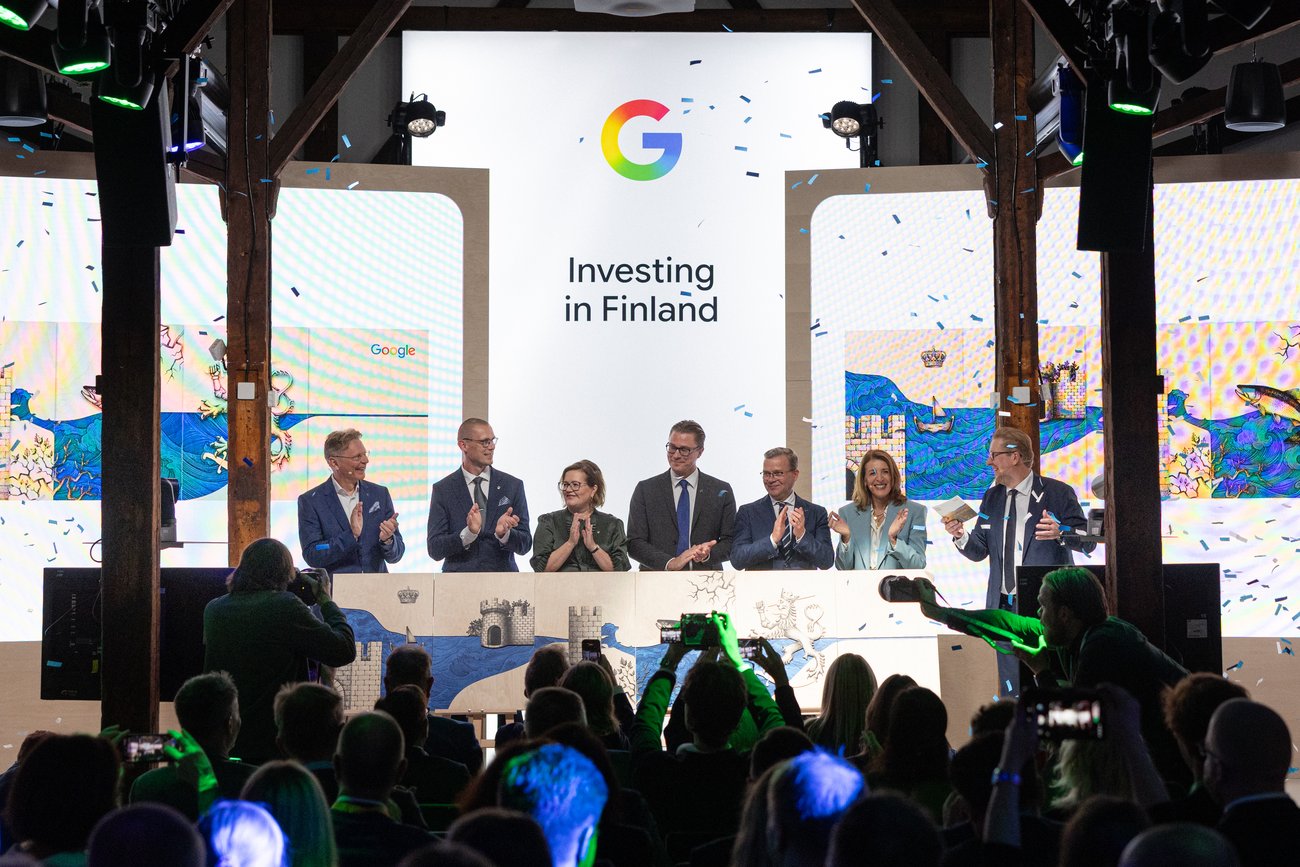
Google is preparing its biggest single investment in Europe, committing around $15.1 billion to Finland’s artificial intelligence and digital infrastructure over the next two years as demand for computing capacity continues to surge.
The investment goes well beyond expanding data-centre capacity.
Google plans to channel funding into data centres, electricity-grid upgrades, clean energy, battery storage and other infrastructure, reflecting the growing amount of power and computing capacity required to support modern AI services.
The move also highlights Finland’s increasing importance in Europe’s data-centre industry.
With its relatively cool climate and access to low-carbon electricity, Finland offers conditions that can help hyperscale technology companies operate energy-intensive computing infrastructure while addressing growing scrutiny over the environmental footprint of AI.
Google Expands Its Finnish Data-Centre Footprint
At the centre of Google’s investment is its long-established Hamina data-centre campus.
Google has operated the site for around 15 years after converting a former paper mill into a major data-centre facility.
The company says it has invested approximately $4 billion in Hamina and related infrastructure since acquiring the site in 2009.
The facility has also become notable for its approach to cooling and heat management.
Rather than relying entirely on conventional cooling systems, the Hamina campus uses seawater for cooling, helping reduce the amount of freshwater required by the facility.
Google has also developed an offsite heat-recovery system designed to redirect waste heat from the data centre towards local properties.
Those measures reflect a broader shift among data-centre operators toward finding ways to reduce energy and water consumption while improving the overall efficiency of large computing facilities.
Why Finland Is Attractive for AI Infrastructure
The country’s geography and energy system are important factors behind Google’s expansion.
Finland’s cool climate can reduce the energy required to manage the heat generated by high-performance computing equipment.
At the same time, access to relatively low-carbon electricity provides an important advantage for companies trying to increase computing capacity while limiting emissions.
That combination is becoming increasingly valuable as AI systems require enormous amounts of electricity to train and operate.
For hyperscalers such as Google, the location of new data centres is therefore no longer simply a question of available land and internet connectivity.
Energy availability, grid capacity, cooling requirements and environmental considerations are becoming increasingly important parts of the investment decision.
Google Is Putting Money Into Finland’s Power Infrastructure
The company’s investment plans extend beyond its own facilities.
Google has signed a 22-year power-purchase agreement supporting the extension of Finland’s Loviisa nuclear power plant.
The company is also planning additional onshore wind capacity and a 94MW battery storage facility.
The combination is intended to help provide the reliable electricity needed to support growing data-centre operations while increasing the availability of lower-carbon energy.
Battery storage can also help address one of the fundamental challenges of renewable power: electricity generation does not always coincide with periods of peak demand.
For data-centre operators, having access to dependable electricity is particularly important because computing facilities are designed to operate continuously.
AI Growth Is Increasing Pressure on Energy Systems
Google’s Finnish investment reflects a much broader trend across the technology industry.
The rapid expansion of generative AI has created a huge appetite for computing power.
Training advanced AI models requires large clusters of specialised processors, while serving millions of users also requires enormous amounts of computing capacity.
That means the growth of AI is increasingly linked to the availability of electricity.
Technology companies are consequently investing not only in servers and data centres but also in long-term energy contracts, renewable generation, grid infrastructure and storage.
Google’s Finland strategy illustrates this changing relationship between digital infrastructure and the physical energy system.
Thousands of Jobs Could Be Created
The investment could also have a significant economic impact beyond Google’s technology operations.
The company expects as many as 37,000 jobs to become available during the 2027–2028 construction phase associated with its Finnish expansion.
Local communities in Hamina, Kajaani, Muhos and Vaala are also expected to benefit from a combined $36 million in funding supporting education and skills development.
That investment is intended to help communities build the skills needed to participate in the economic opportunities created by expanding digital infrastructure.
For regions hosting large technology facilities, workforce development can be particularly important because data-centre construction requires a broad range of expertise, from engineering and construction to electrical systems and specialised technical services.
Google Plans Wider Environmental and Community Projects
The company’s plans also include environmental and community initiatives outside its core data-centre operations.
Google Global Infrastructure Vice President Bikash Koley highlighted projects involving native forest and wetland restoration, along with investments in public recreational infrastructure.
These initiatives include accessible trails, public saunas and fishing piers.
The approach reflects an effort to connect major technology investments with the communities and environments surrounding Google’s facilities.
For Finland, where nature and access to outdoor recreation are important parts of local life, such projects can form part of the broader community impact associated with large infrastructure developments.
Hamina Remains Central to Google’s Finnish Strategy
The history of Google’s Hamina facility helps explain why Finland has become an important location for the company.
The site was originally a paper mill before Google acquired and transformed it into a data centre in 2009.
Over roughly 15 years, the company says its investment in Hamina and related infrastructure has reached approximately $4 billion.
The new $15.1 billion commitment therefore represents a dramatic expansion of Google’s financial presence in Finland.
It also signals that the company expects demand for cloud computing, AI and digital services to continue growing rapidly across Europe.
What the Investment Means for Finland
Google’s expansion could have implications well beyond the company’s own operations.
Large-scale data-centre investments can stimulate construction activity, create demand for technical skills, support local suppliers and encourage investment in energy infrastructure.
The accompanying spending on education and workforce development could also help communities prepare for the changing skills requirements associated with the digital economy.
At the same time, the scale of the investment highlights the infrastructure demands created by AI.
As more companies deploy advanced AI services, countries seeking to attract technology investment will increasingly need sufficient electricity generation, transmission capacity, reliable networks and suitable locations for data centres.
Finland Positions Itself for the Next AI Infrastructure Wave
Google’s planned $15.1 billion investment represents a major bet on Finland as a European hub for AI and digital infrastructure.
The company’s strategy combines data-centre expansion with long-term energy procurement, renewable power, nuclear generation, battery storage and community investment.
That combination is significant because the next phase of the AI boom will depend on much more than software.
It will require vast amounts of physical infrastructure—and enormous quantities of reliable electricity.
For Finland, Google’s investment demonstrates how its climate, energy resources and existing digital infrastructure can help attract some of the world’s largest technology companies.
And as AI demand continues to grow, the country could find itself playing an increasingly important role in powering Europe’s digital economy.