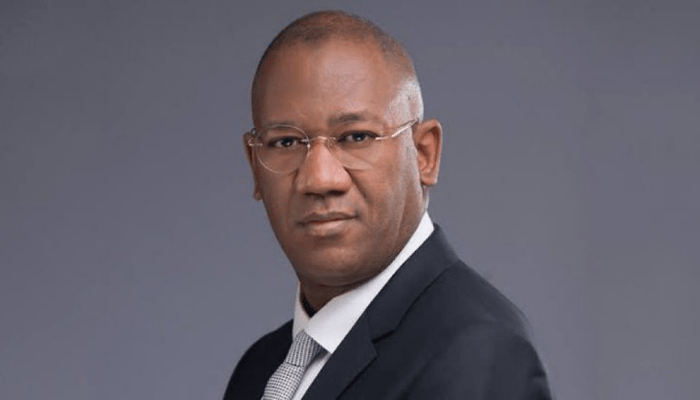
Yusuf Datti Baba-Ahmed has delivered a blunt assessment of Nigeria’s 2027 presidential race: none of the leading challengers, he argues, represents the break with the political establishment that the country needs.
Baba-Ahmed, who served as Peter Obi’s running mate in the 2023 presidential election, made the remarks while appearing on the MicOn Podcast.
President Bola Tinubu is seeking re-election under the All Progressives Congress (APC). Among the politicians positioning themselves against him are Peter Obi and former Vice-President Atiku Abubakar.
But Baba-Ahmed says Nigerians should not expect a fundamental transformation simply by replacing one major political figure with another.
“None of them will improve Nigeria”
Baba-Ahmed urged Tinubu to prepare to leave office rather than assume that any of his principal opponents would necessarily produce better results.
His argument is that several prominent contenders have themselves been connected to the political establishment they now seek to challenge.
He specifically pointed to Obi’s previous membership of the Peoples Democratic Party (PDP), arguing that even his former running mate has been part of the existing political system.
For Baba-Ahmed, the distinction matters because his political message is built around the idea of creating a “new Nigeria” rather than simply changing the occupants of power.
Why Baba-Ahmed says he is different
Baba-Ahmed presented his own political history as evidence that he stands apart from the established ruling-party structure.
His central question was straightforward: Which major political figure has never belonged to a ruling party?
He argued that he qualifies because, although he once belonged to the Congress for Progressive Change (CPC), the party was an opposition movement at the time.
The CPC later became part of the political merger that produced the APC. Baba-Ahmed stressed that he left before that merger and said he never held an APC membership card.
That history, he suggested, separates him from politicians who have previously operated within Nigeria’s governing-party system.
He also challenges Atiku’s focus on Tinubu
Baba-Ahmed also turned his attention to the continuing controversy over Tinubu’s records in the United States.
He questioned why Atiku has made the issue a prominent part of his criticism of the president, arguing that Atiku had not previously pursued the matter with the same intensity.
For Baba-Ahmed, the dispute illustrates a broader problem: political figures who criticize one another today may have been connected to the same political establishment at different points in their careers.
A direct message to Tinubu
Despite his criticism of Tinubu’s opponents, Baba-Ahmed did not argue that the president should remain in office.
Instead, he said Tinubu has already had the opportunity to govern and should now prepare to leave power.
Baba-Ahmed also accused the president of damaging Nigeria’s political-party system during his first term, alleging that Tinubu’s administration had weakened political parties rather than strengthened democratic competition.
His conclusion was uncompromising: Tinubu should make way for a different political direction—but, in Baba-Ahmed’s view, the answer cannot simply be another familiar face from the establishment.
And that leaves the bigger question hanging over the 2027 contest: if none of the major contenders represents the “new Nigeria” Baba-Ahmed describes, who does?