A school day in eastern Democratic Republic of Congo ended in tragedy when a fire sent terrified pupils scrambling for their lives, leaving at least 26 children dead.
The blaze erupted on Thursday at Ujamaa Primary School in Bukavu while classes were in session, triggering a stampede as pupils desperately tried to escape the burning building.
According to inspectors from the Congolese education ministry and information from UNICEF, 25 other children were injured.
Panic Turns Deadly
Teacher Simon Kasamira, who was being treated at a clinic after the incident, described scenes of chaos as pupils began screaming and rushing toward exits.
Some children attempted to escape from upper floors, while others crowded the doors in an effort to get outside.
Kasamira told AFP that parents soon arrived at the school searching for their children. By then, much of the building—constructed largely from wooden planks—was engulfed in flames.
The rush to safety created another danger.
Education ministry inspectors reported that some pupils fell and were trampled in the stampede. Others trapped inside reportedly died from asphyxiation.
The ministry also said fires were reported at three separate locations roughly 500 metres apart, adding another layer of uncertainty to the disaster.
Hundreds of Homes Also Destroyed
The destruction extended beyond the school.
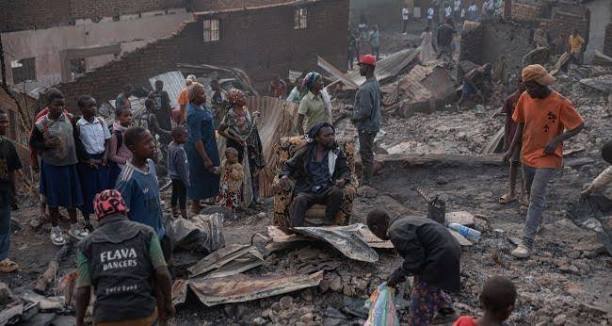
Local officials and education authorities said hundreds of homes were destroyed in the fires.
UNICEF confirmed the deaths and injuries among the children while highlighting the scale of the emergency facing affected families.
The tragedy has left communities across Bukavu mourning as authorities seek answers about what caused the fires and why the disaster escalated so quickly.
Three Days of Mourning Declared
The M23 armed group, which has controlled Bukavu since February 2025, announced three days of mourning following the deaths.
M23 said the victims included 20 girls and six boys, with funerals expected to take place on Saturday.
Authorities in Kinshasa and M23 have both called for investigations into the cause of the blaze.
Why Bukavu Is Vulnerable to Fires
The disaster has also renewed concerns about fire safety in Bukavu.
The South Kivu provincial capital sits on the shores of Lake Kivu and has a history of deadly urban fires. Many structures are densely packed and built with wood or other highly combustible materials, while firefighting resources remain limited.
Experts have also pointed to:
- Inadequate firefighting infrastructure
- Densely packed buildings
- Unsafe or illegal electricity connections
- Limited emergency response capacity
Those vulnerabilities can allow relatively contained fires to become major disasters.
A separate fire in Bukavu in October reportedly killed 14 people, most of them children.
Another deadly blaze struck a wedding ceremony in Kinshasa the previous week, claiming 12 lives.
Calls for Action
The latest tragedy has brought renewed grief to a country already struggling with years of conflict and instability, particularly in the east, where numerous armed groups have fought for territory.
Nobel Peace Prize laureate Denis Mukwege called on authorities to respond urgently and provide humanitarian assistance to families affected by the disaster.
His message carried a broader warning: the deaths of the children must not become another statistic that is forgotten once the immediate mourning ends.
For families in Bukavu, Thursday’s fire has already changed everything.
Twenty-six children went to school and never came home. Now, authorities face the urgent task of finding out why.