
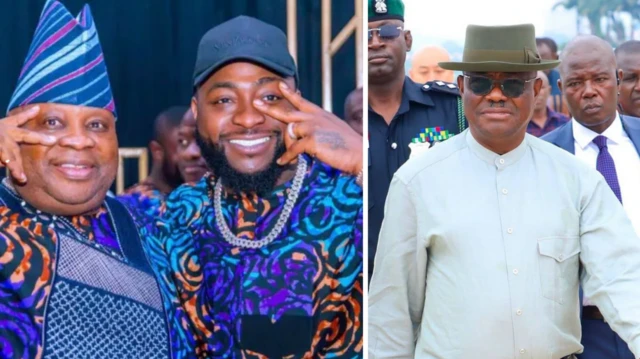
Nyesom Wike says a new political alignment is taking shape ahead of 2027. Governor Ademola Adeleke’s camp says it is not an APC defection.
The conflicting interpretations followed Adeleke’s recent meeting with President Bola Ahmed Tinubu in Abuja, which Wike described as part of efforts to assemble a broader “Rainbow Coalition” behind the President’s 2027 ambition.
Wike spoke on Friday while inspecting the ongoing renovation of the IBB International Golf and Country Club in Abuja.
Wike: Adeleke Is Supporting Tinubu
The FCT minister argued that Adeleke’s current political platform should not be mistaken for opposition to Tinubu.
He said Adeleke had faced internal difficulties within the Peoples Democratic Party (PDP) and therefore contested on the Accord Party platform, but remained connected to the PDP political structure.
Wike also said Adeleke was now supporting Tinubu’s 2027 bid, describing the emerging alliance as a coalition that extends beyond traditional party boundaries.
According to the minister, the political landscape could change significantly in the coming weeks as more politicians align themselves with the President.
He also dismissed claims that opposition figures had played a decisive role in Adeleke’s electoral success, arguing that some politicians were attempting to take credit for a victory they did not build.
You might want to read this: Gunmen Attack Adeleke’s Convoy After Palace Visit in Osogbo
Adeleke’s Camp: No APC Defection
Adeleke’s campaign spokesman, Pelumi Olajengbesi, rejected speculation that the governor’s meeting with Tinubu was a step towards joining the APC.
He described the encounter as a courtesy visit consistent with Nigeria’s federal structure.
Olajengbesi said Adeleke recognises the President as head of the federal government and believes maintaining a working relationship with Abuja is necessary to advance Osun’s interests.
“Governor Ademola Adeleke is not joining APC.”
He nevertheless said the governor would cooperate with the Federal Government on matters affecting both Osun State and Nigeria.
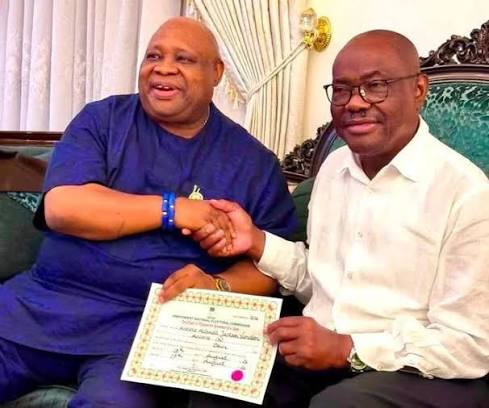
Why Adeleke Met Tinubu
According to Olajengbesi, the meeting served several purposes beyond party politics.
The governor reportedly:
- Congratulated Tinubu on allowing democratic institutions to operate during the governorship election.
- Thanked the President for an environment in which Osun voters could express their preferences.
- Called for stronger democratic institutions.
- Raised the need to prevent political actors from manipulating democratic structures.
- Sought reconciliation following a tense election campaign.
Olajengbesi said the visit was intended to represent the interests of Osun residents rather than signal a change in Adeleke’s political affiliation.
Wike Takes Aim at Opposition Figures
Wike also questioned whether Nigeria currently has a clearly defined leading opposition force.
He pointed to the PDP’s internal crisis and argued that the party had struggled to maintain the cohesion expected of a dominant opposition organisation.
The minister said his political strategy was to keep rivals such as Atiku Abubakar and Peter Obi under pressure as alliances evolve ahead of 2027.
He added that he was unconcerned about how opposition figures viewed the latest political developments.
Adeleke Camp Rejects ADC Credit
Olajengbesi also pushed back against claims that the African Democratic Congress (ADC) played a significant role in Adeleke’s victory.
He said Adeleke’s campaign did not seek an alliance with another political party and maintained its own organisational structure throughout the election.
The spokesman attributed the victory primarily to Osun voters and the governor’s record in areas such as infrastructure and public welfare.
Election Violence Allegations Resurface
While the political debate centres on possible alliances, a separate controversy is putting the conduct of the Osun election under renewed scrutiny.
The Coalition of Public Interest Lawyers and Advocates (COPA) has given the Independent National Electoral Commission (INEC) and the Nigeria Police Force seven days to investigate allegations involving inflammatory political statements, voter intimidation and election-related killings.
COPA National Coordinator Ajibola Bello said the conclusion of an election should not prevent authorities from investigating potential criminal offences connected to the campaign or polling period.
The coalition said it had examined videos allegedly showing political figures making threatening statements against opponents and, in some cases, allegedly encouraging violence.
Lawyers Demand Investigation, Not Presumed Guilt
COPA raised particular concerns about alleged statements attributed to political figures connected to the election.
Among the allegations cited were:
- A video purportedly showing an APC campaign figure making threatening remarks against political opponents.
- Another alleged recording involving a serving senator and calls for violence against Accord Party members.
- A video allegedly involving Francis Eniade, in which voters were purportedly warned against participating in the election based on political affiliation.
Bello linked some of these allegations to subsequent reports of violence in communities including Esa-Oke and Ilesa, where deaths were reported.
But he stressed an important distinction: the coalition was not declaring anyone guilty.
Instead, it wants investigators to authenticate the recordings, identify those involved, interview witnesses and determine whether the evidence supports criminal charges.
COPA Challenges INEC and Police
The lawyers also invoked Section 148(2) of the Electoral Act 2026, arguing that INEC has statutory authority to pursue prosecution of electoral offences through its legal officers or appointed legal practitioners.
COPA therefore urged the electoral commission not to leave the entire burden of enforcement to the police.
Its demands include:
- Authenticate the disputed videos.
- Identify and question the people involved.
- Investigate witnesses and reported victims.
- Establish whether the alleged statements are connected to subsequent offences.
- Forward cases for prosecution where the evidence meets the legal threshold.
Bello said authorities must demonstrate that political influence does not determine who gets investigated or prosecuted.
The Bigger 2027 Picture
Two separate narratives are now emerging from the aftermath of the Osun election.
Wike sees Adeleke’s engagement with Tinubu as evidence of a broader coalition taking shape for 2027. Adeleke’s camp sees it as normal cooperation between a state governor and the Federal Government—and insists an APC defection is not on the table.
At the same time, demands for investigations into alleged electoral violence could keep the political temperature high long after the ballots have been counted.
For now, the key question is not simply who is moving into which political camp.
It is whether these emerging alliances—and the response to allegations arising from the election—will shape Nigeria’s political landscape well before the 2027 campaign reaches its peak.