
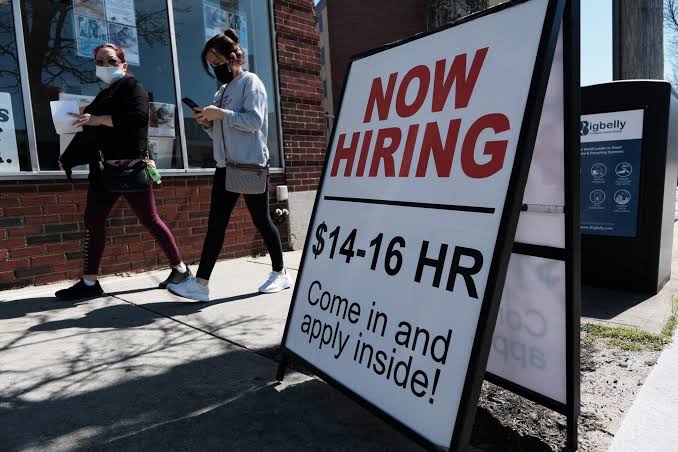
US employers added 162,000 nonfarm jobs in August. That was far stronger than the recent pace—and markets responded.
Total US nonfarm payroll employment increased by 162,000 in August 2026, according to the U.S. Bureau of Labor Statistics.
The gain was substantially above the 31,000 average monthly increase recorded over the previous 12 months.
The unemployment rate, meanwhile, held at 4.1%.
The stronger payroll reading also coincided with a shift in market expectations for the Federal Reserve’s next policy meeting. Rate futures subsequently implied about a 62% probability of a rate increase on September 15–16, compared with roughly 55% before the employment report, according to CU Today, citing Reuters.
That probability reflects market pricing. It is not a decision by the Federal Reserve.
August payroll growth far outpaced the previous year
The August employment increase stood well above the average monthly gain reported for the preceding 12 months.
According to the BLS, nonfarm payroll employment rose by 162,000 during the month, compared with the 31,000 average monthly gain over the prior year.
The unemployment rate did not move alongside the payroll increase. It remained at 4.1% in August.
These are separate measures of the labor market. An unchanged unemployment rate does not reduce or otherwise change the reported 162,000 increase in payroll employment.
Together, the figures provide two different signals about labor-market conditions heading into the Federal Reserve’s September meeting.
Food services and education accounted for major gains
Some of August’s largest employment increases came from food services and drinking places, which added 59,000 jobs.
Local government education employment also increased, adding 42,000 positions.
Those gains accounted for a substantial portion of the month’s overall increase.
Other parts of the labor market moved in the opposite direction. Information employment fell by 23,000, partially offsetting gains recorded elsewhere.
Average hourly earnings rose to $37.75
Wages also increased during August.
Average hourly earnings for employees on private nonfarm payrolls rose 10 cents, or 0.3%, to $37.75, according to the BLS.
This wage measure covers employees on private nonfarm payrolls. It is therefore distinct from the broader nonfarm payroll employment figure, which includes government employment.
The wage data adds another element to the August labor-market report alongside employment growth and the unemployment rate.
Markets increased the odds of a September Fed hike
The employment figures also affected expectations for the Federal Reserve’s September policy meeting.
After the report, rate futures indicated approximately a 62% chance of a Federal Reserve rate increase at the September 15–16 meeting.
Before the employment data was released, that implied probability was around 55%, according to CU Today, citing Reuters.
The move shows how quickly economic data can influence interest-rate expectations.
But there is an important distinction: a futures-implied probability is not the same thing as a confirmed policy decision.
The Federal Reserve will determine its policy at the meeting.
August report at a glance
- Nonfarm payroll increase: 162,000
- Average monthly payroll gain over previous 12 months: 31,000
- Unemployment rate: 4.1%, unchanged
- Food services and drinking places: +59,000 jobs
- Local government education: +42,000 jobs
- Information employment: −23,000 jobs
- Average hourly earnings: $37.75, up 10 cents or 0.3%
- Market-implied probability of a September Fed hike: About 62%, up from roughly 55%
The August report delivered a much stronger payroll increase than the labor market’s average pace over the preceding year.
The next question is whether that strength is enough to change the Federal Reserve’s policy path.
Disclaimer: This article is provided for informational purposes only. It is not intended to constitute legal, tax, investment, financial, or other professional advice.