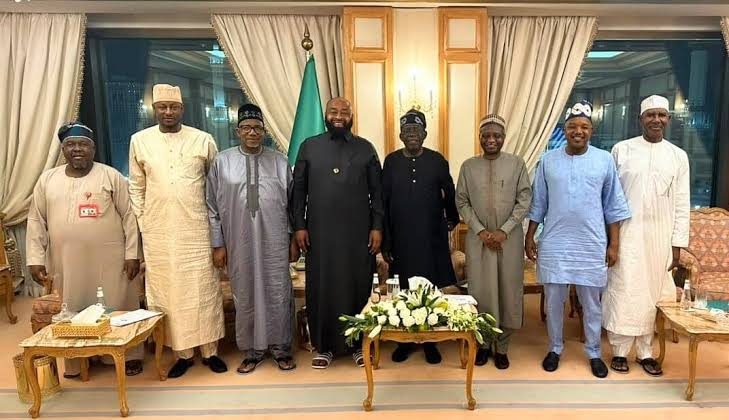
President Bola Ahmed Tinubu has revealed the personal prayer he made while performing Umrah in Makkah, Saudi Arabia, disclosing that he asked Allah for the wisdom, strength and resilience needed to continue leading Nigeria.
The President described the opportunity to pray inside the Holy Kaaba as a deeply meaningful spiritual experience, saying he believed his prayers had been answered. His remarks offered a glimpse into the religious convictions that shape his understanding of leadership and the enormous responsibilities that come with governing a country like Nigeria.
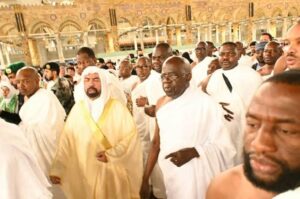
Tinubu made the revelation during his recent visit to Saudi Arabia for Umrah, an Islamic pilgrimage often referred to as the lesser Hajj. He also used the occasion to express gratitude to the Saudi leadership for granting him and members of his delegation the rare opportunity to enter the sacred structure.
You might want to read this: Tinubu Performs Umrah in Saudi Arabia, Reveals Why Pilgrimage Is Significant Ahead of 2027 Election
Tinubu Reveals What He Asked Allah for Inside the Holy Kaaba
Speaking about his experience in Makkah, Tinubu said his primary request was for divine guidance and the personal strength to serve Nigerians effectively.
According to the President, he specifically prayed for wisdom and resilience, recognising that leading a nation comes with challenges that require patience, sound judgment and determination.
“Well, I asked for wisdom and resilience to continue to serve the people. I know that prayer has been granted,” he said.
His comments suggest that the President views his position not simply as a political achievement but as a responsibility that requires divine guidance and a strong sense of purpose.
For Tinubu, the opportunity to pray inside the Kaaba was particularly significant because it allowed him to reflect on his journey to the presidency and the expectations attached to his leadership.
The Holy Kaaba, located within the Grand Mosque in Makkah, is the most sacred site in Islam. Access to its interior is highly restricted, making the opportunity granted to the Nigerian President and his delegation an exceptional religious experience.
Why Tinubu Returned to Makkah After the 2023 Presidential Election
Tinubu also recalled that his latest spiritual visit was connected to a promise he made before the 2023 presidential election.
According to him, he had previously travelled to Makkah to perform Umrah and seek Allah’s blessings ahead of the election. During that visit, he prayed for a successful pilgrimage and divine assistance as he pursued his ambition of becoming Nigeria’s President.
He explained that he had made a commitment to return to express gratitude if his prayers were answered.
Following his emergence as President, Tinubu said he returned to Saudi Arabia to fulfil that promise and offer thanksgiving.
The experience therefore carried a personal meaning beyond the religious significance of Umrah. It represented an opportunity for the President to acknowledge what he considers divine intervention in his political journey.
His remarks also highlighted the importance of gratitude and faith in his personal approach to leadership.
Details of the President’s comments were contained in a statement issued on Monday by his Special Adviser on Information and Strategy, Bayo Onanuga.
Tinubu Thanks Saudi King and Crown Prince for Rare Access to the Kaaba
During his visit, Tinubu expressed appreciation to Saudi Arabia’s leadership for making the spiritual experience possible.
He specifically thanked King Salman bin Abdulaziz Al Saud, the Custodian of the Two Holy Mosques, and Crown Prince Mohammed bin Salman for granting him and members of the Nigerian delegation permission to enter the Holy Kaaba.
The President described the opportunity as a historic and memorable spiritual experience.
He also viewed the gesture as a reflection of the longstanding diplomatic relationship and friendship between Nigeria and Saudi Arabia.
Tinubu acknowledged the hospitality extended to him and his delegation by the Saudi authorities, expressing gratitude for the respect and recognition accorded to the Nigerian representatives throughout their visit.
His appreciation underscored the diplomatic importance of the trip alongside its religious significance.
Nigeria and Saudi Arabia maintain longstanding relations, with cooperation extending across religious, diplomatic, economic and other areas of mutual interest.
For the Nigerian President, the visit provided an opportunity to strengthen those ties while undertaking an important religious obligation.
Tinubu Says Political Power Belongs to Allah
Beyond discussing his prayers and the significance of the Kaaba, Tinubu also reflected on the nature of political authority and the responsibilities that come with occupying the highest office in Nigeria.
He stressed that power ultimately belongs to Allah, who has the authority to grant leadership to an individual and withdraw it whenever He wills.
In making this point, the President referred to Surah Aal-Imran, Verse 26 of the Holy Qur’an, which speaks about Allah’s sovereignty over dominion, honour and authority.
The verse emphasises that Allah grants power to whom He wills and takes it away from whom He wills.
Tinubu’s reference to the scripture reflected his belief that political leadership should be approached with humility, responsibility and an understanding that authority is not permanent.
He described his emergence as President and Commander-in-Chief of the Armed Forces of Nigeria, among millions of citizens, as a divine favour.
According to him, such an opportunity should inspire a greater commitment to public service rather than personal privilege.
His comments also reinforced the idea that leadership comes with obligations that extend beyond political office, including the responsibility to improve people’s lives and contribute to the country’s long-term development.
President Expresses Confidence in Nigeria’s Future
Tinubu also used the occasion to express optimism about Nigeria’s future, particularly regarding the direction of the national economy.
The President indicated that he believed the foundations of the economy had become stronger, expressing confidence in the country’s ability to overcome its present difficulties and move towards greater prosperity.
Although he did not provide detailed economic figures during the remarks, his comments reflected his administration’s confidence in its ongoing efforts to reposition the Nigerian economy.
Nigeria continues to face significant economic and development challenges, making economic recovery, improved living standards and sustainable growth major priorities for the government.
Tinubu maintained that faith and determination would remain important as the country works towards addressing these difficulties.
He expressed confidence that Nigeria could overcome its challenges and achieve meaningful progress through sustained efforts and a commitment to national development.
Tinubu Highlights Investment in Nigerian Youth
Another important issue raised by the President was the need to invest in young Nigerians.
Tinubu stressed that the opportunities available to the country’s younger generation would play a significant role in determining how future generations judged the performance of the current administration.
His comments highlighted the importance of creating an environment where young people can access opportunities, develop their abilities and contribute meaningfully to national growth.
Nigeria has one of Africa’s largest youth populations, making young people central to conversations about employment, education, entrepreneurship, technology and economic development.
For the President, ensuring that this generation has the opportunity to succeed is an important part of building a prosperous country.
He suggested that the legacy of today’s leadership would not be measured solely by political achievements but also by the opportunities created for Nigerians who will shape the nation’s future.
The emphasis on young people also connected with his broader message about responsible leadership and the need to use political authority to improve the lives of citizens.
Top Government Officials and Business Leaders Accompany Tinubu
The President’s Umrah visit included a delegation comprising senior government officials, state governors and prominent Nigerian business figures.
Among those who accompanied him were Attorney-General of the Federation and Minister of Justice, Lateef Fagbemi, and Coordinating Minister of Health and Social Welfare, Ali Pate.
Several state governors were also part of the delegation, including those from Borno, Sokoto, Jigawa, Kaduna, Yobe and Kwara states.
The business community was represented by influential Nigerian entrepreneurs and corporate leaders, including BUA Group Chairman Abdulsamad Rabiu and Oando Group Chief Executive Wale Tinubu.
Their participation brought together representatives of government and the private sector during the President’s visit.
The presence of these officials and business leaders also highlighted the importance of Nigeria’s relationship with Saudi Arabia across different sectors.
A Spiritual Experience With a Message About Leadership
Tinubu’s revelation about praying inside the Holy Kaaba went beyond a personal account of his religious experience.
By asking Allah for wisdom and resilience, recalling his pre-election prayers and expressing gratitude for his emergence as President, he presented leadership as a responsibility that demands humility, dedication and divine guidance.
His reflections on political authority also reinforced his belief that power is temporary and should be used responsibly.
At the same time, his comments about Nigeria’s economic future and the importance of investing in young people pointed to the priorities he believes should shape the country’s development.
Ultimately, the President’s visit to Makkah combined personal thanksgiving, religious devotion and reflections on national leadership. His central message was that the privilege of governing Nigeria should be matched by a genuine commitment to serving its people and creating a better future for generations to come.