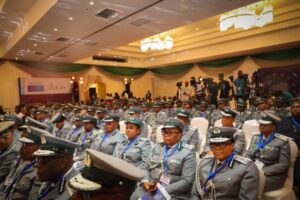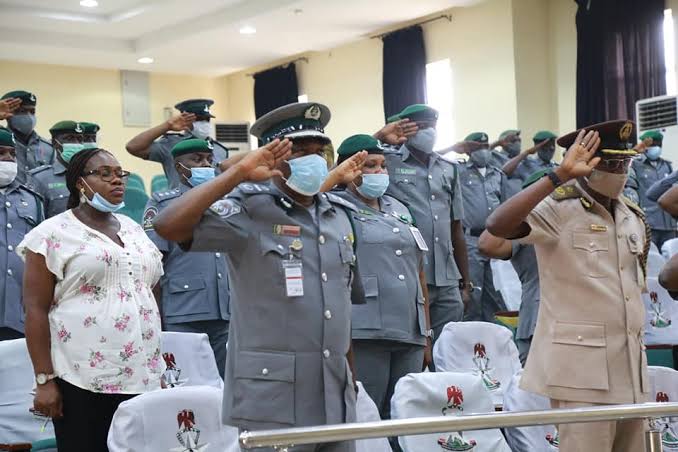
The Nigeria Customs Service (NCS) has intensified efforts to combat financial crimes and strengthen Nigeria’s national security by engaging six federal government agencies in a fresh inter-agency collaboration initiative targeting money laundering, terrorism financing, drug trafficking, corruption and other cross-border illegal activities.
The initiative is designed to improve intelligence sharing, strengthen institutional cooperation and enhance the ability of security and law enforcement agencies to detect and disrupt illicit financial transactions moving across Nigeria’s borders.
The three-day engagement, which took place from October 27 to 29, 2026, was led by the Assistant Comptroller-General of Customs in charge of Headquarters, Muhammad Shuaibu.
During the visit, the Customs delegation held discussions with relevant government institutions on practical ways to improve coordination, address operational challenges and strengthen the country’s response to organised financial and security-related crimes.
The exercise also involved a World Customs Organisation (WCO) mentoring team, which provided additional perspectives on international approaches to combating money laundering and the financing of terrorism.
You might want to read this: Customs Deploys Artificial Intelligence to Fight Fake News and Online Scams as Bashir Adeniyi Reveals New Strategy
Six Federal Agencies Join Customs in New Security Initiative
As part of the initiative, the Nigeria Customs Service engaged six major federal institutions responsible for financial intelligence, law enforcement, border management and national security.
The agencies involved are:
- Economic and Financial Crimes Commission (EFCC): Responsible for investigating and tackling economic and financial crimes.
- National Drug Law Enforcement Agency (NDLEA): Responsible for combating drug trafficking and related offences.
- Nigeria Police Force (NPF): Responsible for maintaining law and order and investigating criminal activities.
- Nigerian Financial Intelligence Unit (NFIU): Responsible for receiving, analysing and disseminating financial intelligence.
- Nigeria Immigration Service (NIS): Responsible for immigration administration and border-related activities.
- National Counter-Terrorism Centre (NCTC): Operating under the Office of the National Security Adviser (ONSA), it coordinates efforts to address terrorism-related threats.
The involvement of these institutions reflects the importance of a coordinated approach to tackling criminal activities that frequently extend beyond the responsibilities of a single government agency.
According to the Customs Service, stronger cooperation among the institutions will help improve the exchange of intelligence, strengthen border controls and support more effective investigations.
Muhammad Shuaibu Explains Purpose of Customs Engagement
Speaking during the engagements, Assistant Comptroller-General Muhammad Shuaibu explained that the initiative was designed to strengthen coordination among government agencies working to protect Nigeria’s economy and national security.
He emphasised that detecting and disrupting illicit financial flows across international borders remained the central objective of the exercise.
“The sole objective of this mission is to effectively detect and disrupt cross-border illicit financial flows,” Shuaibu said.
He explained that the programme went beyond discussions at institutional headquarters, as it also included practical engagements aimed at examining existing operational arrangements.
According to him, the exercise involved visits to selected border stations to assess Customs control measures and interact with relevant agencies involved in border security and enforcement.
These field visits were intended to provide a clearer understanding of operational realities and identify areas where cooperation could be improved.
The approach recognises that tackling financial crimes requires effective coordination between agencies responsible for monitoring trade, tracking financial transactions, enforcing the law and managing Nigeria’s borders.
Shuaibu stressed the need for institutions to work together more closely to address threats that could undermine economic stability and national security.
NFIU Commends Customs for Supporting Financial Crime Prevention
The Nigerian Financial Intelligence Unit also welcomed the initiative, recognising the longstanding working relationship between the two institutions.
During the engagement, the NFIU Chief Executive Officer was represented by Muhammed-Mustapha, Chief Operating Officer of the Intelligence Security Service Sector.
Mustapha commended the Nigeria Customs Service for its contributions to combating smuggling and strengthening border security.
He also recalled the important role Customs played when the NFIU was established, describing the relationship between the institutions as longstanding.
“When NFIU was created, NCS was the first to collaborate with us. No particular agency understands things better than how Customs does globally,” Mustapha said.
His remarks highlighted the importance of maintaining strong institutional relationships when addressing financial crimes and other activities that threaten the country’s economy.
The NFIU’s participation is particularly relevant because financial intelligence plays an important role in identifying suspicious transactions and helping law enforcement agencies investigate possible money laundering and other financial offences.
Closer cooperation between the NFIU and Customs could also improve the exchange of relevant information concerning suspicious trade activities and cross-border financial movements.
World Customs Organisation Team Supports Anti-Money Laundering Efforts
The engagement also featured participation by a mentoring team from the World Customs Organisation (WCO), led by Shahiduzzaman Sarkar.
The team interacted with the participating agencies on strategies for strengthening Anti-Money Laundering (AML) and Countering the Financing of Terrorism (CFT) measures.
These two areas are central to international efforts to prevent criminal organisations and terrorist networks from exploiting financial systems to move or conceal illegal funds.
The WCO team also encouraged stronger cooperation with the Nigeria Customs Service to ensure the success of the initiative.
Its participation brought an international dimension to the discussions, particularly regarding the importance of aligning national enforcement efforts with established approaches to combating financial crimes.
The discussions also highlighted the need for Customs authorities and other law enforcement institutions to share relevant intelligence and develop coordinated responses to cross-border threats.
Communication Gaps and Bureaucracy Identified as Major Challenges
Despite the importance of inter-agency collaboration, participants identified several obstacles that could limit the effectiveness of cooperation among government institutions.
Some of the major challenges raised included communication gaps, bureaucratic procedures and concerns surrounding database privacy.
Communication difficulties can delay the exchange of important intelligence, while excessive administrative procedures may slow down investigations and coordinated enforcement operations.
Database privacy concerns also emerged as an important issue, particularly regarding how institutions can share sensitive information without compromising confidentiality and established data protection requirements.
These challenges demonstrate that having several agencies working towards the same objective does not automatically guarantee effective cooperation.
For collaboration to produce meaningful results, institutions must establish clear communication channels, improve information-sharing arrangements and develop practical procedures for coordinating their activities.
Participants therefore explored possible ways to address the identified obstacles and strengthen institutional relationships.
The discussions focused on improving cooperation while ensuring that sensitive information is handled appropriately.
Why Stronger Inter-Agency Collaboration Matters for Nigeria
The engagement comes against the backdrop of persistent security and economic concerns involving financial crimes, illegal cross-border activities and organised criminal networks.
Money laundering and illicit financial flows can undermine economic stability by allowing proceeds from illegal activities to enter legitimate financial systems.
Similarly, drug trafficking, corruption and terrorism financing can create wider security challenges that require coordinated action from different government institutions.
Customs authorities occupy an important position in this effort because they operate at the intersection of international trade, border management and enforcement of import and export regulations.
However, effectively addressing sophisticated financial crimes often requires information and investigative support from other specialised agencies.
For example, intelligence gathered during border operations may become useful to financial investigators, while information from financial intelligence agencies may help Customs officers identify suspicious trade activities.
Cooperation between the Police, Immigration Service, NDLEA, EFCC and counter-terrorism institutions can further strengthen the country’s ability to respond to interconnected criminal activities.
This makes intelligence sharing and institutional coordination important components of Nigeria’s broader national security strategy.
Customs Presents Awards and WCO Certificates to Participating Agencies
The three-day engagement also featured the presentation of Nigeria Customs Service awards and World Customs Organisation certificates to the participating agencies.
The presentations were intended to recognise the importance of cooperation and demonstrate the Customs Service’s commitment to strengthening relationships with other government institutions.
The recognition also underscored the need for continued collaboration in addressing threats to Nigeria’s economy and national security.
By engaging six federal agencies and the WCO mentoring team, the Customs Service has taken steps towards building a more coordinated approach to tackling cross-border financial crimes.
A Coordinated Approach to Protecting Nigeria’s Economy and Borders
The Nigeria Customs Service’s engagement with the six federal agencies highlights the growing importance of institutional cooperation in addressing modern security and economic threats.
The discussions covered intelligence sharing, border controls, financial crime prevention, terrorism financing and the operational challenges affecting cooperation among government institutions.
While communication gaps, bureaucracy and database privacy concerns remain issues requiring attention, the engagement provided an opportunity for the agencies to identify areas for improvement.
The next important step will be translating the discussions into practical arrangements that improve information exchange, strengthen investigations and support coordinated enforcement activities.
Ultimately, the success of the initiative will depend on how effectively the participating institutions work together to detect and disrupt illicit financial flows, prevent criminal activities and protect Nigeria’s economic and national security interests.