
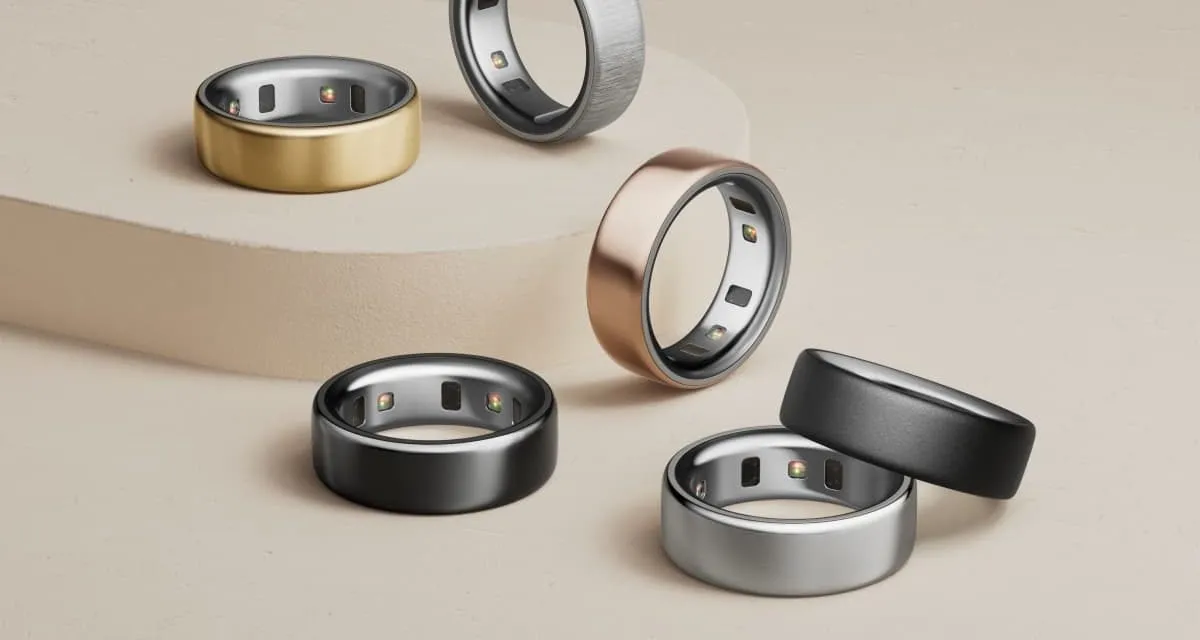
Oura has put its planned stock-market debut on hold, even after building strong momentum and attracting significant investor demand for its highly anticipated IPO.
The maker of the popular Oura smart ring said Tuesday that it is postponing its initial public offering because of what it described as market uncertainty.
The decision comes at a particularly notable moment for the company. Oura had been preparing to enter the public markets after a period of rapid growth, helped by the launch of its latest-generation Oura Ring 5 and a sharp increase in paid subscribers.
The company said the IPO was being delayed despite strong demand, highlighting how broader market conditions can influence even companies with solid business momentum.
Oura Had Been Preparing for a Major Wall Street Debut
Oura’s planned IPO was expected to be one of the more closely watched technology and consumer-product listings.
The company planned to offer 50 million shares at between $40 and $44 per share.
At the midpoint of that range, the offering would have valued Oura at approximately $13.5 billion.
However, most of the shares were not expected to represent new capital for the company.
Nearly three-quarters of the shares were reportedly being offered by existing shareholders, meaning the IPO would have provided an opportunity for early investors and other current holders to sell portions of their stakes.
The postponement therefore represents more than a delay for Oura itself. It also puts a spotlight on the broader appetite for new public-market listings.
Oura’s Business Was Showing Strong Momentum
The decision to delay the IPO comes despite several encouraging developments inside the company.
Oura’s smart rings are designed to help users monitor aspects of their health and daily activity, including sleep patterns and fitness activity.
The company’s business model combines hardware sales with recurring subscription revenue.
Ring purchases account for the majority of Oura’s revenue, while subscriptions provide an additional recurring stream.
The introduction of the Oura Ring 5 helped drive customer growth, with the company reporting 5.7 million paid members.
Oura also expected revenue for the fiscal year ending Wednesday to have increased by approximately 90%.
That combination of subscriber growth and rapidly rising revenue had given the company considerable momentum heading into the planned listing.
So Why Is Oura Delaying the IPO?
The answer appears to lie less with Oura’s underlying business and more with the broader financial environment.
Oura cited market uncertainty when announcing the postponement.
The IPO market had enjoyed a strong start to the year before losing momentum during the third quarter, according to research firm Renaissance Capital.
Several factors contributed to the deterioration in market conditions.
One concern was the possibility of a slowdown in spending on artificial intelligence, an area that has become a major driver of technology investment and market sentiment.
Interest-rate policy was another factor.
The Federal Reserve’s resumption of rate hikes, combined with rising bond yields, has made borrowing more expensive and can make investors more cautious about putting money into higher-risk assets.
For companies preparing to go public, that environment can make valuation negotiations considerably more difficult.
Higher Bond Yields Can Change the IPO Equation
When bond yields rise, investors have more opportunities to earn returns from relatively lower-risk assets.
That can make newly listed companies less attractive unless investors believe their growth prospects justify the additional risk.
Higher borrowing costs can also affect companies themselves.
For fast-growing businesses, access to capital is particularly important. If financing becomes more expensive and investors become more selective, companies may choose to delay a public offering rather than accept a valuation they consider unattractive.
Oura’s decision demonstrates how quickly conditions in the public markets can change—even when an individual company continues to report strong growth.
The Oura Ring 5 Helped Drive Growth
Oura entered the planned IPO with a significant growth story behind it.
The launch of the Oura Ring 5 helped increase the company’s paid membership base to 5.7 million.
That subscriber growth is particularly important because it adds recurring revenue to a business that is still primarily driven by hardware sales.
The company’s expectation of 90% revenue growth for the fiscal year also points to the rapid expansion Oura has experienced.
For investors, the combination of wearable technology, health tracking and subscription services has helped make Oura an interesting player in the broader consumer technology market.
But strong operational growth does not guarantee favorable IPO conditions.
Oura’s Delay Shows How Fragile the IPO Window Can Be
Companies preparing to go public often spend months—or longer—planning their listings.
But ultimately, the timing of an IPO can depend heavily on market conditions.
A company may have strong revenue growth, rising customer numbers and considerable investor interest, yet still decide that the public markets are not offering the right environment for a debut.
Oura’s decision is a reminder of that dynamic.
The company specifically said it was postponing the offering despite strong demand, suggesting that the broader uncertainty surrounding markets was significant enough to outweigh the appeal of moving ahead immediately.
For investors watching the IPO market, the development could also be an indication that companies are becoming more cautious about pricing new listings.
What Happens to Oura’s $13.5 Billion Valuation?
The planned midpoint valuation of approximately $13.5 billion was based on the proposed share price range of $40 to $44.
Because the IPO has been postponed, that valuation is not necessarily what Oura will ultimately command when it returns to the market.
Market conditions could change considerably by the time the company revives the offering.
If investor appetite improves, Oura could potentially revisit its previous pricing expectations.
If markets remain volatile or valuations come under pressure, the company could face different conditions when it eventually returns.
For now, the proposed $13.5 billion valuation remains a reference point rather than a confirmed public-market value.
A Bigger Test for the IPO Market
Oura’s decision arrives as investors continue to navigate an uncertain environment for technology and growth stocks.
The company has many of the characteristics public-market investors typically look for: rapidly growing revenue, a large and expanding customer base, a recognizable consumer product and recurring subscription income.
Yet those strengths have not been enough to eliminate concerns about the timing of a listing.
That contrast may be the most important takeaway from the postponement.
Oura’s business appears to be moving quickly, but the IPO market is moving according to a different clock.
For now, the smart-ring maker is choosing to wait rather than force a public debut in uncertain conditions.
When Oura eventually returns to the IPO market, investors will have another opportunity to assess whether its rapid growth can justify the valuation the company is seeking—and whether market conditions are ready to support it.