
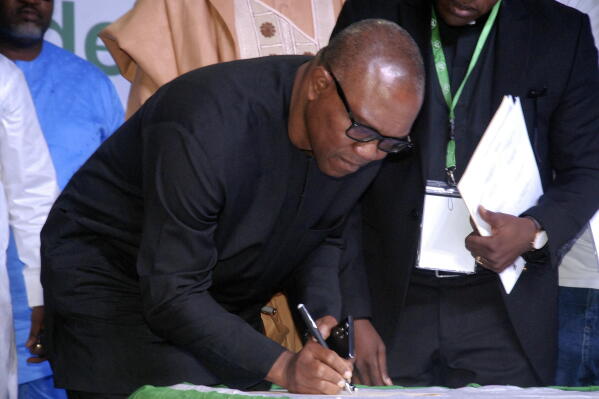
Peter Obi, presidential candidate of the Nigeria Democratic Congress (NDC), African Action Congress (AAC) candidate Omoyele Sowore, the Peoples Redemption Party (PRP) presidential candidate, and other contenders gathered in Abuja on August 18 to sign the National Peace Accord ahead of the 2027 elections.
The ceremony, held at the Bola Ahmed Tinubu International Conference Centre, brought together presidential and governorship candidates, National Assembly contenders, political party leaders, the Independent National Electoral Commission (INEC) chairman Joash Amupitan, Secretary to the Government of the Federation George Akume, and other senior political figures.
The accord is designed to establish rules for peaceful political competition before and during the January and February 2027 polls.
Obi: Let Nigerians’ votes count
Before the signing, Obi urged electoral authorities and political actors to deliver an election in which voters can trust the outcome.
The former Anambra State governor said his main concern was not the prospect of contesting the election but whether Nigerians would be able to exercise their franchise meaningfully.
His message was straightforward: the credibility of the election must come first, particularly for the country’s younger generation.
Obi also argued that candidates and parties that breach the peace agreement should face consequences at the ballot box.
His proposed sanction?
Nigerians should simply refuse to vote for them.
He further challenged candidates to set the standard through their own conduct.
For Obi, the title “His Excellency” should mean more than political status. Those seeking public office, he argued, should demonstrate excellence and responsibility throughout the electoral process.
Tinubu: Elections must not become a battle for survival
President Bola Tinubu was represented at the ceremony by SGF George Akume, who commended the National Peace Committee for maintaining the peace-accord process since 2014.
Akume pointed to recent advances in electoral technology, particularly the Bimodal Voter Accreditation System (BVAS), as evidence of efforts to strengthen the voting process.
He cited recent off-cycle elections in Anambra, Osun and Ekiti, where different political parties emerged victorious, arguing that the outcomes had been viewed positively by both domestic and international observers.
According to the presidency, greater transparency can also reduce the number of disputes that reach the courts after elections.
The broader message was clear: political competition should end at the ballot box—not become a struggle that threatens national stability.
Tinubu reaffirmed the All Progressives Congress’ commitment to the accord and condemned electoral violence, hate speech, misinformation and inflammatory online content.
His appeal was equally direct: candidates may win or lose, but Nigeria must remain the ultimate winner.
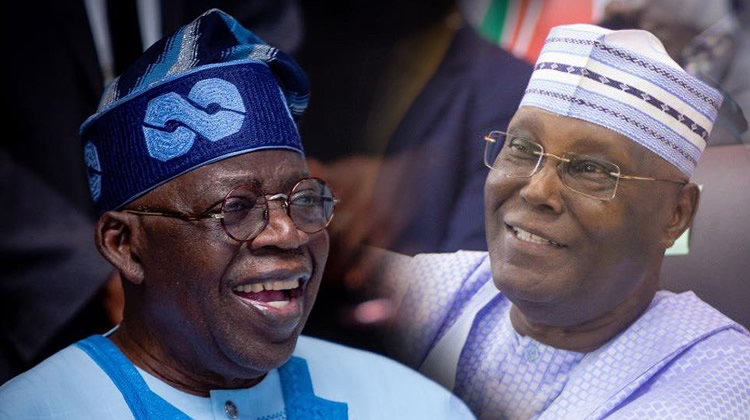
INEC promises neutrality
INEC Chairman Joash Amupitan used the gathering to reassure contestants that the electoral commission would not take sides.
He said INEC has no preferred candidate or political platform and would approach the 2027 election as an impartial electoral umpire.
Amupitan also called on political parties to make the campaign a competition over ideas rather than personal attacks.
Nigerians, he said, need practical solutions—not insults.
That means candidates should present manifestos that are clear, specific and measurable, giving voters something concrete against which to judge their promises.
A massive election operation ahead
Beyond the political rhetoric, INEC is preparing for an enormous logistical exercise.
Amupitan said preparations for the 2027 elections were advancing, with the commission planning to coordinate about 1.4 million temporary election personnel across more than 176,000 polling units nationwide.
That scale alone underscores the challenge ahead.
A credible election will depend not only on what political candidates promise but also on how effectively the electoral system performs on election day.
What happens after the polls?
The peace process will not end when Nigerians cast their ballots.
A second phase of the National Peace Accord is expected to be signed after the elections, extending the framework beyond the campaign and voting periods.
For now, the candidates have put their signatures to a shared commitment.
The real test will come later—when the campaign intensifies, the stakes rise and every party has to decide whether it will honour the principles it endorsed in Abuja.