
Nasarawa State is taking a broader approach to security—one that goes beyond deploying more personnel.
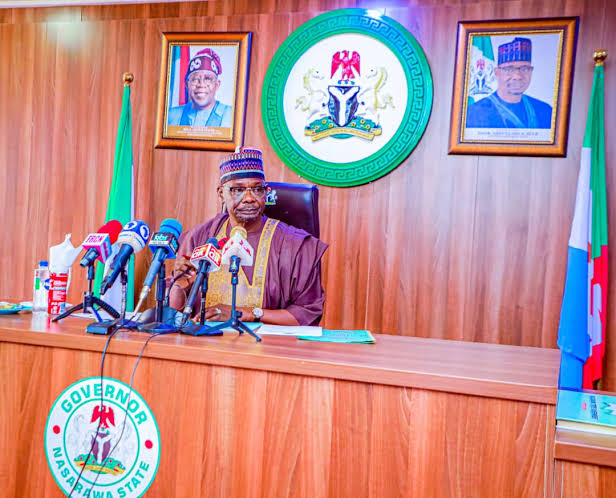
Governor Abdullahi Sule has inaugurated a nine-member Security Advisory Council to strengthen coordination among security stakeholders and tackle the economic and social conditions that contribute to crime and insecurity across the state.
Sule inaugurated the council in Lafia, saying the changing nature of security threats required better intelligence, stronger coordination and greater community involvement.
Why the council was created
The governor said lasting security could not depend solely on personnel and equipment.
He identified several factors that must work together to keep communities safe, including:
- Justice and dialogue
- Responsible leadership
- Economic opportunities
- Community participation
- Trust between government and citizens
- Effective intelligence gathering
Sule said sustained engagement with traditional institutions could improve early-warning systems, strengthen the flow of information and help resolve disputes before they develop into major security incidents.
You might want to read this: Two Amotekun Officers Killed in Akure Gun Attack
From enforcement to prevention
The new council is expected to complement the work of existing security agencies by combining enforcement with prevention, intelligence and development-focused strategies.
Its work will involve engagement with traditional rulers, religious leaders, youth groups and women’s organisations, which the governor said could provide important information about developments within local communities.
Sule also linked some criminal activity to challenges involving cross-border movement, community intelligence gaps and forest management.
He stressed that the council would not take over the duties of existing security agencies.
Instead, it would provide strategic coordination, analysis and policy recommendations to support their operations.
The state government will continue working with the Nigeria Police Force, the Armed Forces, the Department of State Services and the Nigeria Security and Civil Defence Corps.
What the council will do
Among its responsibilities, the council will:
- Advise the government on the state’s evolving security situation.
- Strengthen intelligence-led security operations.
- Examine possible frameworks for community policing.
- Improve communication between government and communities.
- Assess emerging threats and recommend preventive measures.
Sule urged the members to carry out their duties with impartiality, seriousness and confidentiality.
He also pledged continued government investment in preventive security while addressing the conditions that allow insecurity to take root.
Who is on the council?
The council is chaired by Retired Maj.-Gen. Illiyasu Abba, a former force commander of the Multinational Joint Task Force in N’Djamena, Chad.
Its other members are:
- Retired Deputy Inspector-General of Police Mohammed Ari-Doma
- Retired Brig.-Gen. Japo Abashi-Ebu
- Retired Wing-Cdr. Umar Ibrahim-Awe
- Retired Wing-Cdr. Mukhtar Usman
- Retired Commissioner of Police Isa Usman Baba
- Retired CSC Adamu Tanko Umar
Focus on poverty, unemployment and 2027
Speaking for the council, Abba said its approach would address insecurity from multiple angles.
He identified poverty, unemployment and social dislocation as factors that can contribute to criminal activity and said the council would incorporate these issues into its security advice.
The council will also support the state’s security preparations ahead of the 2027 general elections, adding an electoral dimension to its broader preventive-security mandate.
The central idea behind the new council is clear: security cannot be separated from development. By combining intelligence, community engagement and preventive measures with the work of existing security agencies, the Nasarawa government hopes to address both the symptoms and underlying causes of insecurity.