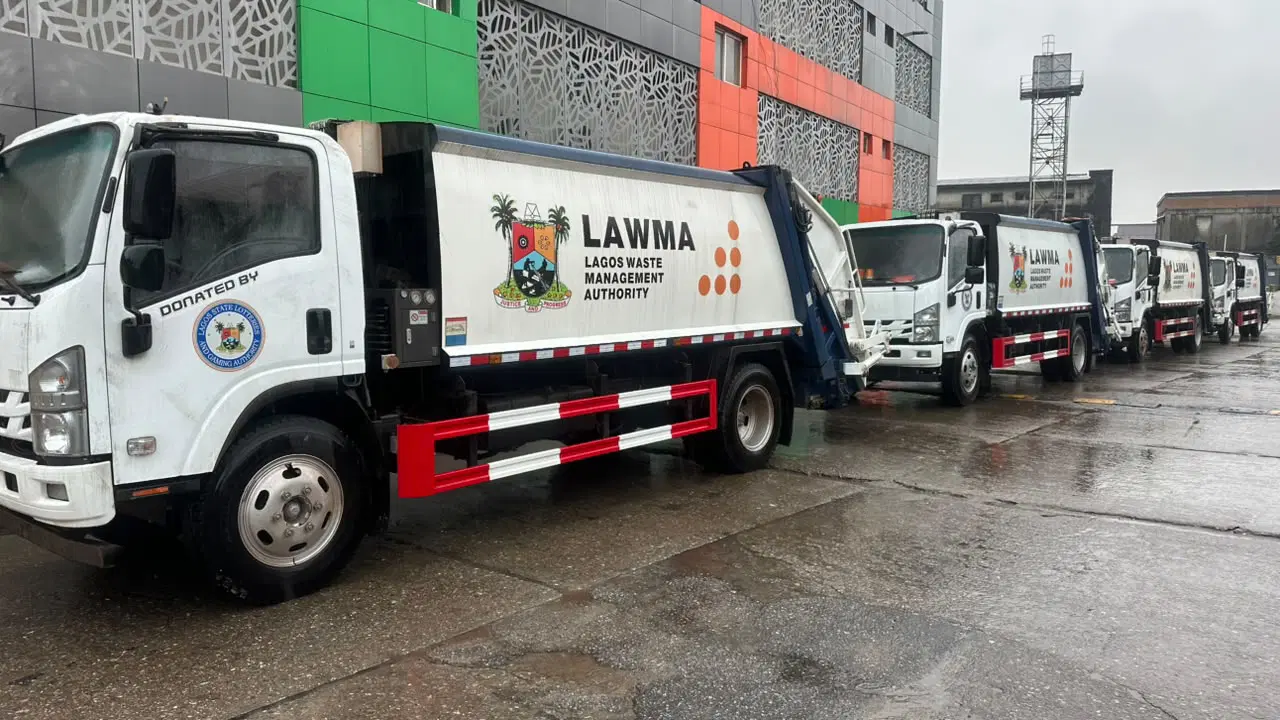
Lagos State is preparing to add 220 compactor trucks to its waste management fleet as authorities move to expand refuse collection and keep pace with the state’s rapidly growing population.
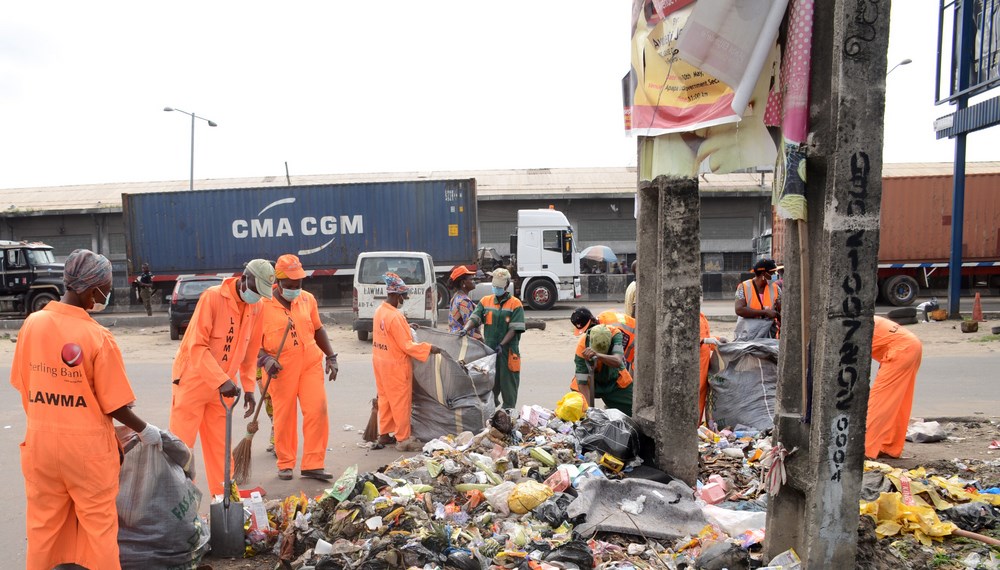
Deputy Governor Kadri Hamzat announced the plan on Saturday during the monthly environmental sanitation exercise in Festac, Amuwo-Odofin Local Government Area.
He said the new trucks would supplement the existing Private Sector Participation (PSP) system and increase the state’s capacity to evacuate household waste, particularly in areas where current arrangements are struggling to meet demand.
“The state government will be bringing in another 220 trucks to make sure that we supplement our PSP,” Hamzat said.
Residents Told to Use Accredited Waste Collectors
Hamzat urged Lagos residents to patronise accredited PSP operators instead of informal cart pushers.
He warned that unregulated waste collectors may dispose of refuse improperly because their activities are not fully integrated into the state’s waste management system.
Residents, he said, should know where their waste ends up and ensure it is handled through approved channels.
More People, More Waste
The deputy governor linked the pressure on Lagos’ waste infrastructure to the state’s expanding population.
As more people move into Lagos, the amount of refuse generated each day also rises, increasing the demand for collection and evacuation capacity.
But Hamzat stressed that additional trucks alone cannot solve the problem.
He urged residents to take greater responsibility for how they dispose of waste, particularly by keeping refuse out of drains and canals.
Improper dumping can block waterways, restrict stormwater flow and increase the risk of flooding during periods of heavy rainfall.
Monthly Cleanliness Should Become a Habit
Hamzat encouraged communities to treat environmental sanitation as a regular responsibility rather than something reserved for official sanitation days.
He said residents should make a habit of keeping their homes, streets and neighbourhoods clean.
“A cleaner environment is what makes a city or a state sustainable,” he said.
He also noted that residents and property managers in Festac remain subject to Lagos State environmental regulations, even in areas where other government agencies have specific responsibilities.
24-Hour Response Teams Improving Waste Evacuation
Commissioner for the Environment and Water Resources Tokunbo Wahab said the state has begun recording improvements in refuse evacuation.
He attributed the progress partly to 24-hour emergency response teams and interventions aimed at resolving operational problems at landfills and dumpsites.
The government is also holding discussions with PSP operators to improve household waste collection and strengthen their capacity.
Wahab said Lagos has intervened in locations where LAWMA would not ordinarily operate in order to close gaps in waste evacuation.
Under the state’s polluter-pays principle, residents are expected to pay for waste collection while operators receive the resources needed to provide the service.
Lagos Moves Beyond ‘Collect and Dump’
The state is also pursuing a broader transformation of its waste strategy.
Wahab said Lagos is moving away from the traditional “collect and dump” model towards a circular approach that focuses on recovering waste and converting it into useful resources.
As part of that transition, the state has developed material recovery facilities in Badagry and Epe, as well as transfer stations at Solus and Olusosun.
The goal is to treat waste increasingly as a resource rather than simply something to be removed and buried.
Cart Pushers Under Scrutiny
Wahab said the government is engaging with cart pushers but warned that the state would not adopt measures that could create additional environmental or security problems.
Investigations, he said, have found cases where some informal collectors dumped refuse in inappropriate locations, including drainage channels and road medians.
Such practices can worsen environmental degradation and increase flooding risks.
The government’s preferred model is a more organised system in which government agencies, licensed operators and residents each have clearly defined responsibilities.
Officials Monitor Sanitation Compliance
Head of Service Bode Agoro also monitored the sanitation exercise in Bariga LCDA alongside senior government officials, including Permanent Secretary for Environmental Services Omobolaji Gaji.
Officials inspected Ewenla, Adetoke and Emmanuel Church streets, extending through Omobokun to New Garage, to assess compliance and encourage residents to maintain clean surroundings.
Represented by Permanent Secretary of the Public Service Office Sunkanmi Oyegbola, Agoro urged Lagosians to take ownership of their environment.
He said government investment in infrastructure must be matched by responsible behaviour from residents, including protecting public facilities and maintaining clean homes, streets and communities.
The Bigger Waste Challenge
Lagos is expanding—and so is the amount of waste it produces.
The planned 220 additional trucks, emergency-response operations and shift toward recycling and resource recovery are part of the state’s attempt to build a waste system capable of keeping pace.
But officials say the equation has another essential component: residents must dispose of waste properly and use approved collection services.
Without that cooperation, even a larger fleet will struggle to keep Lagos clean.