The Federal Government has announced a series of measures to ease the financial pressure on Nigerian workers amid rising petrol prices, including a monthly transport allowance of ₦70,000 for six months beginning in November 2026.
The announcement followed a conciliation meeting between the Federal Government and the Nigeria Labour Congress (NLC) at the Ministry of Labour and Employment, where both sides reached resolutions on workers’ welfare, outstanding allowances and the next steps towards minimum wage negotiations.
Under the agreed measures, eligible workers are expected to receive the transport intervention for six months, while outstanding peculiar allowance arrears will be paid in three equal monthly instalments starting in November.
The meeting also addressed outstanding allowances owed to health workers, with 19 months of arrears scheduled for redemption within three months beginning in December 2026.
Meanwhile, the minimum wage negotiation process is expected to move forward, with the relevant committee to be constituted and commence meetings immediately.
The resolutions represent an effort to address some of the financial concerns raised by organised labour, although implementation of the agreed measures will be an important factor in determining their impact on workers.
Federal Government Announces ₦70,000 Monthly Transport Allowance
One of the key outcomes of the meeting is a proposed transport intervention of ₦70,000 per month for six months, beginning in November 2026.
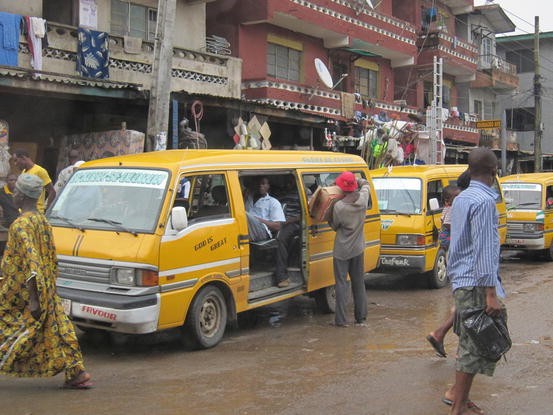
The measure is intended to help cushion the effects of rising petroleum pump prices on Nigerian workers, particularly as higher fuel costs can increase the amount employees spend travelling to and from work.
Transport expenses are an important part of household spending for many workers, especially those who depend on public transportation or private vehicles for their daily commute.
By providing temporary financial assistance, the government aims to ease some of the additional costs associated with higher fuel prices.
If paid for the full six-month period, the allowance would amount to ₦420,000 per eligible worker over the duration of the intervention.
However, the announcement does not specify all the eligibility requirements or payment arrangements, so further details may be needed to establish which workers will benefit and how the payments will be administered.
Outstanding Peculiar Allowances to Be Paid in Three Instalments
The resolutions also address outstanding peculiar allowance arrears, which are scheduled to be paid in three equal monthly instalments beginning in November 2026.
The arrangement is intended to provide a structured timeline for settling the outstanding payments rather than leaving workers waiting indefinitely for the arrears to be cleared.
Under the proposed schedule, the payments will be spread across three consecutive monthly instalments.
The total amount owed in peculiar allowance arrears was not specified in the information released following the meeting. Consequently, the value of each instalment will depend on the total outstanding amount covered by the arrangement.
The commitment to a defined payment schedule is an important part of the agreement between the government and organised labour, with implementation expected to be monitored as the process moves forward.
Health Workers to Receive 19 Months of Outstanding Allowances
Health workers were also included in the resolutions reached at the conciliation meeting.
According to the agreement, 19 months of outstanding allowances owed to health workers are to be redeemed within three months, beginning in December 2026.
The commitment addresses a substantial period of unpaid allowances and establishes a timeframe for settling the arrears.
The arrangement is expected to provide a clearer path towards resolving the outstanding payments, although the specific amounts involved and the detailed payment schedule were not disclosed in the announcement.
For affected health workers, the implementation of the commitment will be crucial in determining when the outstanding allowances are received.
The resolution also places the issue of health-sector remuneration among the matters requiring follow-through after the discussions between the government and labour representatives.
Minimum Wage Negotiations Expected to Begin Immediately
Another major outcome of the conciliation meeting is the decision to constitute the Minimum Wage Negotiation Committee and begin its meetings immediately.
The committee is expected to provide a formal platform for discussions on minimum wage issues involving the relevant parties.
Minimum wage negotiations are an important aspect of industrial relations in Nigeria, as they concern the baseline remuneration framework for workers covered by the applicable wage arrangements.
The decision to move ahead with the committee signals the intention to continue discussions between the government and organised labour.
However, the announcement does not specify a new minimum wage figure or indicate that an increase has already been approved.
Rather, the immediate priority is to establish the committee and commence negotiations.
The outcome of those discussions will depend on the proposals presented by the parties and the agreements eventually reached through the negotiation process.
Tax Relief Proposal Referred to the National Economic Council
Tax relief was another issue considered during the meeting.
According to the resolutions, the matter will be referred to the National Economic Council (NEC) for consideration.
This means that the tax relief proposal has not yet been confirmed as an approved measure under the announced agreement.
Further consideration will be required before its scope, eligibility requirements or possible implementation arrangements can be established.
The issue is relevant to the broader discussion about workers’ purchasing power and the financial pressures associated with rising living costs.
For workers, any eventual tax relief could have implications for disposable income, depending on the form of relief adopted and the categories of employees covered.
For now, however, the resolution establishes a process for further consideration rather than a final decision on the proposed relief.
What the Agreement Means for Nigerian Workers
The measures announced after the conciliation meeting cover several areas of concern for organised labour, including transport expenses, unpaid allowances, health-sector arrears and minimum wage negotiations.
The six-month transport intervention is designed to provide temporary support against higher commuting costs, while the allowance repayment arrangements establish timelines for addressing outstanding financial obligations.
The planned constitution of the Minimum Wage Negotiation Committee also creates an avenue for further discussions about workers’ remuneration.
At the same time, the referral of tax relief to the National Economic Council indicates that some issues remain under consideration.
The practical impact of the agreement will depend on whether the announced timelines are met, the details of the implementation arrangements and the progress made in subsequent negotiations.
Workers awaiting outstanding allowances will be particularly interested in the scheduled payment periods, while those concerned about minimum wage issues will be watching for developments from the new negotiation committee.
Implementation Remains the Key Next Step
The conciliation meeting between the Federal Government and the NLC has produced a set of commitments intended to address workers’ financial concerns and move minimum wage discussions forward.
The main measures include ₦70,000 in monthly transport support for six months beginning in November 2026, payment of peculiar allowance arrears in three equal instalments from November, and the settlement of 19 months of outstanding health workers’ allowances within three months beginning in December.
The Minimum Wage Negotiation Committee is also expected to be constituted and begin meetings immediately, while the tax relief proposal will proceed to the National Economic Council for consideration.
Although the resolutions establish a framework for action, their effectiveness will ultimately depend on implementation and continued engagement between the government and organised labour.
For Nigerian workers, the coming months will therefore be important in determining whether the commitments translate into timely payments, progress on minimum wage negotiations and further measures to address the cost-of-living pressures affecting households.