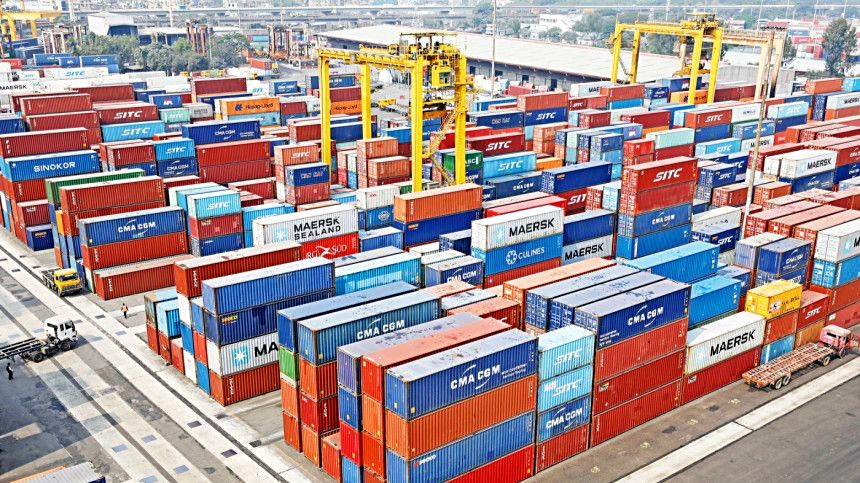
President Bola Tinubu has ordered the immediate clearance of more than 300 containers of electricity equipment stranded at Nigerian ports, with some reportedly abandoned for between 14 and 20 years because of unpaid charges and unresolved customs procedures.
The directive could help Nigeria recover valuable power infrastructure that has remained unused for years, even as the country continues to grapple with transmission bottlenecks, unreliable electricity supply and persistent challenges in the power sector.
Minister of Power, Olasunkanmi Tegbe, disclosed the development on Wednesday while briefing journalists after the Federal Executive Council (FEC) meeting presided over by Tinubu at the State House in Abuja.
Tegbe described the prolonged detention of the equipment as unacceptable, explaining that successive administrations had failed to resolve the financial and administrative issues preventing the containers from being released.
Under the President’s directive, the Ministry of Power will work with the Nigerian Ports Authority (NPA) and the Nigeria Customs Service (NCS) to reconcile outstanding charges, complete the necessary clearance procedures and facilitate the release of the equipment.
However, the government has yet to establish how much of the stranded equipment remains usable, the total cost of clearing the containers or the amount required to settle the outstanding port charges.
The initiative forms part of a broader effort by the Federal Government to strengthen electricity transmission infrastructure, improve grid reliability and increase the amount of power that can be delivered across the country.
Tinubu Directs Immediate Action on Long-Abandoned Power Equipment
The stranded containers contain electricity equipment that could potentially support Nigeria’s transmission and distribution infrastructure if the materials are found to be serviceable.
According to Tegbe, some of the containers have remained at the ports for as long as two decades because outstanding charges and customs-related issues were never fully resolved.
The President has now directed the relevant agencies to work together to bring the prolonged delays to an end.
The Ministry of Power is expected to coordinate with the NPA and NCS to establish the status of the containers, reconcile outstanding liabilities where necessary and complete the required administrative processes.
Once the equipment is released, technical experts will inspect the materials to determine their condition and suitability for use.
Tegbe explained that equipment found to be in good working condition would be incorporated into ongoing electricity infrastructure projects, while obsolete or unusable materials would be handled appropriately.
This assessment will be particularly important because equipment left in storage for many years may have deteriorated or become unsuitable for current infrastructure requirements.
Although the clearance exercise could recover useful assets, the government has not yet disclosed the total value of the materials or how much additional electricity infrastructure could be supported by their deployment.
No specific deadline has been announced for completing the exercise.
Government Moves to Expand Transmission Capacity to 19,000MW
Beyond the stranded containers, the Federal Government has approved the commencement of procurement for the proposed East and West Super Grids, an initiative designed to significantly expand Nigeria’s electricity transmission capacity.
According to Tegbe, the proposed projects aim to increase the network’s capacity from approximately 5,000 megawatts to 19,000MW within two years.
The initiative is intended to strengthen transmission links between northern and southern Nigeria, allowing the national grid to accommodate larger electricity volumes and support future demand.
The minister said the planned infrastructure would connect strategic transmission corridors, including routes extending from Sokoto through Abuja to other parts of the country.
Tinubu has authorised the commencement of procurement, marking an initial step towards developing the proposed transmission network.
However, the procurement authorisation does not mean the entire project has already been constructed or that the targeted transmission capacity has been achieved.
The proposed Super Grids form part of the government’s broader strategy to address weaknesses in the electricity network and improve the delivery of available power to homes, businesses and industries.
Expanding transmission capacity is important because electricity generated by power plants must be transported through the national network before it can reach consumers.
Without sufficient transmission infrastructure, available generation may not translate into reliable electricity supply across the country.
Three Major Transmission Projects Receive FEC Approval
The minister also announced three Federal Executive Council approvals targeting electricity transmission constraints in Abuja, Lagos and the Lagos-Shagamu industrial corridor.
The projects are intended to strengthen key sections of the network, improve operational reliability and support growing electricity demand.
1. New transmission line for Abuja
The first project involves constructing a 33kV double-circuit transmission line, combining underground and overhead sections, linked to the Katampe Transmission Substation.
The project is expected to strengthen electricity infrastructure serving Abuja and surrounding areas.
Improving the connection to the substation could help address local transmission constraints and support more dependable electricity delivery.
2. Three new power transformers for Lagos
The second approval covers the design, manufacture and supply of three 300MVA, 330/132/33kV power transformers for the Ikeja West Transmission Substation.
The facility serves Lagos and adjoining areas, making it an important component of electricity infrastructure in one of Nigeria’s largest commercial and industrial centres.
The additional transformers are intended to strengthen the substation’s capacity to handle electricity flows and support demand from households, businesses and industries.
3. Upgrade of the Lagos-Shagamu transmission corridor
The third project involves reconstructing and upgrading the 35.6-kilometre Itumola-Mapasin-Shagamu 132kV single-circuit transmission line into a double-circuit facility.
The upgrade is designed to accommodate growing electricity demand along the Lagos-Shagamu corridor.
By increasing the line’s transmission capability, the project is expected to help ease existing bottlenecks and improve the movement of electricity through the industrial corridor.
Together, the three projects form part of the government’s efforts to reinforce critical sections of the national transmission network.
Nationwide Technical Audit to Identify Weak Electricity Infrastructure
Tegbe also disclosed that the Ministry of Power had commenced a nationwide technical audit of electricity infrastructure to identify ageing, weak and underperforming facilities requiring rehabilitation or replacement.
The exercise began approximately four weeks before the minister’s briefing and divides the country into three major energy zones.
These are the Lagos and surrounding industrial corridor, the Abuja-Kaduna-Kano axis, and the Enugu-Onitsha-Benin axis.
The audit is expected to provide a clearer picture of the condition of existing infrastructure and help the government determine where investment is most urgently required.
According to the minister, the findings will guide future spending decisions and help prioritise projects capable of improving grid reliability.
The exercise could also help authorities identify infrastructure that can be rehabilitated rather than replaced entirely, although the government has not disclosed the audit’s preliminary findings.
The assessment is particularly relevant as Nigeria pursues several transmission projects simultaneously and seeks to make better use of existing electricity assets.
FG Pays ₦1.23 Trillion in Outstanding Power Sector Liabilities
Financial challenges remain another major concern for Nigeria’s electricity industry.
Tegbe disclosed that the Federal Government had paid ₦1.23 trillion out of a total ₦3.3 trillion owed to gas suppliers and other stakeholders in the power sector.
The accumulated liabilities have contributed to difficulties in gas supply, affecting electricity generation companies and limiting power production.
Gas-fired plants account for a substantial share of Nigeria’s electricity generation, making the availability and affordability of gas important to the performance of the national grid.
When suppliers face prolonged payment delays, maintaining consistent gas deliveries can become more difficult, potentially affecting generation.
The government’s payments are therefore intended to help address outstanding obligations and improve conditions across the electricity supply chain.
Nevertheless, the disclosed payment represents only part of the reported ₦3.3 trillion liability, meaning a significant balance remains outstanding.
The minister did not provide a detailed repayment timetable for the remaining obligations during the briefing.
New National Control Centre Under Construction
The Federal Government is also investing in improved monitoring and coordination of electricity transmission operations.
Tegbe announced that construction had commenced on a new National Control Centre in Osogbo to replace the existing facility, which he said was built 64 years ago.
The new centre is expected to strengthen real-time monitoring and management of electricity transmission across Nigeria.
A national control centre plays an important role in coordinating electricity flows, monitoring grid conditions and supporting responses to disruptions.
Modernising the facility could therefore improve the ability of system operators to identify problems and coordinate corrective action.
The minister also said the government was working to energise completed transmission substations in Kano, Katsina, Bauchi and Gombe, among other locations.
Bringing these facilities into operation could help make better use of infrastructure that has already been constructed but is not yet fully operational.
Tegbe further disclosed that the government was seeking stronger coordination between the Transmission Company of Nigeria (TCN) and the Nigerian Independent System Operator (NISO).
He said separating system operations from transmission infrastructure management was expected to improve efficiency, shorten response times and strengthen coordination across the grid.
The government is also considering greater private-sector participation in managing power assets to improve operational performance.
Solar Power Expands Across Federal Universities and Teaching Hospitals
Alongside investments in conventional electricity infrastructure, the government is pursuing renewable energy projects to support institutions that require dependable power.
Tegbe disclosed that 14 federal universities had received installed and operational solar mini-grids, with capacities ranging from one to five megawatts.
Another 11 universities were benefiting from similar interventions through the Tertiary Education Trust Fund (TETFund).
The combined programmes bring the number of universities covered by the broader initiative to nearly 30, according to the minister.
Five teaching hospitals are also benefiting from solar power installations being implemented in collaboration with the Federal Ministry of Health.
These projects are intended to improve electricity availability for essential services, including teaching, research, healthcare and hospital operations.
Solar mini-grids can provide an alternative source of electricity for institutions affected by unreliable grid supply, although their overall impact depends on their capacity, maintenance and integration with existing power systems.
The government has not provided a detailed breakdown of the costs or generation performance of the installations during the briefing.
Can the Measures Improve Nigeria’s Electricity Supply?
The directive to release more than 300 stranded containers represents one element of a much wider effort to address Nigeria’s electricity challenges.
The government is pursuing several interventions simultaneously, including the proposed East and West Super Grids, targeted transmission upgrades, a nationwide infrastructure audit, outstanding debt payments and renewable energy installations.
The clearance of the containers could provide an additional source of equipment for ongoing projects, but the actual benefits will depend on the condition of the materials and the speed with which they can be deployed.
Similarly, the proposed expansion of transmission capacity to 19,000MW will require procurement, construction and effective coordination before the targeted improvements can be realised.
For electricity consumers, the ultimate test will be whether these measures translate into more reliable supply, fewer grid disruptions and improved access to power.
The government’s immediate task is to resolve the outstanding port charges, inspect the stranded equipment and determine which materials can still be used.
If the exercise succeeds, it could help recover infrastructure that has remained idle for years while supporting wider efforts to modernise Nigeria’s electricity network.
For now, the extent of the potential gains remains uncertain, but the directive signals a renewed push to address longstanding administrative, financial and technical obstacles affecting the country’s power sector.