

The Ebola outbreak in the Democratic Republic of the Congo is becoming a race against time.
More than 2,700 people have died, with roughly 500 new cases reported each week, as the outbreak continues to strain an already fragile humanitarian system.
UN Secretary-General António Guterres is urging governments and donors to act quickly, warning that a funding shortfall could leave responders without the resources needed to contain the disease.
“The challenge is immense,” Guterres told journalists at UN Headquarters in New York.
The humanitarian response is currently only 48% funded, according to the UN, and existing resources could be exhausted within weeks.
Guterres is calling for an additional $1.1 billion to keep critical operations running and allow the response to expand.
“We know how to contain Ebola, how to interrupt transmission and how to save lives,” Guterres said. “But we must also overcome another virus: the virus of indifference.”
Conflict is making containment harder
The health emergency is unfolding in communities already battered by years of conflict, displacement and inadequate healthcare infrastructure.
The World Health Organization said response measures have helped slow transmission but have not yet reversed the broader trend.
More than 12 million people across the affected humanitarian crisis require assistance and protection, while about one million people in Ituri Province have been displaced.
That displacement makes some of the most important Ebola-control measures—such as identifying contacts, monitoring symptoms and getting patients into treatment—far more difficult.
And responders face another threat.
Violence.
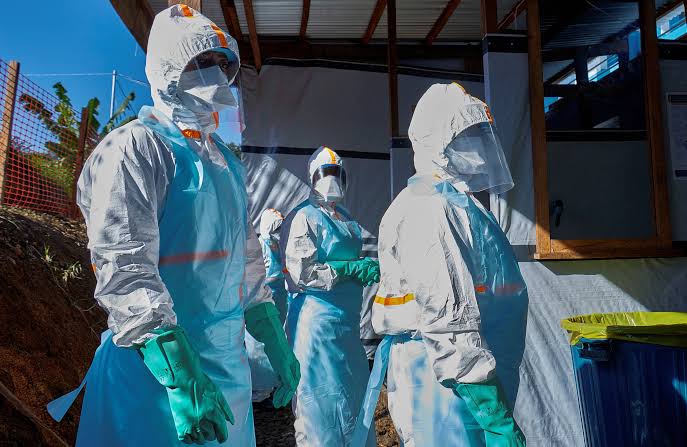
More than 40 healthcare workers have reportedly been killed, while treatment facilities and ambulances have come under attack. Aid agencies say insecurity is preventing teams from reaching some affected communities.
Thousands of responders are on the ground
Despite the obstacles, international agencies are expanding the response.
The UN Office for the Coordination of Humanitarian Affairs said partners have added:
- 35 safe and dignified burial teams
- 286 community-based response teams
- More than 2,500 volunteers and civil-protection personnel
WHO has deployed more than 260 experts and delivered over 330 tonnes of medical and logistical supplies to support treatment, surveillance and containment.
The World Food Programme is assisting frontline operations and medical evacuations through the UN Humanitarian Air Service.
Meanwhile, the International Organization for Migration has screened more than one million people across the region.
Neighbours prepare for cross-border spread
The threat does not stop at the DRC’s borders.
IOM has launched a preparedness plan covering 11 countries, with particular concern about possible transmission into neighbouring Burundi.
Burundi has not confirmed an Ebola case, but WHO says it is strengthening laboratory capacity, updating response procedures and increasing public awareness because of its proximity to affected areas in the DRC.
The preparations reflect a central concern for health authorities: an outbreak that is difficult to contain inside one conflict-affected country could become significantly harder to control once it crosses borders.
Uganda declares separate outbreak over
There is, however, one piece of encouraging news.
WHO has declared Uganda free of its Bundibugyo Ebola outbreak after the country went 42 consecutive days without a new confirmed case.
Uganda recorded 20 infections and two deaths during that outbreak.
The 42-day period is the international benchmark for declaring an Ebola outbreak over because it represents twice the maximum known incubation period for the disease.
For Uganda, that milestone marks a successful containment effort.
For the DRC, the emergency is moving in the opposite direction.
The message from the UN is increasingly urgent: the tools to control Ebola exist, but responders need the money, security and access to use them before the window closes.