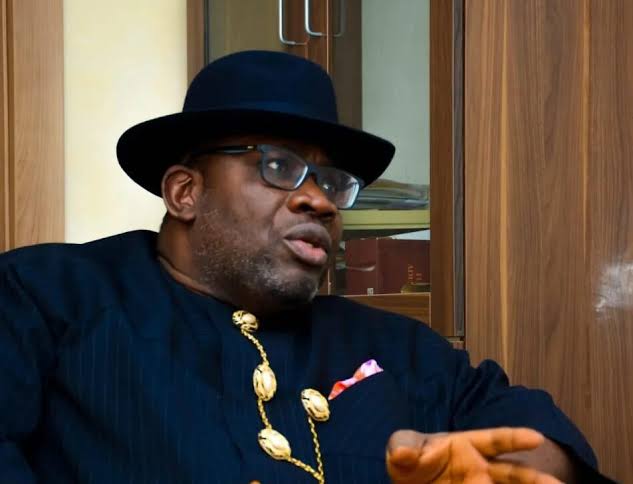
Senator Seriake Dickson has drawn a clear line between himself and the Obidient and Kwankwasiyya movements.
The national leader of the Nigeria Democratic Congress (NDC) said his political allegiance is to the party as it prepares for the 2027 general elections.
Dickson made the clarification on Arise TV’s Prime Time on Wednesday while discussing the relationship between the NDC and the support movements associated with its presidential candidate, Peter Obi, and vice-presidential candidate, Rabiu Kwankwaso.
“I’m not a member of Kwankwasiyya. I’m not a member of Obidient. I am NDC,” Dickson said.
Dickson draws distinction between party and support groups
While distancing himself from both movements, Dickson acknowledged their right to operate independently.
He noted that the distinction was particularly important because the leaders of the two movements—Obi and Kwankwaso—are now the NDC’s presidential and vice-presidential candidates.
For Dickson, however, the political priority has shifted from identity to electoral strategy.
He said the party had already settled its internal debates over its candidates and should now concentrate on the bigger task of winning the 2027 election.
“There are no internal battles to fight in the NDC. We have decided candidature. The next stage of the battle, strategically, is to win the election,” he said.
‘Take the message to Nigerians’
Dickson urged supporters of both Obi and Kwankwaso to avoid allowing questions of political identity to distract from the party’s campaign.
Instead, he said, supporters should focus on communicating the NDC’s message to voters and building support ahead of the election.
He characterised the relationship between the NDC and the two support movements as a strategic partnership built around a shared electoral objective.
“We have a partnership that is committed to winning the next elections. That is the most important thing,” he said.
A relationship that predates the NDC
Dickson also pointed to his longstanding political relationships with Obi and Kwankwaso.
He said his interactions with both politicians began before the NDC was established, with the three having worked together through different political arrangements over the years.
His latest comments therefore frame the 2027 contest less as a question of competing support-group identities and more as an effort to bring those constituencies behind a single NDC electoral project.