
America can design the next generation of biotechnology. The harder question is whether it can manufacture it at home.
For Seattle biotech company Arzeda, that gap is impossible to ignore.
The startup designs enzymes used in products ranging from laundry detergent to stevia. Its technology reaches an estimated 1.8 billion consumers worldwide, and artificial intelligence is helping its researchers develop new enzyme designs in days rather than weeks.
But when those designs need to become commercial products, Arzeda frequently looks beyond U.S. borders.
Most of the company’s specialized enzymes are manufactured in Western Europe and India, with one domestic contract manufacturing partner in Wisconsin.
That dependence on overseas production is exactly the kind of vulnerability federal biotechnology officials came to Seattle to examine this week.
The science is advancing faster than the factories
During a Tuesday visit by the National Security Commission on Emerging Biotechnology, Seattle industry leaders delivered a straightforward message:
The United States has world-class biotech research. It does not yet have enough of the infrastructure or skilled workers needed to turn that research into products at scale.
Arzeda CEO Alexandre Zanghellini said finding U.S. manufacturers with both the technical expertise and available capacity to produce highly specialized proteins has been challenging.
For companies trying to move discoveries from the laboratory into the marketplace, the consequences can be severe.
A manufacturing delay, Zanghellini said, can become “catastrophic.”
The problem is bigger than one company.
Washington has built a formidable life-sciences ecosystem around institutions such as the University of Washington, Fred Hutchinson Cancer Center and the Allen Institute. The University of Washington’s Institute for Protein Design, led by 2024 Nobel laureate David Baker, has helped launch more than 20 companies.
Yet turning that scientific strength into domestic manufacturing capacity remains difficult.
The “valley of death” in biotech
Seattle biotech leaders described a familiar gap between research and commercial production.
Federal programs can support basic research. Venture capital can fund promising early-stage companies.
Then comes the expensive part.
A biotech startup eventually needs physical facilities, specialized equipment, manufacturing expertise and trained workers. At that stage, traditional financing becomes much harder to secure.
Zanghellini said venture investors often don’t see sufficient returns to justify funding manufacturing infrastructure, while banks can also be reluctant to finance facilities with highly specialized uses.
That leaves startups with an uncomfortable choice:
- Build a manufacturing operation themselves, requiring enormous capital and expertise.
- Find a domestic contract manufacturer, if one has the necessary capabilities and capacity.
- Move production overseas, where the infrastructure may already exist.
For many companies, the third option is the most practical.
Why China raises the stakes
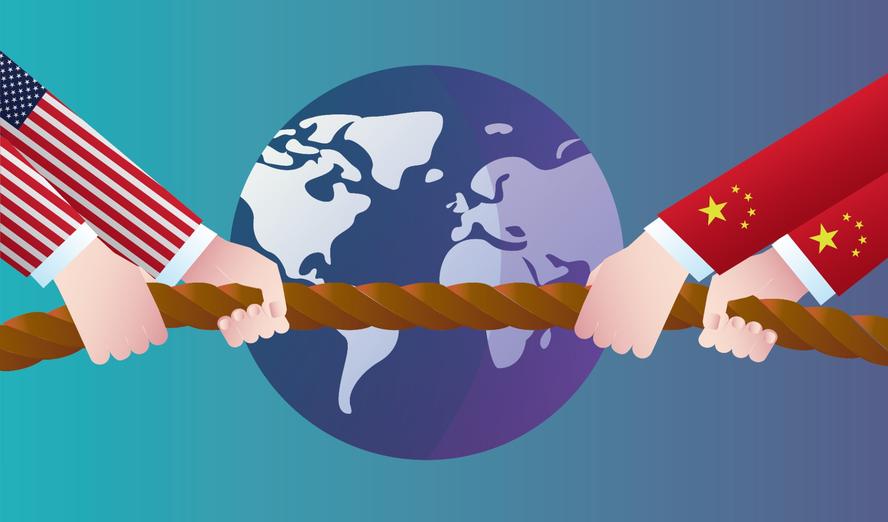
The manufacturing challenge is also becoming a national-security issue.
China has spent years treating biotechnology as a strategic industry. Its 2026 Five-Year Plan continues to prioritize fields including biomedicine, biomanufacturing and pharmaceuticals.
That creates pressure on U.S. companies competing in the same global market.
If another country can manufacture a biological product more quickly and cheaply, businesses have an obvious economic incentive to use that capacity.
Seattle-based Sana Biotechnology provided a recent example. The company abandoned plans for a manufacturing facility in Bothell, Washington, that was expected to create hundreds of jobs and instead turned to an outside manufacturer to reduce costs.
Snehal Patel, Sana’s executive vice president and chief technology officer, told the commission he believes the Seattle region could eventually compete with China’s integrated supply chain on both cost and speed—but only with the right investment.
The ideal domestic system, industry leaders said, would provide flexible manufacturing capabilities that companies could access without having to construct an entire facility themselves.
It would also protect valuable trade secrets.
A national manufacturing network
The federal commission believes government policy could help close that gap.
One of its recommendations calls for a nationwide network of manufacturing facilities capable of scaling bioindustrial products before they reach full commercial production.
The idea is relatively simple: give emerging companies somewhere to manufacture and test products at larger scales without forcing every startup to build its own factory.
That could reduce one of the biggest barriers between a promising laboratory discovery and a commercially viable product.
The commission has also recommended greater transparency around overseas supply-chain risks, including requiring companies to identify vulnerabilities connected to foreign countries of concern.
Alexander Titus, a commission member who has led AI-focused biotechnology initiatives, argued that domestic manufacturing is ultimately about resilience.
A disruption caused by geopolitical conflict could affect supplies of medicines and other biological products in the United States even when the conflict itself is thousands of miles away.
For Titus, maintaining domestic production capacity is therefore more than an economic strategy.
It is part of national security.
AI is accelerating discovery. Who will manufacture the results?
Arzeda illustrates the speed of the technological shift.
The company has developed an increasingly automated workflow in which AI can refine models, recommend the next experiment and help researchers test thousands of biological sequences in a single experimental cycle.
Its first commercially launched AI-designed product was a stevia ingredient introduced in 2024.
The company is also negotiating a potential $44 million agreement with the Defense Threat Reduction Agency involving biothreat response.
But faster discovery only makes the manufacturing bottleneck more obvious.
If AI can generate promising biological designs at unprecedented speed, the ability to produce those designs at scale becomes an increasingly important competitive advantage.
The bottleneck may no longer be inventing what biology can do. It may be building enough capacity to turn those inventions into real-world products.
The missing piece: workers
Factories alone won’t solve the problem.
Biomanufacturing also requires technicians and other workers with specialized skills.
Rebecca Bryant, director of government relations at Fred Hutch, said Washington has developed strong training for biomedical research but lacks a comparable pathway into entry-level biomanufacturing careers.
Titus described the challenge more broadly as a problem of “bioliteracy.”
His argument is that biology should become a more familiar problem-solving discipline—alongside engineering, chemistry and computing—rather than a subject understood primarily by specialists.
There are already efforts underway.
The Hutch Advance partnership with Shoreline Community College trains laboratory technicians and helps connect graduates with jobs. Sana Biotechnology has also explored ways to move workers into biomanufacturing roles.
Seattle industry representatives have suggested creating a state- or federally supported workforce consortium to expand those efforts.
The federal commission has likewise called for greater investment in biomanufacturing training.
The clock is ticking
The National Security Commission on Emerging Biotechnology was established by Congress in 2022 to examine how biotechnology intersects with national security and how the United States can maintain its competitive position against China.
The bipartisan commission has produced 49 recommendations, calling for at least $15 billion in federal investment over five years across areas including manufacturing, workforce development, supply-chain security and private investment.
The commission is scheduled to wind down in December.
According to Titus, 26 of its 49 recommendations have already been incorporated into law in some form.
The remaining question is whether the broader strategy will become reality.
Seattle already has the researchers. It has the startups. It has the universities, investors and scientific talent.
What it needs now is the bridge between discovery and production.
If the United States cannot build that bridge, its biotech breakthroughs may continue to be invented at home—and manufactured somewhere else.