
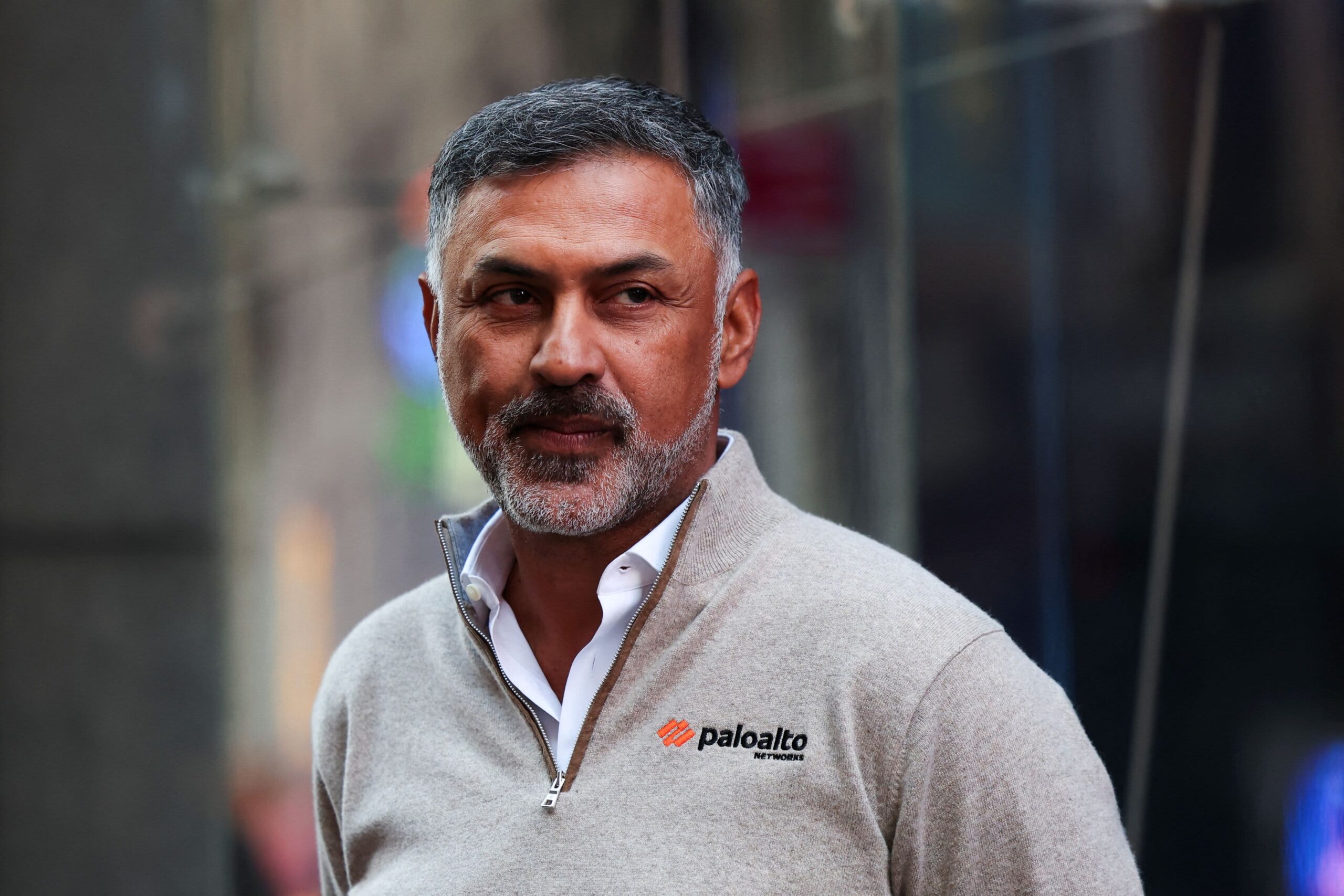
AI is changing the cybersecurity game—and according to Palo Alto Networks CEO Nikesh Arora, companies may have to spend heavily to keep up.
Arora estimates that businesses around the world are sitting on roughly $1 trillion worth of outdated cybersecurity infrastructure that was built before AI became a major part of the threat landscape.
Speaking to CNBC’s Jim Cramer on Mad Money, Arora said security systems installed years ago were not designed to deal with attacks moving at machine speed.
That leaves companies with a difficult choice: modernise their defenses or risk falling behind attackers using AI to find weaknesses faster.
AI Is Raising the Stakes
Arora believes artificial intelligence will accelerate the cybersecurity arms race.
Attackers can use AI to identify vulnerabilities and automate parts of an attack far more quickly than humans can. Businesses, meanwhile, need security tools capable of responding at a similar pace.
That creates a growing demand for new cybersecurity technology.
Arora’s message to companies is blunt: AI adoption and cybersecurity now go hand in hand.
Palo Alto Is Already Seeing Demand
The warning comes as Palo Alto Networks reports strong business momentum.
The company exceeded Wall Street expectations for its fiscal fourth quarter and delivered an upbeat outlook for the year ahead.
Arora believes the potential market is much larger than a temporary increase in cybersecurity spending.
He sees AI forcing companies to rethink security architecture across their organisations—and potentially creating years of additional demand for cybersecurity products and services.
Wall Street’s AI View Has Changed
Earlier in the year, investors worried that AI could threaten established cybersecurity companies.
The concern was straightforward: if AI can automate sophisticated security tasks, perhaps traditional cybersecurity software would become less valuable.
That narrative has increasingly shifted.
The same technology that gives attackers new capabilities can also help defenders identify weaknesses, test systems and respond to threats.
AI may not replace cybersecurity. It could make cybersecurity even more important.
Mythos Put the Threat in Focus
Arora highlighted Anthropic’s Mythos model as an important moment in that change.
He said the technology demonstrated how AI could be applied to software vulnerabilities, making the risks of AI-powered attacks more tangible for businesses.
Palo Alto Networks shares have risen 113% since April 7, after the stock had been negative for the year before that point.
Arora said he had spent years warning customers that their defenses were not ready for the next generation of threats. The emergence of powerful AI models, he suggested, made that warning much harder to dismiss.
Palo Alto’s New AI Security Push
The company is also trying to help customers address the problem.
Arora said Palo Alto has discussed its Frontier AI Critical Defense Program with around 2,000 companies.
The programme, introduced in August, uses advanced AI models to assess security defenses, uncover vulnerabilities and help organisations upgrade older infrastructure.
The spending won’t happen overnight.
But Arora believes the underlying opportunity is much bigger than a single quarter or product cycle.
A Bigger, Longer Cybersecurity Market
The $1 trillion figure is Arora’s estimate, not an independent industry forecast. Still, his broader argument points to a major shift.
As businesses deploy increasingly capable AI, they will also have to defend against increasingly capable AI-powered attacks.
That could mean more security spending today—and a much longer growth runway for the cybersecurity industry.
The AI boom may ultimately create two races at once: one to build smarter systems, and another to protect them.