
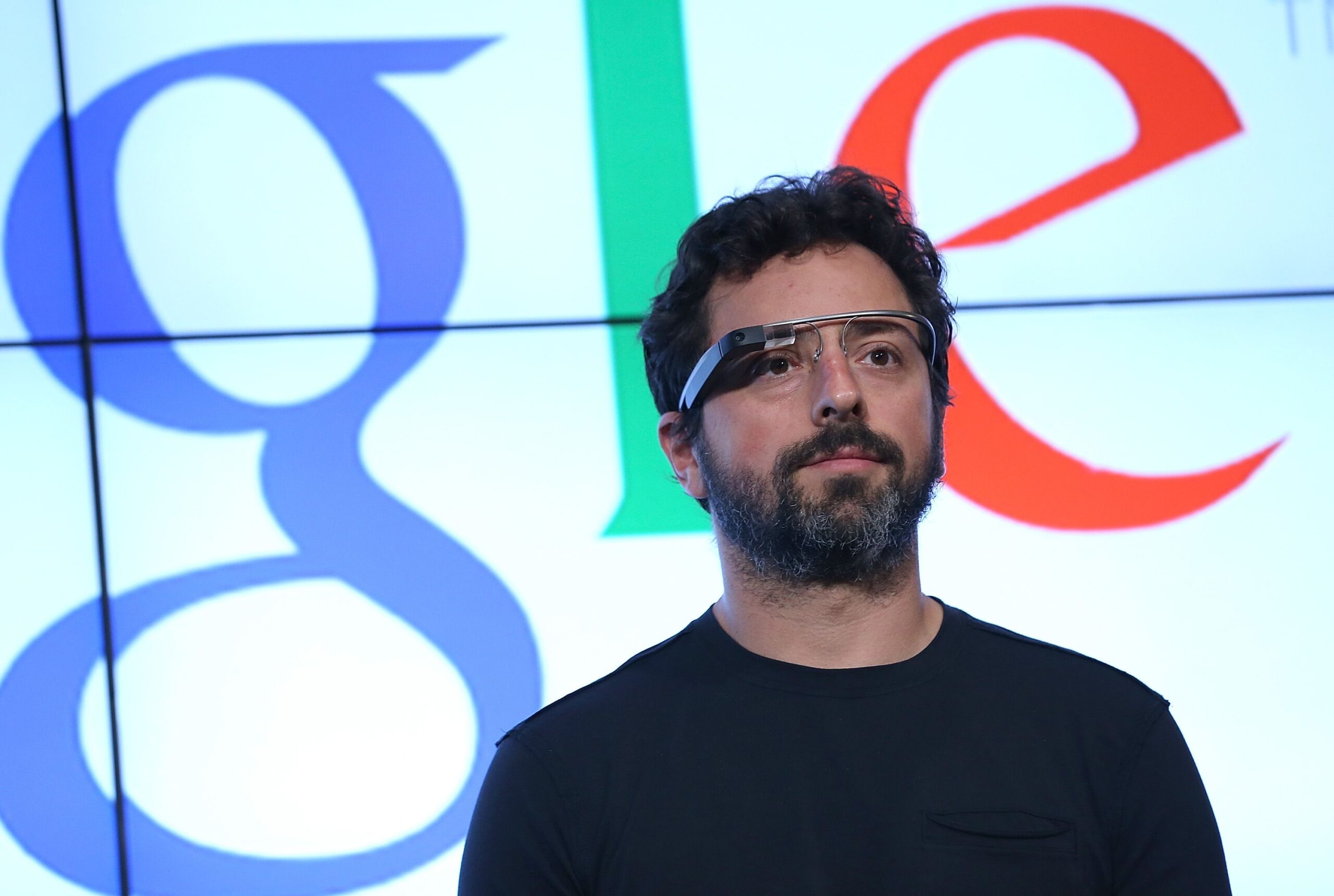
Sergey Brin has put an extraordinary price tag on his opposition to California’s proposed billionaire tax: $102 million and counting.
The Google cofounder has emerged as the single biggest financial backer of the campaign fighting Proposition 40, a November ballot measure that would impose a one-time 5% tax on certain billionaires who were California residents at the start of 2026. For Brin, whose fortune is measured in the hundreds of billions of dollars, the stakes are far larger than his political spending.
If the measure were applied to a fortune of roughly $260 billion, Brin’s potential bill could approach $13 billion.
That enormous gap—$102 million spent to fight a tax that could cost him billions—captures the scale of California’s increasingly bitter battle over wealth, taxation and the future of the state’s economy.
Brin Becomes the Face of the Billionaire Tax Fight
Campaign filings show Brin has contributed a total of $102 million to Building a Better California, a political advocacy organization and PAC opposing the proposed wealth tax while backing broader business-friendly policies, including efforts involving housing and infrastructure affordability.
Overall spending aimed at blocking the tax has surpassed $187 million, according to campaign filings, making Brin by far the largest individual contributor to the opposition effort. By comparison, groups supporting the tax have raised roughly $32 million.
The spending underscores how unusual Proposition 40 is. Rather than taxing annual income, the measure would target accumulated wealth—primarily the value of assets such as businesses, securities, art, collectibles and intellectual property.
Under the measure, billionaires who were California residents on January 1, 2026, would face a one-time tax of up to 5% on covered assets worth more than $1 billion. The tax would be due in 2027, although taxpayers could elect to spread payments over five years, with additional costs for doing so.
The proposed revenue would be directed overwhelmingly toward healthcare. Ninety percent would go toward healthcare services, while the remaining 10% would support education-related programs, food assistance and administration of the tax.
That makes Proposition 40 not simply a tax debate, but a fight over how California should finance its social safety net—and who should pay for it.
Why the Proposed Tax Matters So Much to Brin
For most taxpayers, even a 5% wealth levy would be difficult to imagine. For someone with a fortune approaching $260 billion, however, the potential liability becomes almost unfathomably large.
A 5% assessment on $260 billion works out to approximately $13 billion.
Brin’s wealth, like that of many technology billionaires, is tied heavily to valuable company holdings and other investments rather than a conventional salary. That distinction is central to the argument surrounding Proposition 40.
California already collects income taxes from wealthy residents, but income taxes generally apply when money is earned or realized. A wealth tax instead reaches the accumulated value of assets.
That difference has become a central point of the national debate over economic inequality. Supporters argue that billionaires can see their fortunes rise dramatically without realizing comparable taxable income. Opponents counter that taxing wealth could encourage wealthy residents to relocate, potentially reducing the state’s future income-tax revenue and weakening its economic base.
California’s Wealth Gap Is at the Center of the Debate
The controversy comes at a particularly significant moment for California.
The state has one of the largest economies in the world, with enormous concentrations of wealth generated by technology, finance and other industries. At the same time, California faces severe affordability pressures and persistent poverty.
That contrast has made the state a prominent example of what economists and commentators describe as a K-shaped economy—one in which the financial fortunes of wealthy households continue climbing while lower-income residents struggle with housing, healthcare and the broader cost of living.
Proposition 40’s supporters see the state’s enormous concentration of private wealth as an opportunity to raise substantial funding for public programs.
Opponents see something very different: a tax policy that could encourage some of the state’s most productive and mobile taxpayers to leave.
And that disagreement has drawn some of the biggest names in Silicon Valley into the fight.
Which Billionaires Are Fighting Proposition 40?
Brin is not alone.
Former Google CEO Eric Schmidt and PayPal cofounder Peter Thiel have also supported efforts opposing the measure. Other prominent billionaires whose potential departure from California has become part of the debate include Google’s Larry Page, auto-loan billionaire Don Hankey, former Uber CEO Travis Kalanick and filmmaker Steven Spielberg.
Brin has made his opposition particularly personal.
The Google cofounder was born in the Soviet Union and immigrated to the United States with his family in 1979. He has compared the proposed California tax to the socialism he experienced growing up, warning that he does not want California to move toward a system resembling the one his family left behind.
His comments illustrate just how ideological the battle has become. For supporters, Proposition 40 is an attempt to make an exceptionally wealthy group contribute more toward public services. For opponents such as Brin, it represents a dangerous expansion of government taxation into personal wealth.
Gavin Newsom Is Also Against the Wealth Tax
The opposition is not limited to Silicon Valley.
California Gov. Gavin Newsom has also criticized Proposition 40, arguing that the measure could ultimately weaken the state’s tax base.
Newsom has warned that losing wealthy taxpayers could reduce the revenue available for public priorities, including education, childcare, firefighting and public safety.
The argument is straightforward: California’s billionaires currently generate income-tax revenue for the state. If a substantial number relocate, California could lose some of that recurring revenue.
That creates a potentially uncomfortable paradox for Proposition 40. A measure designed to raise money for healthcare and other public services could encourage some of the taxpayers who currently help finance those services to move elsewhere.
Are Billionaires Already Leaving California?
There are signs that some of the state’s wealthiest residents and their business interests are becoming increasingly mobile.
Brin now lists Nevada as his residence in state records, according to the original reporting. Nevada has no individual state income tax, making it an obvious alternative for wealthy residents concerned about California’s tax burden.
Meanwhile, Larry Page has moved certain assets outside California. His family office, Koop, was incorporated in Delaware in late 2025. Oceankind, an ocean-focused nonprofit founded by Page’s wife, Lucy Southworth, was also incorporated in Delaware around the same period.
Brin has also reportedly purchased a $51 million property near Miami Beach.
None of those developments, by themselves, proves that California’s wealth-tax proposal is driving a billionaire exodus. But they have intensified concerns that the state’s wealthiest residents may have more options than ordinary taxpayers when confronted with higher taxes.
Would a Billionaire Exodus Actually Hurt California?
This is where the debate becomes much more complicated.
Six prominent billionaires—Brin, Page, Thiel, Hankey, Kalanick and Spielberg—have been identified as potential departures. Together, they could represent an estimated $27 billion in tax revenue under certain projections, roughly one-quarter of the $100 billion supporters expect Proposition 40 to generate over five years.
That sounds like a potentially devastating loss.
But recent research from economists Jasper Boll, Emmanuel Saez and Gabriel Zucman at the National Bureau of Economic Research offers a different perspective.
Their 2026 working paper estimates that California billionaires hold roughly $2.3 trillion in wealth. Despite those enormous fortunes, the researchers found that billionaires pay a relatively small amount in California income taxes when measured against their total wealth.
The paper estimates annual California income-tax payments by billionaires at about 0.2% of their wealth.
That distinction is critical.
If a billionaire leaves California, the state may lose future income-tax payments. But the size of that loss has to be compared with the enormous one-time revenue Proposition 40 could produce.
The researchers estimate that the proposed tax could raise around $100 billion. Even significant billionaire migration, they argue, would not necessarily erase the financial benefit of the tax.
The Numbers Behind California’s Billionaire Tax
The NBER analysis puts the debate into particularly stark terms.
California’s billionaires have accumulated extraordinary wealth over recent years, while their annual state income-tax payments represent only a small fraction of that wealth.
According to the researchers, even if every California billionaire left the state, it could take roughly 25 years of lost income-tax revenue to equal the estimated $100 billion raised by the proposed wealth tax.
If only one-quarter of the state’s billionaires departed, the researchers estimate that replacing the $100 billion through lost income-tax revenue could take roughly a century.
Their conclusion is essentially that the proposed 5% one-time tax is enormous compared with what billionaires currently pay in state income tax, but relatively modest compared with the growth of their fortunes.
That does not settle the political argument. It does, however, challenge the idea that billionaire departures would automatically make Proposition 40 financially disastrous for California.
A High-Stakes Test for California—and Wealth Taxes Everywhere
The fight over Proposition 40 is ultimately about much more than Sergey Brin’s $102 million political spending spree.
It is a test of whether governments can successfully tax accumulated billionaire wealth without triggering the mass migration critics predict.
For California, the potential rewards are enormous. The measure could generate tens of billions of dollars for healthcare and other programs at a time when affordability and public-service funding remain major concerns.
For billionaires, the stakes are equally enormous. A one-time 5% levy on covered wealth can translate into billions of dollars for the wealthiest individuals in the state.
And for Brin, the numbers make the political battle unusually personal. He has already spent $102 million trying to stop the tax. If Proposition 40 ultimately survives the political fight and applies to his fortune at the level estimated, that $102 million could look relatively small next to a potential $13 billion tax bill.
California voters will decide the measure on November 3, 2026.
Whatever happens, the outcome will provide an unusually revealing answer to a question increasingly being asked far beyond California: Can governments tax billionaire wealth at a meaningful scale without driving away the people who own it?