
Nigeria is rewriting the rules for deep offshore oil investment—and the government is betting that clearer rules can unlock up to $50 billion in fresh capital.
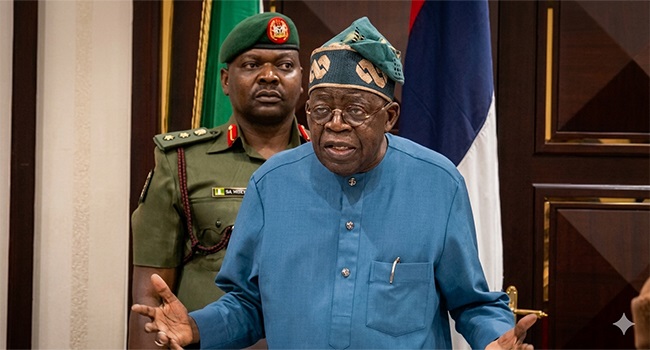
President Bola Tinubu has approved a new investment framework for Nigeria’s deep offshore oil and gas industry, replacing the long-standing practice of negotiating incentives separately for individual projects.
The reform is being implemented through the Deep Offshore Oil and Gas Projects Incentives (Tax Remission) Order, 2026.
According to the Presidency, the new system is intended to give investors greater certainty while ensuring Nigeria retains long-term value from its offshore resources.

Why the reform matters
For years, major offshore developments have faced investment and commercial hurdles, with some projects remaining on hold for extended periods.
The new framework changes the approach.
Instead of negotiating fiscal incentives project by project, qualifying developments will operate under defined eligibility requirements, clearer procedures and a more predictable investment structure.
The government expects that greater certainty will make Nigeria more competitive for international capital, particularly in a sector where investors can choose between offshore opportunities across multiple oil-producing countries.
Bonga South West is the first major test
The framework is expected to support the next generation of deep offshore projects, starting with the approximately $10 billion Bonga South West development.
That makes the project an important early test of whether the government’s new policy can turn long-standing offshore opportunities into actual investment and production.
Olu Arowolo-Verheijen, Special Adviser to the President on Oil and Gas, said qualifying projects would be expected to maximise work carried out within Nigeria where technical and commercial conditions allow.
That could create opportunities across several parts of the domestic economy, including:
- Engineering and fabrication
- Marine logistics
- Technical services
- Project management
- Skilled employment
- Local supply chains
The government’s ambition extends beyond attracting capital. It wants offshore investment to generate more economic activity inside Nigeria and strengthen the country’s position as a regional centre for deepwater project execution.
The reform follows earlier Bonga South West incentives
The latest announcement builds on an earlier move by the Tinubu administration.
In January 2026, the President approved the publication of targeted investment incentives for Shell’s proposed Bonga South West project.
The objective was to help the development reach its Final Investment Decision (FID) and encourage new capital into Nigeria’s energy sector.
At the time, the government presented the project as strategically important for increasing oil output, creating jobs and strengthening foreign-exchange earnings.
But one major question remained: what exactly would the incentives look like?
Details of the package were not publicly available immediately after the January approval, keeping attention on how the government would ultimately structure its deep offshore investment policy.
The 2026 tax-remission order now provides a broader framework rather than limiting the approach to a single project.
Nigeria needs new offshore investment
The timing is significant.
Nigeria’s deep offshore industry has faced declining investment as older fields mature and companies become more selective about committing billions of dollars to new developments.
The Petroleum Industry Act (PIA) was designed to overhaul the industry’s regulatory and fiscal environment, including deepwater operations. Yet major international oil companies have continued to assess new projects cautiously.
That leaves the government with a difficult equation:
Nigeria needs more offshore investment to sustain production, but investors need predictable economics before committing billions of dollars.
The new framework is an attempt to close that gap.
ExxonMobil’s $1 billion commitment adds momentum
The reform also arrives after another significant offshore investment announcement.
ExxonMobil and its partners recently committed $1 billion to the Usan Infill Project, an offshore development expected to add roughly 40,000 barrels per day to Nigeria’s crude production.
That commitment, alongside the government’s new deep offshore framework, points to renewed activity in a sector that has struggled to attract major fresh capital.
What to watch next
The biggest question is no longer whether Nigeria wants more deep offshore investment.
It is whether the new rules can convert investor interest into final investment decisions, construction activity and additional production.
Bonga South West will be closely watched. If the framework delivers the certainty the government promises, it could become a template for other large offshore developments.
If it works, the potential upside goes beyond the headline $50 billion investment target: higher oil production, stronger local supply chains, skilled jobs and additional foreign-exchange earnings could follow.
The policy has changed. Now the industry will be watching for execution.