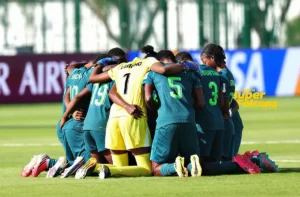
Nigeria’s Super Eagles could be heading back to Lagos for their Africa Cup of Nations (AFCON) qualifying campaign, with the Nigeria Football Federation (NFF) reportedly considering the Teslim Balogun Stadium as an alternative venue for their upcoming home fixture against Tanzania.
The proposed change could mark a significant moment for Nigerian football, as the national team has played most of its home matches at the Godswill Akpabio International Stadium in Uyo since 2022. A return to Lagos would reconnect the Super Eagles with a city that once served as one of the most important centres of football in the country.
However, while the possibility of staging the Tanzania match in Lagos has generated interest, several questions remain unanswered. The NFF has yet to confirm the reason behind the proposed venue change, and the Teslim Balogun Stadium must still satisfy the necessary requirements before it can host an international fixture.
With preparations for the AFCON qualifiers approaching, attention is now turning to whether the Lagos stadium will be ready in time to welcome the Super Eagles.
NFF Considers Lagos for Super Eagles’ Tanzania Match
Reports suggest that the NFF is exploring the possibility of moving Nigeria’s home AFCON qualifier against Tanzania from Uyo to the Teslim Balogun Stadium in Lagos.
The fixture forms part of a two-legged encounter between the Super Eagles and Tanzania, with Nigeria scheduled to host the first leg before travelling to Zanzibar City for the return match next month.
Although the proposed move has not been officially confirmed, the Teslim Balogun Stadium appears to be under consideration as the venue for Nigeria’s home game.
The reason for the potential change remains unclear. Nevertheless, the decision would represent a departure from the arrangement that has seen the Super Eagles regularly play their home matches in Uyo over the past few years.
The Godswill Akpabio International Stadium has become a familiar base for the national team since 2022, hosting several important international fixtures. Moving the Tanzania encounter to Lagos would therefore introduce a different atmosphere and give supporters in Nigeria’s commercial capital an opportunity to watch the team on home soil.
For now, the proposed switch remains under consideration, with the stadium’s readiness and official approval expected to play crucial roles in determining the final decision.
Super Eagles’ Recent Results Put Focus on Tanzania Clash
The possible change of venue comes after a mixed run of results for Nigeria in their recent AFCON qualifying matches.
The Super Eagles hosted Madagascar at the Godswill Akpabio International Stadium on September 25 and secured a 2-1 victory. The result offered encouragement as the team continued its preparations for the qualifying campaign.
However, Nigeria failed to build on that performance in their subsequent match, suffering a disappointing 3-0 defeat to Guinea-Bissau.
The contrasting results highlighted the importance of consistency as the Super Eagles pursue their objectives in the competition. With Tanzania next on the schedule, the team will be eager to deliver a stronger performance and maintain momentum in the qualifiers.
The two-legged meeting will present Nigeria with an opportunity to make a statement, beginning with the home fixture before the return encounter in Zanzibar City.
Whether the first match takes place in Uyo or Lagos, the Super Eagles will face pressure to produce a convincing display. A change of venue could also bring a fresh atmosphere, particularly if supporters turn out in large numbers to back the team.
Teslim Balogun Stadium Undergoing Major Renovation
One of the key factors surrounding the proposed move is the ongoing renovation work at the Teslim Balogun Stadium.
Recent reports indicate that the Lagos facility is being upgraded, with the playing surface among the areas receiving attention. The stadium now has a natural grass pitch, while other important facilities are also undergoing improvements.
These developments could strengthen Lagos’s chances of hosting the Tanzania fixture, provided the work is completed within the required timeframe.
The renovations are particularly significant because the condition of sports facilities in Lagos has been a longstanding concern. Poor maintenance over the years has affected several stadiums in the city, limiting their ability to host major football matches consistently.
Improving the Teslim Balogun Stadium could help address some of those concerns and restore its status as a viable venue for high-profile sporting events.
If the renovation project is completed before November, the stadium could be in a position to host the Super Eagles’ proposed home match against Tanzania.
However, completing the physical work alone may not be enough to secure the fixture. The stadium must also meet the relevant standards for international football before the authorities can approve it.
CAF Approval Remains a Major Hurdle
Despite the reported improvements, the Teslim Balogun Stadium has not yet received approval from the Confederation of African Football (CAF) to host the match.
This remains a crucial step in the process. Before the Super Eagles can play their Tanzania qualifier in Lagos, the NFF must ensure that the stadium undergoes the required inspection and certification procedures.
CAF approval is essential because international matches must be staged at venues that satisfy the governing body’s applicable requirements.
Consequently, the proposed switch will depend not only on the progress of the renovation work but also on the outcome of the necessary assessment.
Until the inspection and certification process is completed, the Teslim Balogun Stadium cannot be regarded as a confirmed venue for the fixture.
The NFF will therefore need to resolve the outstanding requirements before making a final decision. The timing of the renovation work and the approval process could ultimately determine whether Lagos gets the opportunity to host the national team.
For Nigerian supporters, the coming weeks will be important as they await clarity on where the Super Eagles will play their home encounter against Tanzania.
A Potential Return to Lagos Could Revive Old Memories
For a city with a rich football history, hosting the Super Eagles again would carry significance beyond the immediate demands of the AFCON qualifiers.
Lagos was once a major home for Nigeria’s national team and played an important role in the country’s football history. One of the most memorable events associated with the city was the final of the 2000 Africa Cup of Nations, staged at the National Stadium in Surulere.
Nigeria faced Cameroon in a dramatic contest that ended 4-4 after extra time, before Cameroon won 4-3 on penalties to claim the continental title.
The match remains a notable moment in African football history, particularly for Nigerian fans who witnessed the Super Eagles fall short in front of a home crowd.
Since then, the national team’s home fixtures have increasingly been staged elsewhere, with Uyo becoming its regular venue in recent years.
A return to Lagos would offer an opportunity to renew that connection between the Super Eagles and a city that once played a central role in hosting major football events.
It could also give younger supporters the chance to experience a senior national team match at the Teslim Balogun Stadium, provided the venue receives the necessary clearance.
Could Lagos Fans Turn Out in Large Numbers?
If the proposed move is approved, the Super Eagles’ match against Tanzania could attract considerable interest from football fans across Lagos and neighbouring areas.
The city’s large population and longstanding enthusiasm for Nigerian football could create an energetic atmosphere for the home fixture.
Playing in Lagos would also give supporters who may find it difficult to travel to Uyo a more accessible opportunity to watch the national team in action.
However, the scale of the response will depend on the final venue announcement, the stadium’s readiness and the team’s preparations for the encounter.
A successful return could provide a boost for football in Lagos while demonstrating the potential benefits of restoring and maintaining the city’s sporting infrastructure.
More broadly, the fixture could serve as an important test of whether the renovated stadium is ready to accommodate major international football events.
Super Eagles’ Lagos Move Still Awaits Confirmation
For now, the possibility of moving Nigeria’s home AFCON qualifier against Tanzania to the Teslim Balogun Stadium remains a developing story.
The ongoing renovation work offers a potential pathway for Lagos to welcome the Super Eagles again, but CAF approval remains an essential requirement. The NFF must complete the necessary procedures before the venue can be confirmed.
If the stadium is ready in time and receives the required clearance, the Tanzania fixture could mark a welcome return for the national team to one of Nigeria’s historic football cities.
Until an official announcement is made, however, supporters will have to wait to discover whether the Super Eagles will remain in their familiar home in Uyo or take their next AFCON qualifying challenge to Lagos.