
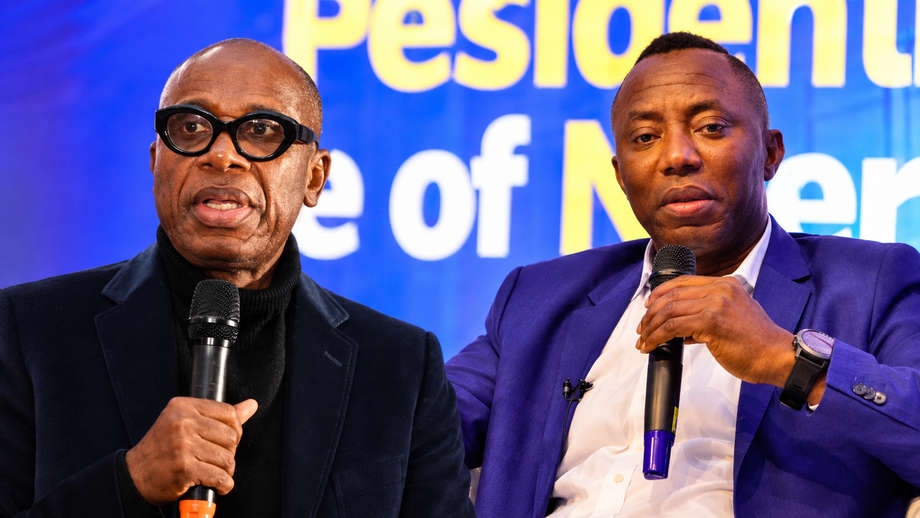
Omoyele Sowore says Rotimi Amaechi owes part of his political career to the democratic system Sowore helped fight to establish.
The African Action Congress presidential candidate made the claim while reflecting on his recent confrontation with the former Rivers State governor at the Nigerian Bar Association’s annual conference in Port Harcourt.
Sowore says he demanded an apology
Speaking on ARISE News on Tuesday, Sowore said he contacted Amaechi after their exchange and told him he expected an apology.
According to Sowore, Amaechi responded by inviting him to his home for food and drinks.
Sowore said he declined the invitation with a joke about being poisoned, while making clear that he did not seriously believe Amaechi would harm him.
The light-hearted exchange came after a much more serious public disagreement at the NBA conference.
The bigger argument: who built Nigeria’s democratic space?
For Sowore, the confrontation was about more than a heated exchange between two politicians.
He argued that his years of activism against military rule contributed to the democratic environment that later allowed politicians such as Amaechi to hold prominent elected and appointed positions.
His point was straightforward: without the return to democratic rule, the political career Amaechi built would not have been possible in its current form.
Sowore pointed to Amaechi’s time as Speaker of the Rivers State House of Assembly, his tenure as governor and his subsequent appointment as Minister of Transportation as examples of opportunities created by democratic governance.
He therefore rejected the idea that his own political influence should be judged solely by whether he has previously occupied government office.
You might want to read this: Why Reinstating Petrol Subsidy Could Put Nigeria’s Reform Gains at Risk
“Leadership is bigger than holding office”
Sowore also pushed back against suggestions that his limited experience in elected or appointed government positions makes him less qualified to lead.
His argument is that leadership can also be demonstrated through activism, political vision, organising and the ability to mobilise people around a cause.
That distinction sits at the heart of his broader political message: a person does not necessarily need a long résumé of government appointments to claim a role in shaping the country’s political direction.
What sparked the confrontation?
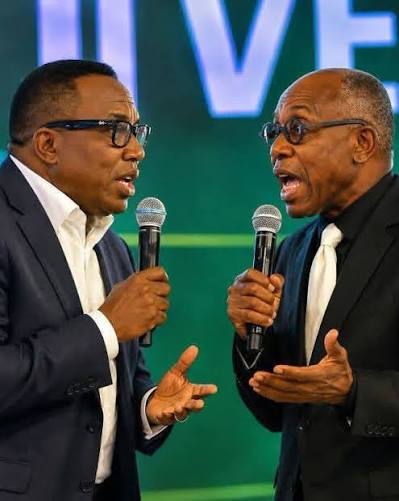
The dispute at the NBA conference began when Sowore challenged aspects of Amaechi’s record as both Rivers governor and Transportation Minister.
Among the issues he raised were railway projects implemented during Amaechi’s time at the federal ministry and the former governor’s views on fuel subsidy.
Amaechi defended his record, citing infrastructure and education projects completed in Rivers State as governor and major railway developments undertaken while he was Transportation Minister.
The disagreement escalated when Amaechi told Sowore to remain silent while politicians were speaking.
That moment turned an already tense policy argument into one of the conference’s most talked-about political exchanges.
Sowore keeps the focus on fuel subsidy
Despite the clash, Sowore said the incident does not change his assessment of his contribution to Nigeria’s democratic development.
He also renewed his opposition to the removal of fuel subsidy, arguing that the economic difficulties that followed the policy were consistent with the consequences he had warned about before the decision was implemented.
For Sowore, the argument is ultimately bigger than Amaechi. It is a claim about political history, democratic struggle and who gets to take credit for the system that allows today’s politicians to wield power.