
Bilateral trade between Nigeria and China reached $18 billion in the first half of 2026, representing a 35 per cent increase compared with the same period of the previous year, according to the Chinese Ambassador to Nigeria, Yu Dunhai.
Dunhai disclosed the figure at a reception hosted by the Chinese Embassy to commemorate the 77th anniversary of the founding of the People’s Republic of China.
According to the ambassador, Chinese imports from Nigeria recorded an even stronger increase during the period, rising by 81 per cent.
“In the first half of this year, our bilateral trade reached $18 billion, up by 35 per cent, with Chinese imports from Nigeria surging by 81 per cent,” he said.
The growth, Dunhai said, reflected the deepening economic relationship between both countries as well as recent efforts to strengthen the institutional framework supporting trade.
“Our practical cooperation is flourishing. Recent agreements on economic partnership and aquatic exports provide strong institutional support for trade expansion,” he said.
China Expands Zero-Tariff Access for African Countries
Dunhai also highlighted China’s decision to extend zero-tariff treatment to 53 African countries, a policy that took effect on May 1.
He said the measure was already having an impact, with China’s imports from Africa increasing by 24 per cent in May and June alone.
“China has implemented zero-tariff treatment for 53 African countries, starting May 1. The impact was immediate. China’s import from Africa grew by 24 per cent in May and June alone,” Dunhai said.
The ambassador said the policy could help African countries turn their natural resource advantages into greater industrial capacity while supporting the implementation of the African Continental Free Trade Area and efforts toward a more balanced global trading system.
He said China’s approach to Africa was based on equality, mutual benefit and solidarity, adding that Beijing remained committed to supporting African integration and self-reliant development.
“Marking 70 years of China-Africa diplomatic relations, we have built a model of sound cooperation based on equality, mutual benefits and solidarity,” he said.
Nigeria-China Ties Expand Beyond Trade
Dunhai said people-to-people exchanges were also contributing to the movement of knowledge, technology and capital between China and Africa.
He pointed to developments in areas including artificial intelligence, digital payments and solar energy as examples of technologies that could help address development challenges across the continent.
“During the China-Africa year of people-to-people exchange, closer ties are accelerating the flow of knowledge and capital,” he said.
The ambassador also highlighted the depth of Nigeria-China relations, noting that the two countries have maintained diplomatic ties for 55 years.
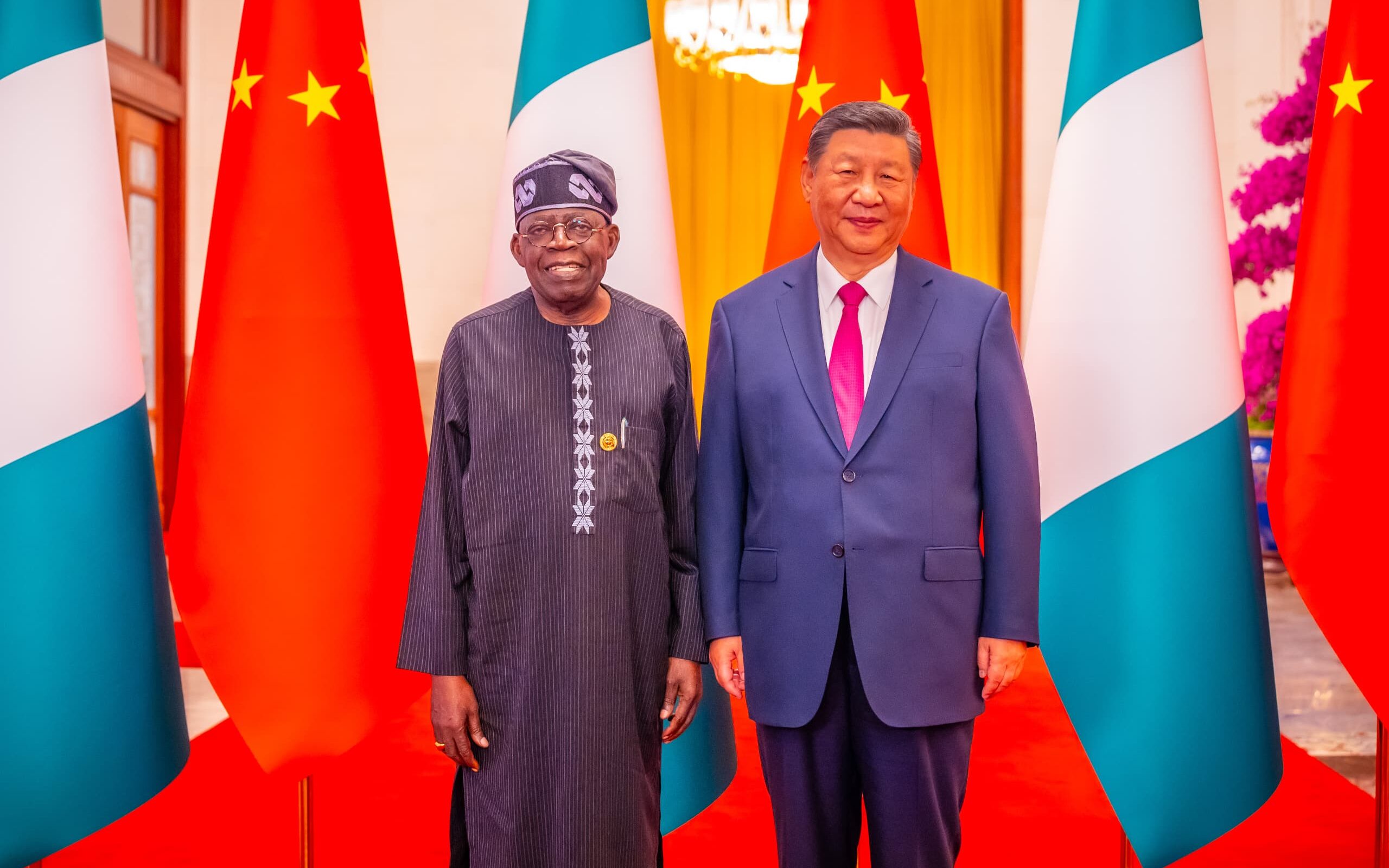
“Celebrating the 55th year of diplomatic ties, China and Nigeria have grown closer through mutual respect and shared success. Under the strategic leadership of President Xi Jinping and President Bola Ahmed Tinubu, our relationship has entered the fast lane,” he said.
Dunhai commended the Tinubu administration’s structural reforms, macroeconomic stabilisation and efforts to improve Nigeria’s business environment.
“We highly commend President Tinubu’s structural reforms, macroeconomic stabilization and business environment enhancements, which have boosted Nigeria’s economic recovery and created optimal conditions for deeper cooperation,” he said.
China Signals More Cooperation Under Renewed Hope Agenda
Looking ahead, Dunhai said China was prepared to align its development cooperation with Nigeria’s Renewed Hope Agenda, particularly in industrialisation, digital development and the green and blue economies.
“Our future cooperation holds boundless potential. China stands ready to align its 55-Year Plan with President Tinubu’s Renewed Hope Agenda across industrialization, digital green and blue economies,” he said.
He also invited Nigeria to participate in international cooperation on artificial intelligence.
“We also invite Nigeria to join the World Artificial Intelligence Cooperation Organization to share global tech development,” Dunhai said.
According to the ambassador, China’s expanding economic strength is being driven by sustained investment in technology, innovation and emerging industries.
He said China’s economy grew by 4.7 per cent in the first half of 2026, describing the performance as a strong start to the country’s 15th Five-Year Plan.
“In the first half of this year, China’s Gross Domestic Product (GDP) grew by 4.7 per cent, securing a strong start for the 15th Five-Year Plan,” he said.
Dunhai added that China’s extensive new-energy supply chain was contributing to global energy stability, while artificial intelligence, robotics and innovative pharmaceuticals were emerging as new drivers of economic growth.
“By fostering new quality productive forces, emerging tech drivers like AI, robotics and innovative pharmaceuticals are thriving, driving global industrial upgrades,” he said.
China Pushes for Greater Role in Global Technology Governance
The ambassador also discussed China’s growing role in global governance, saying Beijing had introduced initiatives aimed at addressing what it described as gaps in the existing global governance system.
According to Dunhai, China had established a group of friends of global governance and issued policy papers promoting international cooperation.
He also said China had supported the creation of international organisations focused on data and artificial intelligence, with the stated goal of ensuring that technological progress delivers broader benefits to countries and populations.
Dunhai said China would continue promoting what it describes as a “community with a shared future for mankind” through international cooperation.
Stronger China-Africa Cooperation
On China-Africa relations, Dunhai said Beijing was marking 70 years of diplomatic relations with the continent and would continue supporting African development.
He said the relationship was increasingly being driven by trade, investment, technology, cultural exchanges and cooperation in emerging areas.
The ambassador also pointed to growing international interest in China, citing increased foreign travel and global interest in Chinese products, culture and development experience.
He said China was using international platforms to promote what he called “China Opportunity 2.0”, with a focus on innovation, industrial cooperation, the green transition and digital development.
According to Dunhai, these areas could provide additional opportunities for China-Africa cooperation and support African modernisation.
Dunhai Reflects on Two Years in Nigeria
Reflecting on his two years as China’s ambassador to Nigeria, Dunhai said travelling across the country had given him a deeper appreciation of Nigerians and their resilience.
“Over the past two years, I have traveled across Nigeria’s bustling cities, rural heartlands, and made many new friends. And I have come to appreciate even more deeply Nigerian people’s resilient, optimistic, and self-reliant Niger spirit,” he said.
He said Nigerians’ determination to embrace new opportunities and improve their circumstances through hard work had earned his admiration.
Dunhai also noted the symbolic importance of October 1 to both countries, as China celebrates its National Day on the same date Nigeria marks its Independence Day.
“We gather here tonight to celebrate the 77th anniversary of the founding of the People’s Republic of China. October 1 marks both China’s National Day and Nigeria’s Independence Day, a shared memory for both of our nations,” he said.
The ambassador thanked Nigerians and Chinese citizens working to strengthen relations between both countries, as well as guests who attended the celebration.
He attributed China’s development to what he described as Chinese modernisation, saying the process was creating opportunities for global development.
“Today, China is advancing national rejuvenation through Chinese modernization, injecting certainty and bringing opportunities for global development,” he said.
Dunhai said China would continue deepening cooperation with Nigeria in areas capable of delivering practical benefits to both countries.
He called for the two nations to maintain the momentum of their relationship through innovation, openness and cooperation.
“Those who walk the same path go far. Let us empower development through innovation, openness and sincere cooperation to continuously enrich China-Nigeria friendship and write a new chapter in China-Africa relations,” he said.
Tinubu Calls for More Nigerian Exports to China
President Bola Ahmed Tinubu, in remarks delivered by the Minister of Power, Joseph Tegbe, congratulated Chinese President Xi Jinping and the Chinese people on the country’s National Day.
The President recalled Nigeria’s 55-year diplomatic relationship with China and acknowledged Chinese contributions to infrastructure development, power, railway modernisation, healthcare and technical training.
However, Tinubu stressed that the expanding relationship should translate into stronger Nigerian production and increased exports to China.
“Our shared task is to translate that asset into stronger Nigerian production and Nigerian exports to China,” he said.
The President also reaffirmed Nigeria’s commitment to the One-China principle, stating that Nigeria recognises the government of the People’s Republic of China as the sole legal government representing the whole of China.
He further called for expanded cooperation in electricity, renewable energy and the manufacturing of power equipment.
Tinubu said such cooperation should place greater emphasis on developing Nigerian engineers, technicians and local enterprises.
With bilateral trade already reaching $18 billion in the first half of 2026, both governments are now looking toward deeper cooperation in trade, technology, energy, manufacturing and industrial development, with Nigeria seeking to expand its productive capacity and increase the value of goods it exports to the Chinese market.