
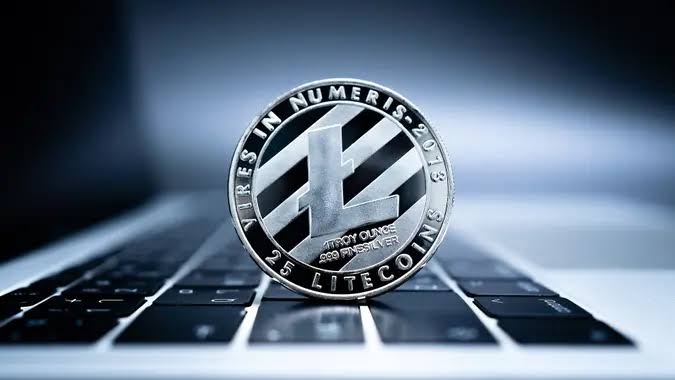
Litecoin is one of the oldest cryptocurrencies still operating today—and it was built with a simple idea: make Bitcoin-style digital payments faster and more accessible.
Created in 2011 by Charlie Lee, Litecoin was developed by modifying Bitcoin’s open-source code. The resulting network retained Bitcoin’s core proof-of-work architecture while changing several technical parameters.
Over the years, Litecoin has established itself as a long-running cryptocurrency focused primarily on peer-to-peer payments and value transfer.
What is Litecoin?
Litecoin (LTC) is a decentralized cryptocurrency launched in October 2011.
Lee, a former Google engineer and MIT graduate, designed Litecoin as an alternative to Bitcoin with faster block production and a different mining algorithm.
The project is often described using the “digital silver” analogy, with Bitcoin positioned as digital gold. The comparison reflects Litecoin’s original goal of complementing Bitcoin rather than directly replacing it.
Unlike traditional currencies, Litecoin operates without a central bank or other institution controlling the network. Transactions are recorded on a public blockchain and secured through a distributed network of miners.
You might want to read this: Litecoin Casino Deposits: Fees, Speed, MWEB and the Best Ways to Use LTC
How Litecoin differs from Bitcoin
Litecoin shares much of Bitcoin’s underlying architecture, but several technical differences affect how the two networks operate.
Faster block times
One of Litecoin’s most recognizable changes is its block interval.
Litecoin targets a new block approximately every 2.5 minutes, while Bitcoin targets roughly 10 minutes.
Faster block production can allow transactions to receive network confirmations more quickly, although actual settlement time depends on factors such as network conditions and the number of confirmations required by a recipient.
This characteristic helped position Litecoin as a cryptocurrency suited to everyday payments.
Larger maximum supply
Litecoin also has a different monetary supply.
The network is designed to produce a maximum of 84 million LTC, compared with Bitcoin’s 21 million BTC.
The larger supply does not inherently make Litecoin more or less valuable. It is simply one of the monetary parameters chosen when the network was created.
Different mining algorithm
Both Litecoin and Bitcoin use proof of work to secure their respective blockchains.
They differ in the hashing algorithms used by miners.
Bitcoin uses SHA-256, while Litecoin uses Scrypt.
That distinction means the networks have historically relied on different types of mining hardware and have developed somewhat different mining ecosystems.
What is Litecoin used for?
Litecoin was designed primarily as a permissionless digital payment network.
Users can transfer LTC directly between cryptocurrency addresses without relying on a bank or traditional payment processor to authorize the transaction.
Its supporters have historically pointed to three characteristics as particularly useful for payments:
- Fast block production
- Generally low transaction costs
- Global accessibility
These properties can make Litecoin practical for transferring relatively small amounts of value, particularly when users need a cryptocurrency payment option rather than a conventional banking rail.
Litecoin and everyday payments
The network’s payment focus remains one of its defining characteristics.
Litecoin can be used wherever merchants, payment processors or other services choose to accept LTC. Over time, the cryptocurrency has been integrated into various commercial and digital platforms.
Its potential usefulness is particularly relevant in situations where traditional financial infrastructure is expensive, unavailable or inconvenient.
However, cryptocurrency adoption varies significantly by country and by merchant. Litecoin’s technical ability to process payments does not mean that every business accepts it.
Litecoin in institutional digital-asset services
Litecoin has also moved beyond its original retail-payment narrative and into parts of the institutional digital-asset ecosystem.
Digital-asset service providers can offer products such as custody, brokerage and lending, allowing eligible clients to hold or transact in LTC through regulated or institution-focused infrastructure.
For example, Sygnum has included Litecoin among the digital assets available through its institutional offering. Depending on eligibility and applicable product terms, clients can access services involving LTC custody and brokerage, as well as use of supported digital assets within lending arrangements.
The availability of these services demonstrates how established cryptocurrencies such as Litecoin can increasingly form part of professional digital-asset portfolios.
Why Litecoin remains relevant
Litecoin is no longer a new cryptocurrency. That is arguably one of its most notable characteristics.
The network has operated since 2011, survived multiple crypto-market cycles and continued to maintain its position among the established blockchain projects.
Its appeal is rooted less in complex smart-contract functionality and more in its original purpose: moving value through a decentralized network with relatively fast block confirmation and a simple transaction model.
Whether that makes Litecoin attractive depends on the use case. For applications requiring extensive programmability, other blockchains may be better suited. For straightforward cryptocurrency transfers, Litecoin’s design remains relevant.
Conclusion
Litecoin began as an alternative to Bitcoin, but more than a decade of continued operation has given it an identity of its own.
Its 2.5-minute target block time, 84-million-coin maximum supply and Scrypt-based proof-of-work system distinguish it from Bitcoin while preserving the decentralized payment philosophy shared by both networks.
The cryptocurrency’s long operating history and continued integration into payment and institutional digital-asset services demonstrate why LTC remains one of the better-known assets in the crypto market.
Its story is ultimately less about replacing Bitcoin and more about pursuing a different balance between speed, simplicity and decentralized value transfer.
Disclaimer
This article is provided for general informational and educational purposes only. It does not constitute investment, financial, legal, tax or other professional advice, nor should it be considered a recommendation to buy, sell or hold Litecoin or any other digital asset.
Cryptocurrency markets are highly volatile and digital assets can lose some or all of their value. Network functionality, fees, regulations, product availability and market conditions may change over time. Institutional services may also be subject to eligibility requirements and jurisdictional restrictions.
Readers should conduct their own research and consult an appropriately qualified professional before making financial or investment decisions involving digital assets.