
The battle between the Osun State Government and the Economic and Financial Crimes Commission (EFCC) is escalating just days before the state’s governorship election.
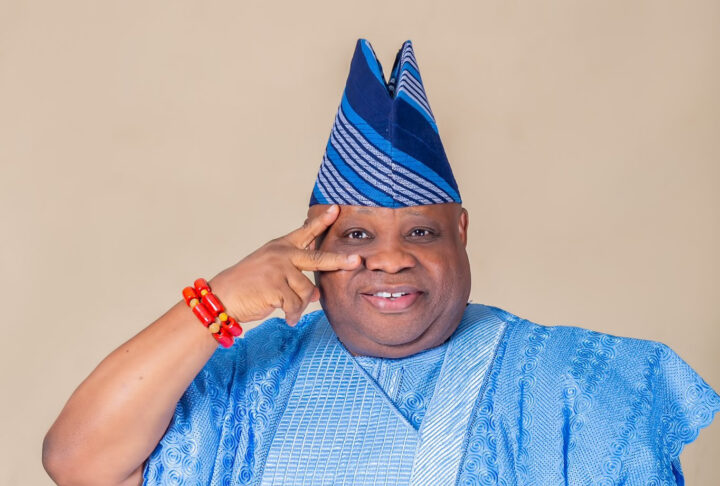
Governor Ademola Adeleke has vowed to challenge the EFCC’s decision to freeze an Osun State Government salary account held with First Bank, describing the move as unconstitutional and a breach of due process.
The EFCC, however, maintains that its action is connected to an investigation into suspected diversion of public funds.
The dispute has also drawn political criticism, while a source familiar with the investigation claims that more than N18 billion passed out of the account through 14 withdrawals in less than two months.
That claim has not been independently established.
Adeleke: We will challenge the EFCC
Speaking at a press conference in Osogbo on Wednesday, Adeleke said the state government learned about the account freeze through a letter from its bank.
According to the governor, the letter communicated an EFCC directive ordering the immediate restriction of the accounts.
Adeleke alleged that the EFCC acted without first obtaining a court order, which he described as unconstitutional and inconsistent with the rule of law.
He called on the EFCC chairman to explain publicly why the accounts were frozen and to provide evidence supporting the decision.
The governor subsequently directed the Osun State Attorney General to challenge the EFCC action at the Federal High Court in Osogbo.
EFCC points to suspicious transactions
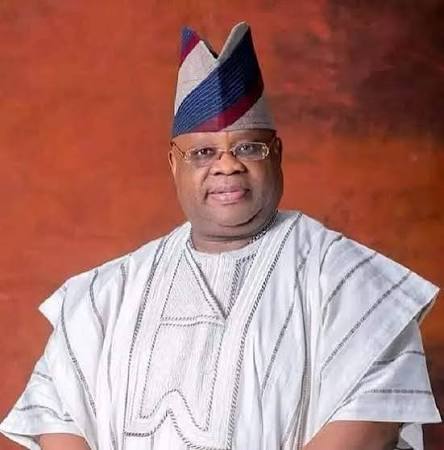
The anti-graft agency has defended its intervention, saying it was aimed at preventing the alleged diversion of government funds and formed part of an ongoing investigation.
A source familiar with the probe alleged that investigators identified unusual activity in the state’s salary accounts.
According to the source, accounts that would ordinarily be used for monthly salary payments had recently recorded several substantial transfers over a relatively short period.
The source claimed that more than N18 billion had been withdrawn from the account under investigation on 14 occasions within less than two months.
The source, who spoke anonymously, also rejected suggestions that the EFCC’s action was politically selective because of the approaching election.
The agency’s position, according to the source, is that suspicious financial activity must be investigated regardless of the political circumstances surrounding the case.
ADC condemns account freeze
The controversy has also triggered a political backlash.
The African Democratic Congress (ADC) condemned the freezing of the state account, describing it as “political terrorism.”
The party alleged that the action formed part of an attempt by the ruling political establishment to secure victory at all costs and warned that such conduct could damage Nigeria’s democratic institutions.
Legal practitioners and civil-rights groups have also criticised the EFCC’s action.
Adeleke alleges wider political intimidation
Adeleke linked the account freeze to what he described as a broader pattern of pressure against his administration and members of the Accord political movement.
He cited what he characterised as disruption of the local government system, arrests of political figures and alleged harassment of political supporters.
The governor argued that allowing federal agencies to restrict the finances of elected state governments without following due process could weaken constitutional democracy.
Police deploy 15,000 personnel
The dispute comes as security preparations intensify ahead of the Osun governorship election scheduled for next Saturday.
The Nigeria Police Force announced the deployment of 15,000 personnel across the state and warned politicians, candidates and their supporters against violating electoral laws.
The security deployment adds another layer to an already tense political environment, with the EFCC investigation and the state government’s legal challenge unfolding alongside preparations for the poll.
Adeleke: Government will continue working
Despite the account dispute, Adeleke said his administration would continue functioning.
He maintained that the EFCC action would not distract his government and vowed to pursue the legal challenge.
The immediate next step is now expected to come before the Federal High Court, where the legality of the account freeze and the circumstances surrounding the EFCC’s intervention may be tested.
For now, the competing claims remain sharply divided: the Osun Government says its accounts were frozen unlawfully and without due process, while the EFCC maintains that its intervention was driven by an investigation into suspected financial irregularities.