Nepal has turned down offers from several countries to send specialist search-and-rescue teams after devastating flash floods killed nearly 500 people and left hundreds of foreign nationals unaccounted for.
Nepal’s Foreign Ministry said on Friday that its own security agencies had sufficient capacity to manage the rescue operation and that outside teams were not currently required.
Countries including India, China, the United States, Britain, Japan, South Korea, Sri Lanka and Bangladesh had offered to deploy rescue personnel following the disaster.
“The offer for help is natural,” Foreign Ministry spokesperson Lok Bahadur Chhetri said, adding that Nepal’s security agencies were conducting the search and rescue operation.
He did not provide further details about the government’s decision.
Rasuwa Among the Worst-Hit Areas
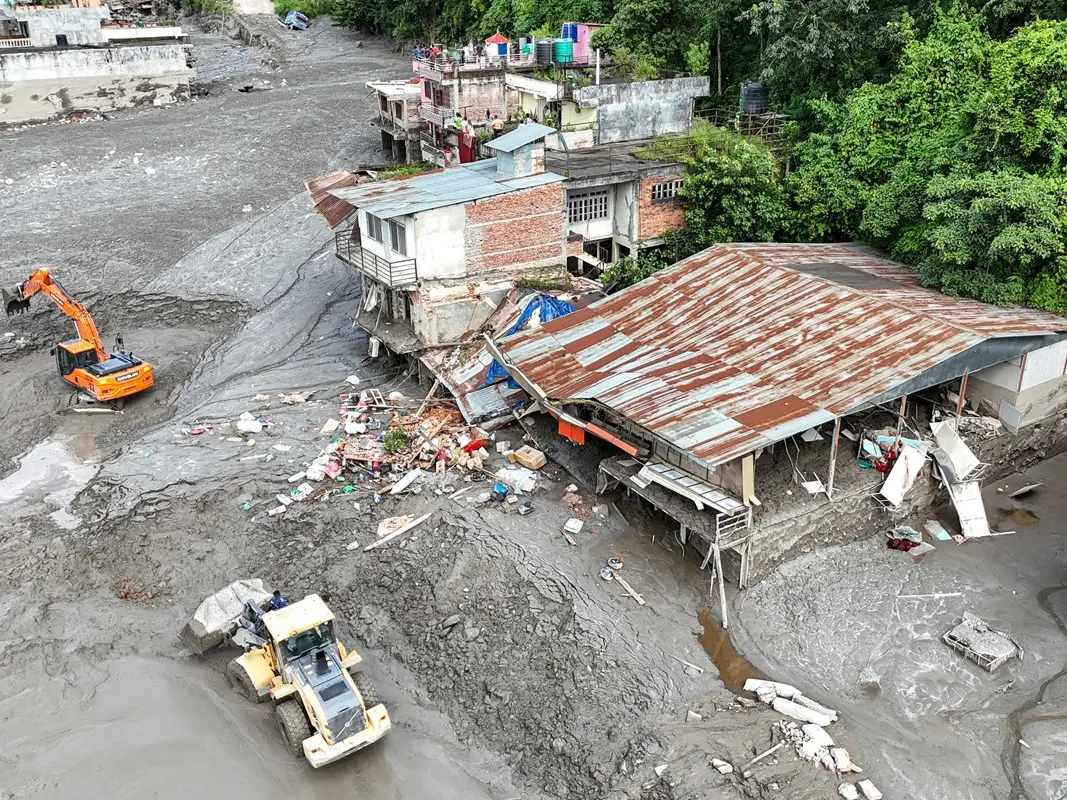
The floods caused extensive destruction across several parts of Nepal, including Rasuwa district near the Chinese border.
Entire communities were damaged or swept away, while hydropower infrastructure was also affected.
The disaster has killed close to 500 people and left a large number of people missing.
Among those still unaccounted for are foreign nationals, raising particular concern among governments whose citizens were visiting or working in the affected areas.
South Korea Wants to Send Disaster Teams
South Korea has been particularly active in seeking permission to assist.
Seoul said it had already deployed a response team to Nepal and was preparing to send a dedicated disaster-relief team.
However, South Korea’s Foreign Ministry said Nepal had indicated that it was not currently planning to accept foreign rescue teams.
“South Korea will keep negotiating with Nepal over the matter,” the ministry said.
Seoul has also pledged $1 million in humanitarian assistance through international organisations, according to South Korea’s foreign minister.
Nine South Korean nationals working at a hydropower facility were reported missing, while another 10 were stranded, according to South Korean officials.
Eight Countries Offered Assistance
The Kathmandu Post reported that governments from India, China, the US, Britain, Japan, South Korea, Sri Lanka and Bangladesh had asked Nepal to allow their specialist teams to join the search.
Nepal’s decision not to accept them has therefore attracted attention, particularly given the scale of the disaster and the number of missing people.
Is the China Border a Factor?
One former Nepali diplomat has suggested that geography could be influencing Kathmandu’s decision.
Dinesh Bhattarai, a former Nepalese ambassador to the United Nations in Geneva, said the government’s reluctance may be linked to the strategic sensitivity of Rasuwa, which borders China’s Tibet region.
He told Reuters that officials may have considered the location sensitive before deciding against accepting foreign teams.
Nepal’s Foreign Ministry rejected that interpretation.
Chhetri said the decision had nothing to do with China and was instead based on the government’s assessment that Nepal’s own rescue agencies were capable of handling the operation.
A Delicate Rescue Operation
The decision puts Nepal’s emergency services under intense pressure as they continue searching for victims across badly damaged communities.
With hundreds still missing—including foreign nationals—the government faces a difficult balance between maintaining control of a highly sensitive operation and making use of international assistance offered by countries with specialised disaster-response capabilities.
For now, Kathmandu’s position is clear: Nepal believes its own teams can handle the search and rescue effort.