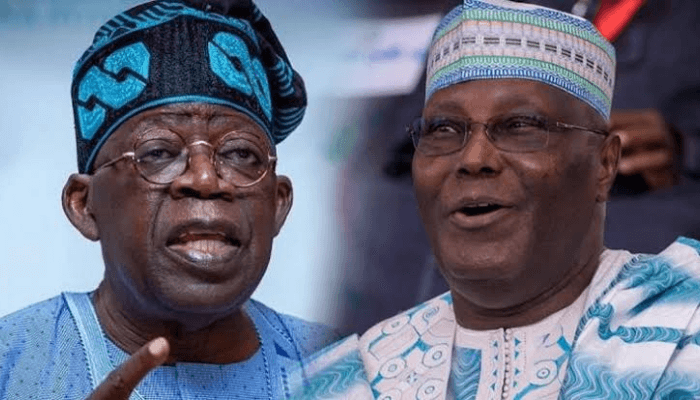
Former Vice President Atiku Abubakar has thrown down a direct challenge to President Bola Tinubu’s administration: if there is evidence linking him to wrongdoing in the controversial $16 billion power sector spending, investigate him and prosecute him.
Atiku said repeatedly reviving allegations from projects dating back nearly two decades was not enough. If the government believes he committed an offence, he argued, it should produce evidence and take the matter to court.
The former vice president made the comments through a statement issued by his Senior Special Assistant on Public Communication, Phrank Shaibu.
Atiku draws a line between oversight and implementation
Atiku acknowledged that he chaired the National Council on Privatisation while serving as vice president.
But he disputed any suggestion that the role made him responsible for executing the controversial power projects.
His position is straightforward: he provided oversight through the council, while the relevant minister handled implementation.
He also said the National Assembly had previously examined the projects but never summoned him to respond to allegations of misconduct.
That, he argued, makes the renewed accusations particularly questionable.
You might want to read this: Atiku Vows to Restore Fuel Subsidy if Elected President in 2027
“Investigate me. Produce the evidence.”
Rather than simply dismissing the allegations, Atiku challenged the government to test them through the legal system.
His message was that authorities have access to Nigeria’s investigative institutions and should use them if they believe a prosecutable case exists.
No evidence, he argued, should mean no conviction by political rhetoric.
He accused supporters of the Tinubu administration of reviving the power-sector controversy partly to shift public attention away from more immediate questions about government revenue following the removal of the petrol subsidy.
The subsidy question
Atiku’s broader argument centres on what happened to the money generated after the subsidy was removed.
The government had defended the policy as necessary to end a costly intervention and redirect resources toward development. But Atiku argued that Nigerians continue to face high prices and intense economic pressure.
That leads to the question he wants the government to answer:
How much additional revenue has been generated since the subsidy was removed—and where has it gone?
He is demanding greater transparency over the deployment of those funds.
Why the tax-waiver argument matters
Atiku also questioned the government’s continued use of tax waivers, credits, concessions and other incentives for businesses.
His criticism is rooted in what he sees as an imbalance.
Ordinary Nigerians were told that subsidy support could no longer continue because it placed an unsustainable burden on public finances. Yet, he argued, the government continues to provide fiscal concessions to influential businesses.
For Atiku, that raises a basic question of fairness:
Why should financial support be withdrawn from ordinary citizens while significant incentives remain available to powerful economic interests?
The bigger political battle
Atiku’s response turns an old allegation into a broader confrontation over public accountability and government spending.
His position is that the power-sector controversy should be settled through evidence, investigation and prosecution where warranted—not repeated political accusations.
At the same time, he wants the Tinubu administration to account for the resources made available by the end of the petrol subsidy.
The two issues now form the core of his challenge:
- If the government has evidence against him, he says, bring a case.
- If public funds have been saved or generated, he wants Nigerians told how they were spent.
Atiku’s underlying message is unmistakable: scrutiny should apply to everyone—including him and the government currently in power.