
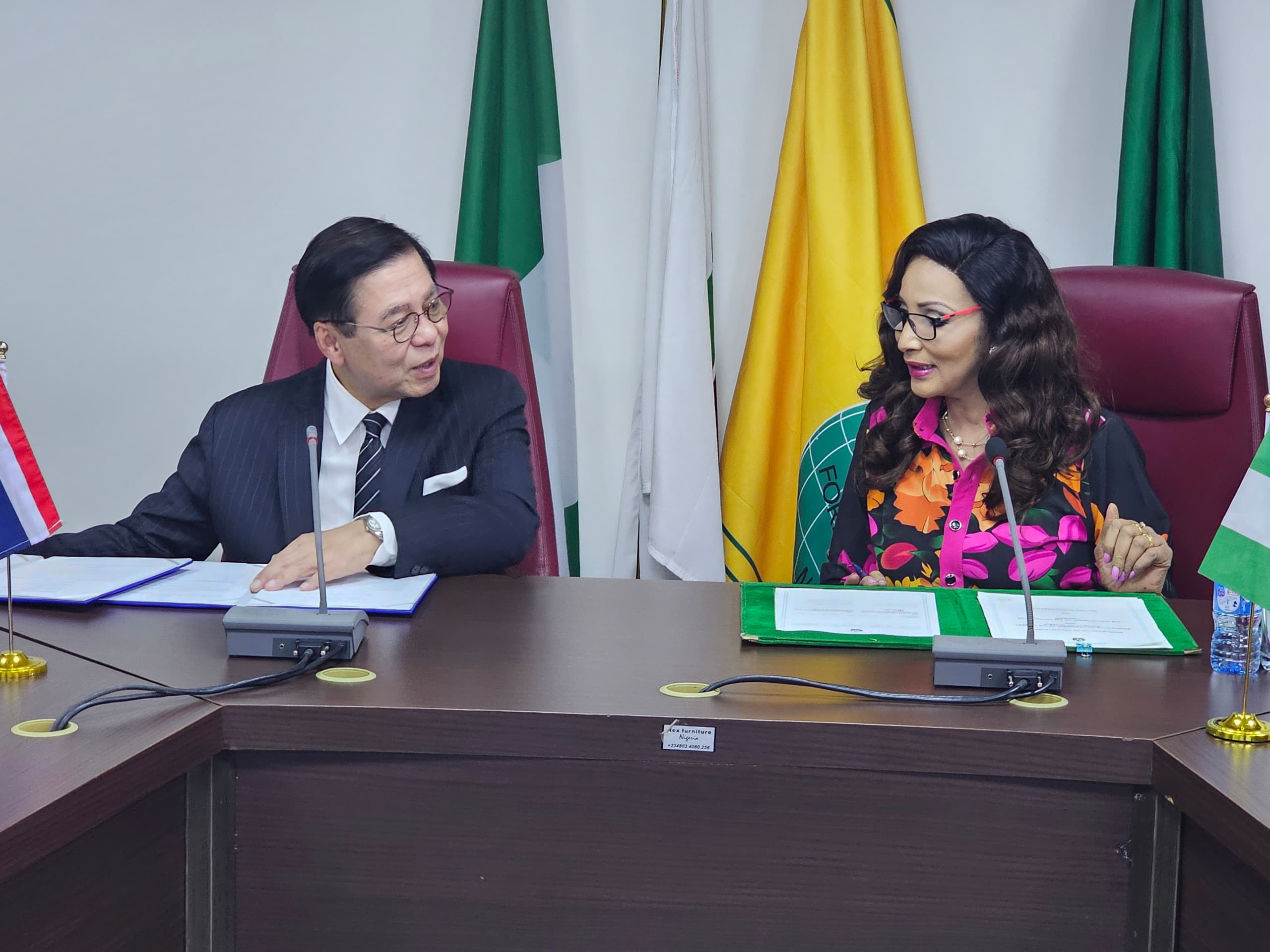
Nigeria and Thailand are laying the groundwork for a broader economic partnership, with both countries moving to deepen cooperation in trade, investment, agriculture and technology.
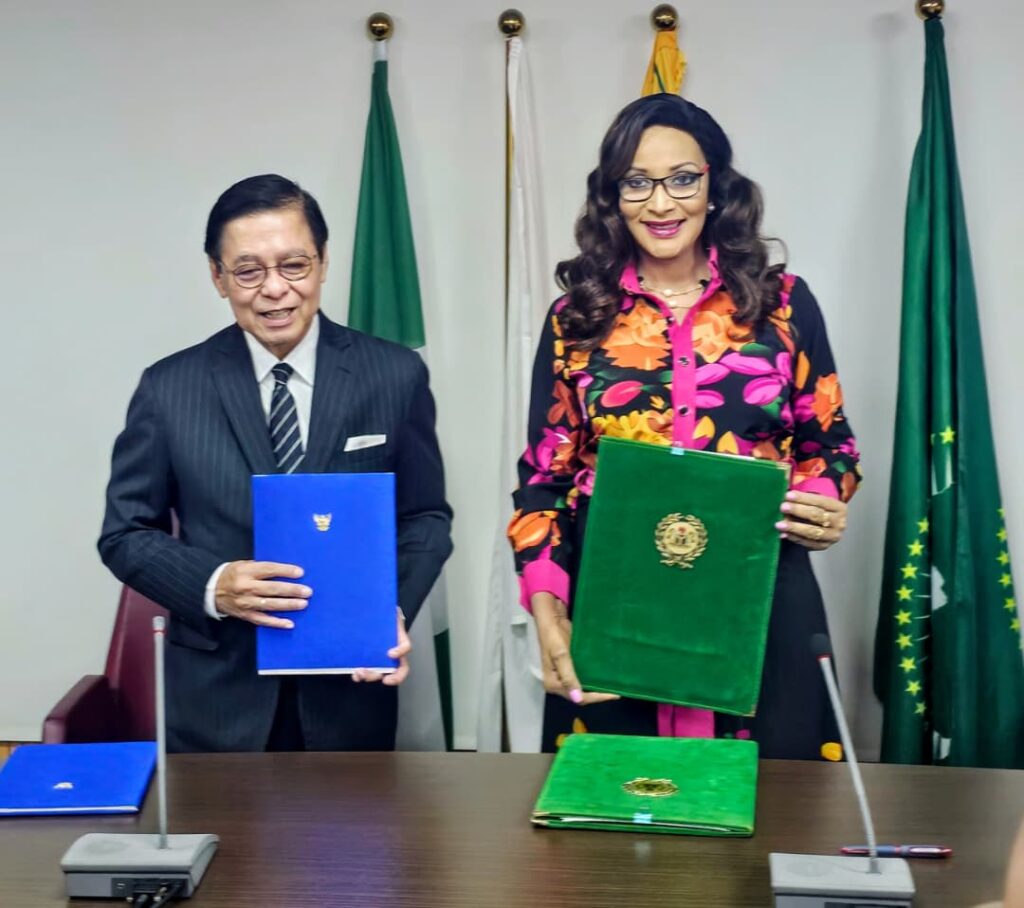
The two nations signed a Memorandum of Understanding (MoU) on technical cooperation in Abuja on Tuesday, creating a framework for collaboration in areas including skills development, innovation, agriculture, technology transfer and sustainable development.
Nigeria’s Minister of Foreign Affairs, Ambassador Bianca Odumegwu-Ojukwu, signed for Nigeria, while Thailand’s Deputy Prime Minister and Minister of Foreign Affairs, Sihasak Phuangketkeow, represented his country.
You might want to read this: Nigeria is demanding action from South Africa over attacks targeting African migrants, warning that hostility toward foreigners must not become a substitute for enforcing immigration laws.
Nigeria wants a bigger economic relationship
Odumegwu-Ojukwu said Nigeria wants to move its relationship with Thailand beyond traditional diplomatic engagement and build a partnership that produces measurable economic benefits.
She welcomed Thailand’s Thailand-Africa Initiative and called for closer coordination between Nigeria’s Nigerian Technical Aid Corps (NTAC) and Thailand’s International Cooperation Agency (TICA).
The proposed cooperation would focus particularly on:
- Technical and vocational skills
- Technology transfer
- Sustainable development
- Agricultural innovation
- Research and capacity building
The minister also called for the expansion of the Thailand-Nigeria Sustainable Agricultural Technology Development Project to more parts of the country.
She argued that stronger cooperation in agricultural research and technology could help Nigeria raise productivity, improve food security and create new opportunities across the agricultural value chain.
Thai investors urged to look beyond traditional trade
Nigeria also wants to diversify the products and industries driving bilateral commerce.
Odumegwu-Ojukwu encouraged Thai businesses to explore Nigeria’s large consumer market and invest in sectors with potential for long-term growth.
Among the areas she highlighted were:
- Agro-processing
- Manufacturing
- Energy
- Information and communications technology
- Mining
- Renewable energy
She said expanding beyond established areas such as crude oil, rice and agricultural machinery would give the relationship a broader economic foundation.
Proposed commission could accelerate cooperation
Nigeria also wants a permanent mechanism for managing the growing relationship.
Odumegwu-Ojukwu proposed a Joint or Bi-National Commission that could provide a regular platform for economic discussions, monitor existing agreements and speed up negotiations on outstanding bilateral instruments.
These include proposed agreements covering:
- Investment promotion and protection
- Trade
- Economic, scientific, technical and cultural cooperation
Such a mechanism could help prevent bilateral commitments from remaining largely on paper by giving both governments a structure for tracking implementation.
Nigeria seeks stronger ASEAN-ECOWAS links
The minister also called for greater engagement between the Association of Southeast Asian Nations (ASEAN) and the Economic Community of West African States (ECOWAS).
She argued that stronger connections between the two regional blocs could create additional channels for trade, investment and development cooperation.
For Nigeria, closer links with Southeast Asia could also provide access to new technology, investment networks and industrial expertise.
Thailand sees Nigeria as a strategic African partner
Phuangketkeow described Nigeria as an important economic power in Africa and said stronger ties could benefit businesses and citizens in both countries.
Thailand brings particular experience in manufacturing, agriculture, technology and industrial development, while Nigeria offers a large domestic market and access to the wider West African economy.
That combination gives the partnership significant potential if both sides can turn diplomatic commitments into commercial projects.
From agreement to action
The MoU provides a framework, but its real impact will depend on what follows.
The next stage will require investment deals, joint ventures, technical programmes and private-sector participation capable of converting the agreement into measurable economic activity.
For Nigeria, the partnership fits into a wider effort to attract foreign capital, diversify sources of growth and reduce reliance on crude oil.
For Thailand, deeper engagement with Nigeria offers an opportunity to strengthen its presence in one of Africa’s largest markets while establishing a stronger platform for expansion across West Africa.
The message from Abuja is therefore clear: Nigeria and Thailand want to move beyond diplomatic goodwill and build an economic relationship defined by trade, investment, technology and practical cooperation.