
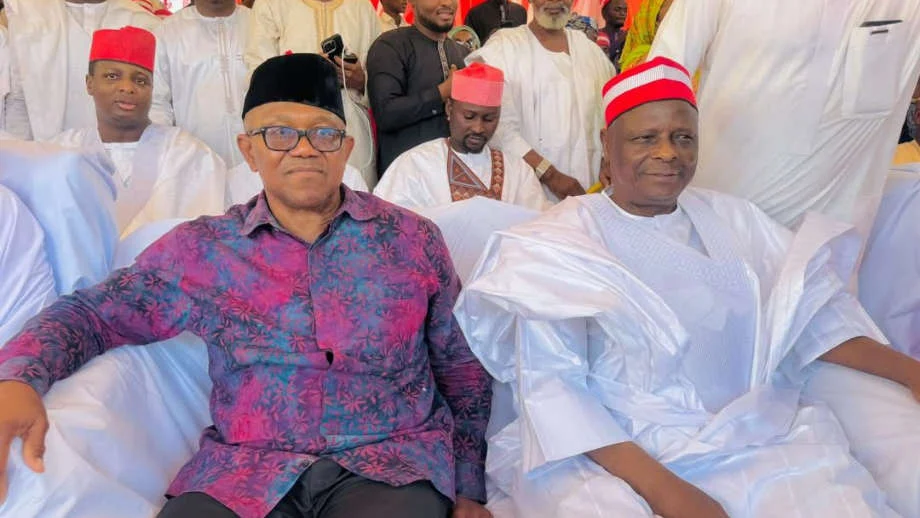
The former Kano governor and current vice-presidential candidate of the Nigeria Democratic Congress (NDC) says his decision to run alongside Peter Obi in the 2027 presidential election is driven by three priorities: regional balance, fairness and political change.
Kwankwaso explained his position during a News Agency of Nigeria personality interview in Abuja, arguing that his experience since the 2023 election had given him a clearer understanding of Obi and convinced him that they could govern effectively together.
Why Kwankwaso changed his mind
The two politicians explored cooperation ahead of the 2023 election but ultimately contested separately. Kwankwaso said the intervening years gave him an opportunity to understand Obi better.
He now believes their political experience and priorities can complement each other.
Kwankwaso also pointed to the importance of maintaining a North-South balance in the presidency. Under the arrangement he described, Obi would serve one four-year term before the presidency returns to the North.
The agreement, he said, was reached after consultations involving members of the Kwankwasiyya Movement, NNPP supporters and the Obidient Movement.
Their conclusion was that a joint ticket could bring together support from both regions while presenting a stronger alternative to the established political order.
Security, agriculture and infrastructure
Kwankwaso said conditions across the country strengthened his decision.
He highlighted:
- Persistent insecurity
- Falling agricultural productivity
- Deteriorating infrastructure
- Rising economic pressure on ordinary Nigerians
He paid particular attention to farmers in Northern Nigeria, saying higher costs and difficult operating conditions have made agricultural production increasingly challenging.
Infrastructure, he added, remains badly neglected across much of the country, with only limited exceptions.
For Kwankwaso, these problems point to a need for the kind of political change Nigerians demanded at the ballot box in 2015.
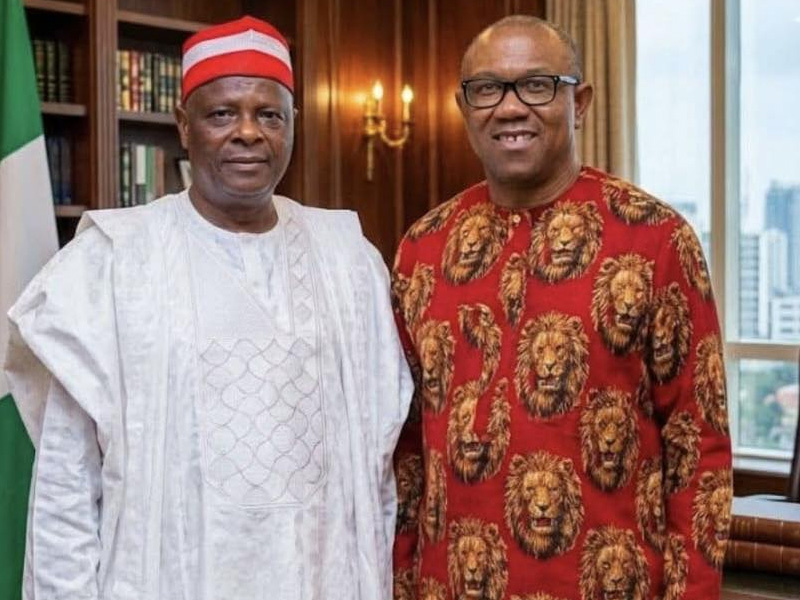
‘I don’t have to be president’
Kwankwaso also rejected the idea that accepting the vice-presidential position represents a step down.
His political résumé already includes service as deputy speaker of the House of Representatives, Kano governor, defence minister and senator.
Yet he argued that public office should be viewed primarily as an opportunity to serve—not as a ladder of personal achievement.
He pointed to Sir Ahmadu Bello as an example of a leader who accepted a position below what he might otherwise have pursued, choosing to remain Premier of Northern Nigeria rather than seek the prime ministership.
His broader argument is simple: no public office should be considered beneath a politician who genuinely wants to serve.
A promise of partnership
One of Kwankwaso’s biggest concerns is whether a vice-president would have genuine authority within the administration.
He said his experience in government taught him that deputies perform best when they are given meaningful responsibilities.
That is particularly relevant because Peter Obi has publicly promised that Kwankwaso would be treated as a governing partner rather than a ceremonial deputy.
Kwankwaso said he trusts Obi to honour that understanding and allow him to play an active role in government.
He believes an effective president should empower a deputy rather than keep the office on the sidelines.
Competence over patronage
The proposed administration, Kwankwaso said, would also seek to change how political appointments are made.
Rather than distributing positions simply to reward allies, he said the priority would be competence and national need.
The president and vice-president, he argued, cannot run Nigeria alone. Ministers and other senior officials must therefore be capable of delivering results.
A calculated political gamble
Kwankwaso’s decision is more than a personal change of direction. It is an attempt to build a coalition across Nigeria’s major political and regional blocs.
The alliance also carries a clear political bargain: Obi’s presidency for one term, followed by a return of the presidency to the North, according to Kwankwaso. Recent reporting has also confirmed that Kwankwaso has described the one-term understanding as a written agreement.
Whether that arrangement can hold—and whether the Obi-Kwankwaso ticket can translate its regional balance into nationwide electoral support—will be one of the defining questions of the 2027 race.
For now, Kwankwaso insists his calculation is bigger than the presidency.
His message is that political power should be a vehicle for service, not a prize to be possessed.