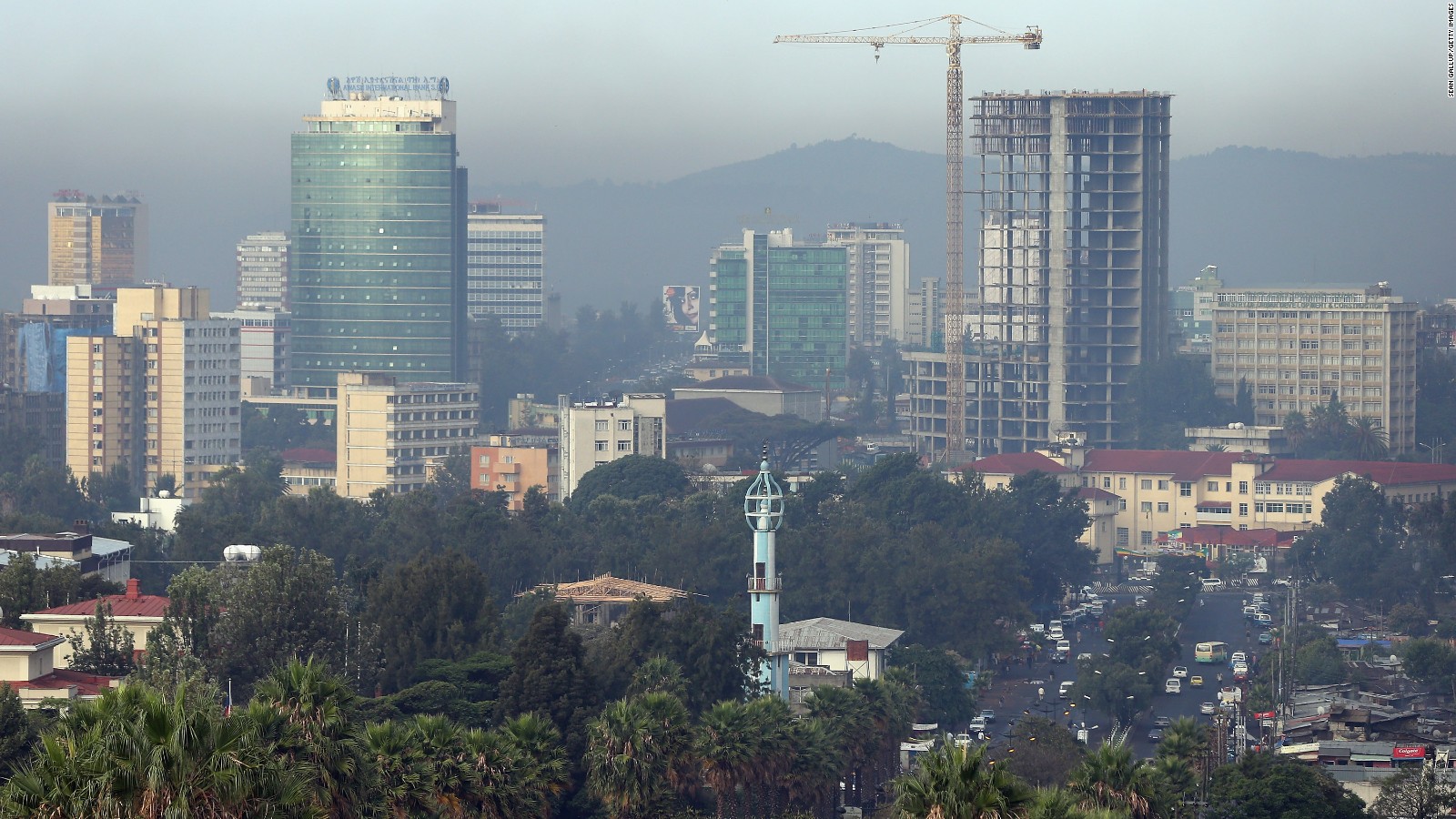
Ethiopia has achieved a major milestone in Africa’s economic rankings, overtaking Morocco to become the continent’s fifth-largest economy. The shift follows a significant revision of the country’s Gross Domestic Product (GDP), which has increased its estimated economic size to an impressive $210.7 billion for the 2025/26 fiscal year.
The development puts Ethiopia among Africa’s five biggest economies, alongside South Africa, Egypt, Nigeria and Algeria. However, the dramatic increase in its GDP figure does not necessarily mean the country has suddenly produced more goods and services. Instead, the change reflects a comprehensive statistical overhaul that captures a much broader picture of Ethiopia’s economic activity.
The revised figures have attracted attention because they significantly alter the country’s position in Africa’s economic landscape, highlighting the importance of accurate economic data in measuring national performance.
Ethiopia Enters Africa’s Top Five Largest Economies
According to the latest figures released by the Ethiopian government, the country now ranks as Africa’s fifth-largest economy, surpassing Morocco following the GDP rebasing exercise.
The updated ranking places Ethiopia behind four major economic powers:
- South Africa: $489.1 billion
- Egypt: $442.9 billion
- Nigeria: $386.7 billion
- Algeria: $331.9 billion
- Ethiopia: $210.7 billion
The revised figures represent a notable development for the Horn of Africa nation, which has been working to expand its economy through investment, infrastructure development and the growth of various productive sectors.
Ethiopia’s new position also makes it the third-largest economy in sub-Saharan Africa, according to the government’s assessment.
The announcement was made by Fitsum Assefa Adela, Ethiopia’s Minister of Planning and Development, following the official launch of the country’s updated GDP statistical series at a national forum organised by the Ministry of National Strategy.
Speaking about the significance of the revision, the minister explained that the new figures provide internationally comparable economic statistics while improving confidence among investors, credit rating agencies and development partners.
She also emphasised that more reliable economic information would help the government make better decisions on public spending, fiscal policy, budgeting and long-term development priorities.
Why Did Ethiopia’s GDP Suddenly Increase by 59.2%?
One of the most striking aspects of the announcement is the scale of the revision.
Ethiopia’s GDP for the 2024/25 fiscal year was previously measured using an older statistical framework. Following the rebasing exercise, the estimated size of the economy increased by 59.2%, reaching 24.03 trillion Ethiopian birr, equivalent to approximately $201.4 billion.
The government subsequently estimated GDP at $210.7 billion for the 2025/26 fiscal year.
Although the increase is substantial, it is important to understand what GDP rebasing actually means.
GDP measures the total value of goods and services produced within a country’s borders over a particular period. Governments periodically update the methods and reference years used to calculate this figure to ensure that national accounts reflect changes in economic structures and production patterns.
As economies evolve, new industries emerge, established sectors expand and consumer behaviour changes. Statistical systems that rely on outdated information may fail to capture these developments accurately.
This appears to have been a major issue for Ethiopia.
The country’s previous GDP calculations were based on an older reference year that no longer adequately represented the structure of its modern economy. By updating the baseline and incorporating more recent information, authorities were able to identify economic activities that had previously been underrepresented or insufficiently reflected in national accounts.
Consequently, the economy’s measured size increased considerably.
Importantly, the 59.2% adjustment should not be interpreted as a sudden economic boom or an equivalent increase in actual production. Rather, it is a statistical correction that provides a more comprehensive estimate of economic output.
A New GDP Base Year Brings Ethiopia’s Economic Data Up to Date
A central part of the exercise was the introduction of a new base year.
The updated GDP series uses the 2017 Ethiopian Fiscal Year, corresponding to 2024/25, as its reference year. This replaces the previous statistical framework, which was based on the 2008 Ethiopian Fiscal Year, corresponding to 2015/16.
The difference is significant because Ethiopia’s economy has undergone considerable structural changes over that period.
The expansion of services, the emergence of new business activities and the increasing importance of technology-driven industries have changed how economic value is generated across the country.
For example, digital financial services have become an increasingly relevant part of modern economic activity. Other service-based industries and evolving commercial activities have also expanded, making it necessary to update the statistical methods used to measure national production.
Under the previous framework, some of these developments were not adequately captured.
The revised GDP methodology is designed to address these limitations by incorporating more recent information and improving the coverage of different economic sectors.
This gives policymakers and economic analysts a more realistic foundation for assessing the country’s economic structure.
New Data Sources Strengthen Ethiopia’s Economic Measurement
Another important feature of Ethiopia’s GDP rebasing is the broader range of information used to calculate economic output.
The updated estimates draw on several major statistical sources, including recent national agricultural and economic establishment censuses, an integrated household survey and administrative records.
These sources provide a wider understanding of economic activity across different industries, businesses and households.
The new methodology also introduces an important improvement in institutional coverage.
For the first time, the calculations incorporate information from federal and regional state-owned enterprises, as well as non-profit institutions serving households.
Including these organisations helps improve the completeness of national accounts by capturing economic contributions that were not fully represented in the previous series.
This is particularly important in an economy where government-owned enterprises and other institutions play a role in delivering services, supporting infrastructure and contributing to national production.
By combining updated surveys, census information and administrative data, Ethiopia aims to establish a more comprehensive picture of its economy.
The result is not simply a larger GDP figure. It is also a revised statistical framework intended to improve the reliability and usefulness of economic information.
What Ethiopia’s New Economic Ranking Means for Investors
Ethiopia’s rise to fifth place in Africa’s GDP rankings could have important implications for how international investors and development partners assess the country.
Reliable economic statistics are essential when businesses evaluate investment opportunities, governments plan development programmes and financial institutions assess national economic performance.
When economic data is outdated or incomplete, investors may struggle to understand the actual size, structure and potential of a market.
The revised GDP series is intended to address some of these concerns.
By providing more internationally comparable figures, Ethiopia hopes to strengthen confidence among foreign investors, credit rating agencies and development partners.
The updated statistics could also help policymakers identify economic sectors that deserve greater attention, allocate public resources more effectively and develop policies based on a stronger evidence base.
For a country seeking to expand its economic opportunities, improving the quality of national statistics is an important part of strengthening its economic management.
Nevertheless, a higher GDP ranking does not automatically translate into improved living standards, higher household incomes or reduced poverty. Those outcomes depend on how economic growth is generated, distributed and sustained.
The revised figures should therefore be viewed as an improvement in economic measurement rather than proof that all of Ethiopia’s development challenges have been resolved.
Ethiopia Overtakes Morocco, Reshaping Africa’s Economic Rankings
The most immediate consequence of the GDP revision is Ethiopia’s new position ahead of Morocco in the continental rankings.
The change represents a significant shift in how the two economies compare based on the newly reported figures.
However, international GDP comparisons require some caution. African countries do not necessarily follow identical fiscal and calendar-year reporting schedules, and differences in statistical methods can influence how national economies are measured.
For this reason, the rankings provide a useful overview of economic size but should not be treated as a perfect like-for-like comparison without considering the underlying reporting periods and methodologies.
Even with these considerations, Ethiopia’s updated GDP estimate marks an important development in the country’s economic statistics.
A Bigger GDP Figure, but the Real Test Lies Ahead
Ethiopia’s emergence as Africa’s fifth-largest economy is an important milestone, but the significance of the announcement extends beyond its position in a continental ranking.
The GDP rebasing exercise provides a more comprehensive measurement of national economic activity, introduces updated data sources and brings the country’s statistical framework closer to its changing economic structure.
It also gives policymakers, investors and development partners a stronger foundation for understanding the Ethiopian economy.
Still, the real test will be how effectively the country translates its economic potential into sustainable growth, productive investment, employment opportunities and improved living standards.
For now, one thing is clear: Ethiopia’s economic position in Africa has changed significantly on paper, and the new figures offer a different perspective on the scale of the country’s economy.
As Ethiopia continues to modernise its economic measurement systems and pursue its development ambitions, its performance in the years ahead will determine whether this statistical milestone is accompanied by equally meaningful progress on the ground.