
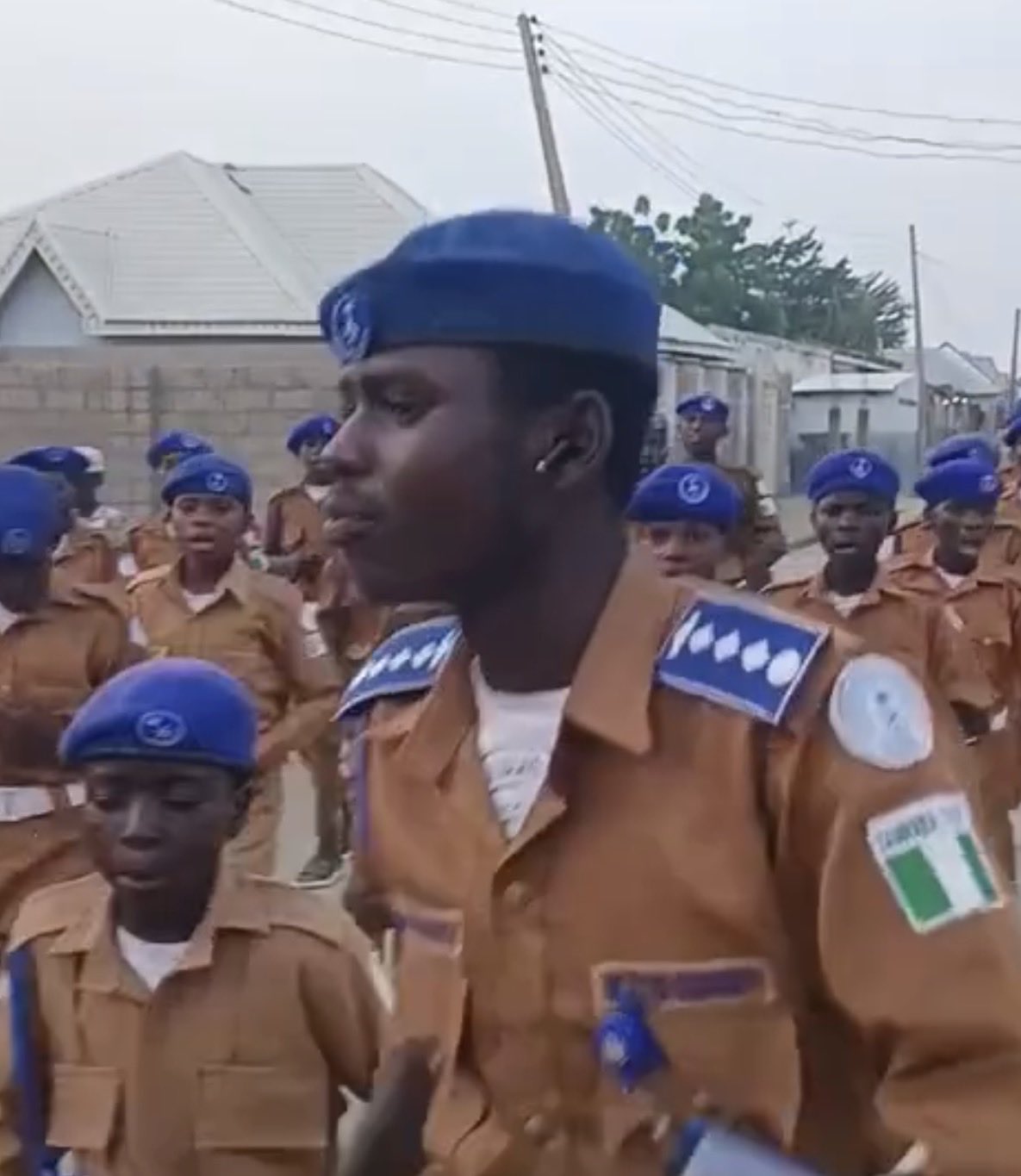
A disturbing viral video showing youths in uniforms associated with the First Aid Group of Jama’atu Izalatil Bid’ah Wa Iqamatis Sunnah (JIBWIS) chanting slogans calling for AK-47 rifles and threatening attacks in Enugu and Jos has triggered widespread concern, prompting demands for an investigation by the religious organisation and Amnesty International Nigeria.
The footage, which circulated on social media on Monday, reportedly shows young participants taking part in a marching exercise while chanting inflammatory statements targeting people they described as infidels. The remarks referenced Enugu and Jos, raising concerns about possible incitement to violence against communities in the two locations.
The video has drawn strong reactions because of the violent language used during the exercise and concerns about the involvement of teenagers and children in activities that appear to combine organised marching drills with messages advocating attacks on others.
In response, JIBWIS National Chairman Sheikh Abdullahi Bala Lau condemned the chants and called on security agencies to identify those responsible and investigate the incident. Amnesty International Nigeria also demanded an independent investigation, warning that exposing children to violent rhetoric could have serious consequences for their safety and development.
What the Viral Video Shows
The footage circulating online appears to show a group of youths participating in a coordinated marching exercise while chanting statements advocating the use of firearms against people they regard as religious outsiders.
One of the participants is heard repeatedly calling for an AK-47 rifle and referring to travelling to Enugu and Jos to attack people described as infidels.
The chants, delivered during the exercise, have raised concerns about the possibility of religious hostility being encouraged through organised activities involving young people.
The term infidel is commonly used to describe someone regarded as not sharing the central beliefs of a particular religion. In the context of the footage, its use alongside explicit references to shooting people has intensified concerns about the potential targeting of communities on religious grounds.
The video has also prompted questions about the purpose of the marching exercise, the identity of the organisers and whether those participating understood the implications of the words they were chanting.
However, the footage alone does not establish the identities or intentions of everyone involved, nor does it independently confirm that the participants were acting under the official direction of JIBWIS.
These questions have become central to calls for a thorough investigation into the incident.
JIBWIS Chairman Condemns the Chants
Reacting to the video, JIBWIS National Chairman Sheikh Abdullahi Bala Lau strongly condemned the statements and called on relevant security agencies to investigate the matter.
In a statement published by JIBWIS Nigeria, the organisation said Bala Lau had expressed concern over footage showing a person wearing a uniform associated with its First Aid Group participating in a jogging exercise while chanting provocative statements about obtaining AK-47 rifles to attack people in Enugu.
The chairman urged the Department of State Services (DSS), the Nigeria Police Force and other relevant authorities to establish what happened and identify those responsible.
According to the statement, the agencies should investigate the incident and ensure that anyone found culpable is held accountable under the law.
The organisation’s response signals an effort to distance itself from the violent language heard in the footage while calling for the authorities to determine the circumstances surrounding its production.
JIBWIS also stressed that statements advocating violence, intimidation or attacks against any community were incompatible with its principles and teachings.
The chairman’s intervention came amid growing concern about the potential implications of the footage for religious relations and public safety.
Religious Organisation Distances Itself From the Incident
One of the central issues raised by JIBWIS was whether the individuals shown in the video were acting with the organisation’s authorisation.
Bala Lau made it clear that wearing a uniform associated with the group’s First Aid Group did not automatically establish that the individuals were officially representing JIBWIS.
The organisation said the presence of its uniform in the footage should not be treated as proof that the chants had been approved by its leadership.
In its statement, JIBWIS categorically rejected the inflammatory remarks, describing calls for violence against any community as inconsistent with the objectives for which the organisation was established.
This distinction is important because the investigation will need to establish the relationship between the participants, the people coordinating the exercise and the religious organisation whose uniforms were reportedly worn.
Authorities will also need to determine whether the activity was formally organised, who was responsible for the messages being promoted and whether any laws were violated.
Bala Lau further called for a detailed examination of the identities and motives of those involved, expressing concern that the video could have been intended to damage the organisation’s reputation.
He also pointed to JIBWIS’s efforts to encourage religious tolerance and peaceful coexistence, including an international conference held in Abuja that brought together Christian leaders, Muslim scholars and other participants for dialogue.
The chairman cited these efforts as evidence of the organisation’s commitment to promoting understanding among different religious communities.
Nevertheless, the questions raised by the footage remain matters for the relevant authorities to investigate.
Amnesty International Demands an Independent Investigation
Amnesty International Nigeria has also called on the authorities to investigate the video independently, placing particular emphasis on the reported involvement of children and teenagers.
In a statement titled Nigeria: Authorities Must Investigate Inciting Izala March Drill Video, the organisation described the footage as deeply disturbing and urged officials to establish the circumstances surrounding the exercise.
Amnesty said the video showed young participants taking part in marching drills led by adult coordinators wearing uniforms associated with JIBWIS.
The organisation expressed concern that the chants appeared to encourage attacks against people described as infidels in Enugu and Jos.
It warned that exposing children to messages promoting hatred and violence could contribute to the normalisation of hostility towards people from other religious or social groups.
Amnesty’s intervention broadened the focus of the controversy beyond the potential security implications of the chants to include questions about child protection, indoctrination and the responsibilities of adults supervising youth activities.
The organisation urged the authorities to identify those who organised the exercise, determine where the footage was recorded and examine the nature of the programme during which the chants occurred.
It also called for an assessment of the messages communicated to the young participants and the circumstances in which they were encouraged to repeat them.
Such an investigation, Amnesty argued, should establish the facts while ensuring that any children who may have been exposed to harmful messaging receive appropriate protection.
Concerns Over Children and Exposure to Violent Rhetoric
The reported presence of minors in the video has become one of the most troubling aspects of the controversy.
Amnesty International warned that children participating in activities involving violent slogans could be vulnerable to manipulation and exposure to messages that encourage hostility towards others.
The organisation described the chants as an example of how young people could be exposed to violence and hatred through organised activities led by adults.
Its concerns centre on the responsibility of organisers and supervisors to ensure that youth programmes do not expose children to threats, extremist rhetoric or activities that could place them or others at risk.
Amnesty also called for appropriate psychological and educational support for minors who may have been affected by the exercise.
Such support, where needed, would aim to protect children’s well-being and help them understand the consequences of messages that encourage violence against other people.
The organisation further argued that any investigation should take account of the children’s welfare rather than treating them solely as participants in a potentially criminal incident.
Establishing the ages of those involved, their understanding of the chants and the extent of adult direction would therefore be important elements of a comprehensive inquiry.
Child Rights Act and International Protections
Amnesty International Nigeria also referred to the Child Rights Act and the United Nations Convention on the Rights of the Child in its call for action.
The organisation argued that children should be protected from exposure to violence, hate speech and recruitment or training in paramilitary activities.
These concerns place the incident within a broader discussion about the protection of minors in organised religious, educational and community programmes.
Although structured activities can provide opportunities for young people to develop discipline, teamwork and social connections, those responsible for such programmes have a duty to safeguard participants and ensure that the activities do not encourage harm against others.
The reported use of violent chants during a marching exercise has therefore raised questions about supervision, the purpose of the activity and the messages being communicated to participants.
Amnesty also warned that using religious or youth programmes to promote hostility could endanger communities and undermine freedom of religion.
Its position is that religious identity should not be used to justify threats or encourage attacks against people who hold different beliefs.
The authorities’ investigation will be important in determining whether the activity breached any applicable laws and what measures may be necessary to protect the children involved.
Security Agencies Under Pressure to Establish the Facts
With both JIBWIS and Amnesty International calling for an investigation, attention has turned to the security agencies expected to establish the circumstances behind the footage.
The DSS, Nigeria Police Force and other relevant authorities have been urged to identify those involved and determine who organised or supervised the marching exercise.
Investigators would also need to establish where and when the footage was recorded, whether the participants were acting under any official instructions and whether the threats heard in the video represented a credible intention to carry out violence.
Determining these facts would help distinguish between the actions of individual participants and any possible involvement by organisers or institutions.
The investigation must also consider the reported presence of minors and the appropriate steps required to protect them throughout the process.
At the same time, the concerns raised by the footage highlight the importance of preventing religious rhetoric from escalating into threats against communities.
A Call for Accountability and Peaceful Coexistence
The viral video has triggered a significant debate about religious tolerance, youth protection and the responsibilities of organisations involved in community activities.
JIBWIS has condemned the chants and distanced itself from the statements, insisting that the use of its uniforms does not establish that those involved were acting with its authorisation.
Amnesty International Nigeria, meanwhile, has called for an independent investigation and stressed the need to protect children from exposure to violent rhetoric and potentially harmful activities.
Both responses underscore the importance of establishing the facts rather than relying on assumptions about the identities, affiliations or intentions of those shown in the footage.
Ultimately, the investigation will need to determine who was responsible for the exercise, whether any laws were broken and what measures should follow.
Beyond the immediate controversy, the incident serves as a reminder that religious differences must not become a justification for threats or violence. Ensuring accountability, protecting children and promoting peaceful coexistence will remain essential as authorities work to establish what happened and address the concerns raised by the video.