
ACAN Trains MDA Finance Officers to Detect Fraud Before It Happens
Nigeria’s anti-corruption fight is shifting from chasing fraudsters to stopping financial misconduct before it occurs.
The Anti-Corruption Academy of Nigeria (ACAN) is strengthening the forensic accounting and auditing skills of finance officers across government Ministries, Departments and Agencies (MDAs) as part of efforts to build stronger defences against fraud.
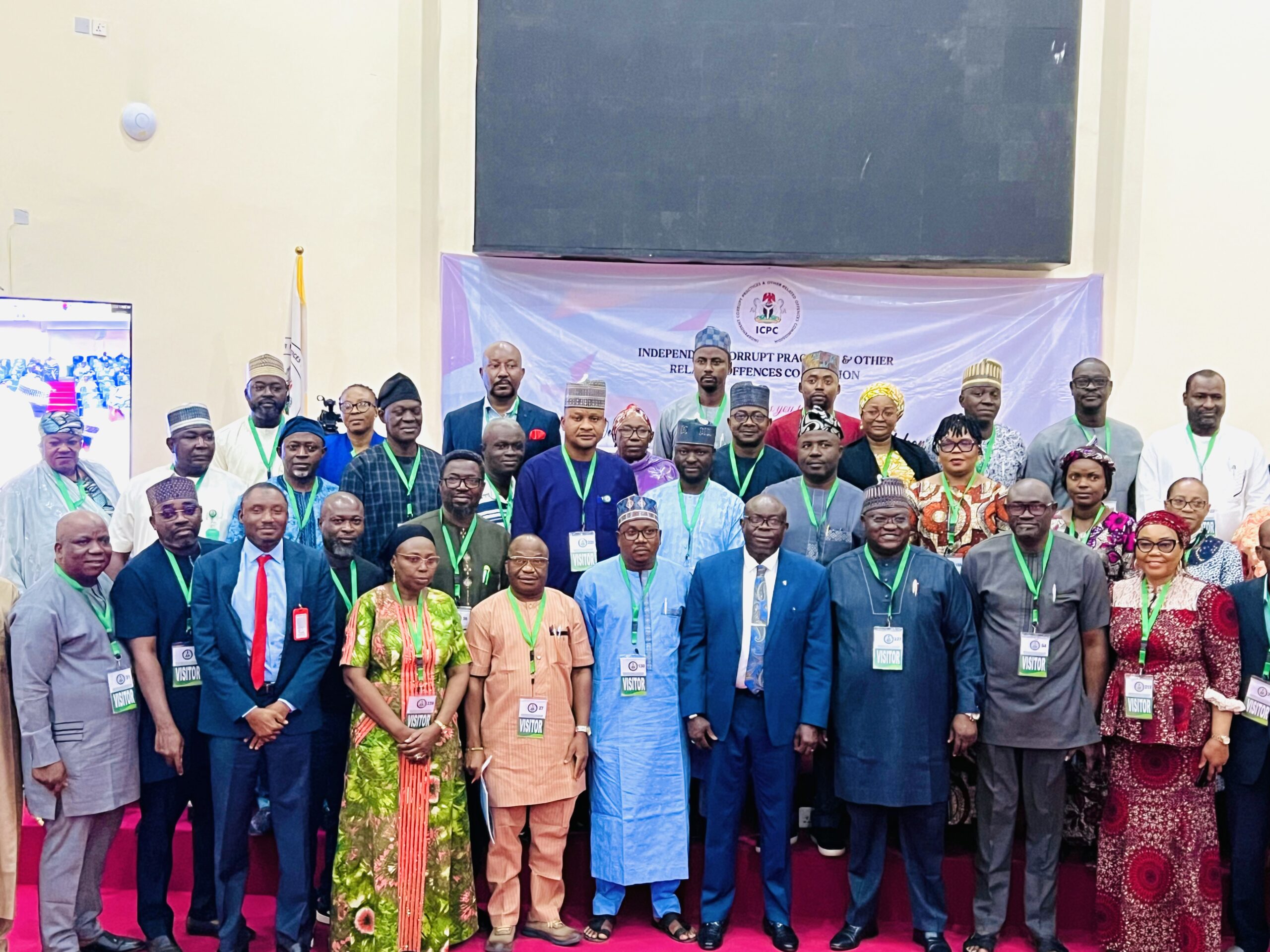
ACAN Provost, Prof. Sheriff Ibrahim, disclosed this on Tuesday at the opening of a three-day workshop for accounting and auditing officers at the academy in Keffi, Nasarawa State.
The workshop, titled “Achieving Zero-Tolerance for Fraud and Corruption in MDAs through Forensic Accounting and Auditing,” is designed to give public-sector finance professionals practical tools for identifying weaknesses in financial systems and preventing them from being exploited.
ACAN is the training and research arm of the Independent Corrupt Practices and Other Related Offences Commission (ICPC).
From prosecution to prevention
Ibrahim said the government cannot rely solely on arrests and prosecutions to win the fight against corruption.
He argued that prevention must become a stronger part of the strategy, with public officials receiving the knowledge and skills required to recognise risks before they become full-blown cases of fraud.
According to him, the training focuses on the vulnerabilities, pressure points and situations that can expose public financial systems to abuse.
Participants are being trained to understand how such weaknesses arise, recognise warning signs and respond appropriately.
The target group, he explained, plays a critical role in risk management, fraud detection and compliance with public financial laws and regulations.
Why forensic accounting matters
Forensic accounting and auditing bring together professionals with different areas of expertise, including accountants, auditors, investigators and legal practitioners.
Their combined role is to examine financial information, identify irregularities and establish evidence that can help uncover fraud and other forms of misconduct.
Ibrahim said the workshop would deepen participants’ understanding of anti-corruption controls while improving efficiency in public financial management.
He noted that financial fraud has inflicted substantial losses on countries across Africa while also damaging institutional credibility and public trust.
Early detection, he said, is therefore critical.
Rather than waiting for financial misconduct to occur and investigating it afterward, forensic techniques can help institutions identify vulnerabilities and strengthen controls before losses occur.
Technology becomes part of the defence
ACAN Director, Garba Idriss, said the workshop was exposing participants to scientific and technology-driven approaches to forensic investigation.
The aim, he explained, is to help officers improve their ability to examine financial systems, uncover evidence and identify weaknesses that could facilitate corruption.
By the end of the training, participants are expected to be better equipped to use technology to detect suspicious activity, close financial loopholes and prevent corruption within their institutions.
Idriss described forensic investigation as one layer of investigative work in which scientific methods and tools are used to establish facts.
ACAN’s broader anti-corruption mission
Ibrahim linked the workshop to the broader mandate of ACAN and the ICPC.
He acknowledged the Federal Government’s establishment of specialised institutions, including the ICPC and the Economic and Financial Crimes Commission (EFCC), to confront corruption.
While enforcement remains important, he said the ICPC also places considerable emphasis on prevention through anti-corruption education and public enlightenment.
That preventive philosophy was one of the reasons ACAN was established: to train public officials and members of the public in good governance, accountability, transparency, integrity and ethical conduct.
Ibrahim said the academy’s approach is based on the belief that sustained training and retraining can help build stronger anti-corruption policies, improve institutional performance and promote better management practices.
Participants expect practical skills
The academy said the subjects selected for the three-day programme were designed to maximise participants’ learning and practical understanding.
Participants welcomed the opportunity to strengthen their forensic auditing skills.
David Mbatsoron, from the Federal Medical Centre, Makurdi, said he expected the workshop to give him deeper knowledge of conducting forensic audits and applying those skills to combating corruption.
Another participant, Dr Chioma Ugwa of the Projects Development Institute (PRODA), Enugu, said she hoped to acquire practical knowledge that could help her contribute more effectively to the fight against corruption within her organisation.
For ACAN, the objective extends beyond a three-day classroom exercise.
The bigger goal is to put better-trained financial officers inside Nigeria’s public institutions—people capable of spotting vulnerabilities, using evidence and technology effectively, and closing the gaps that allow fraud to thrive.
Source: NAN