
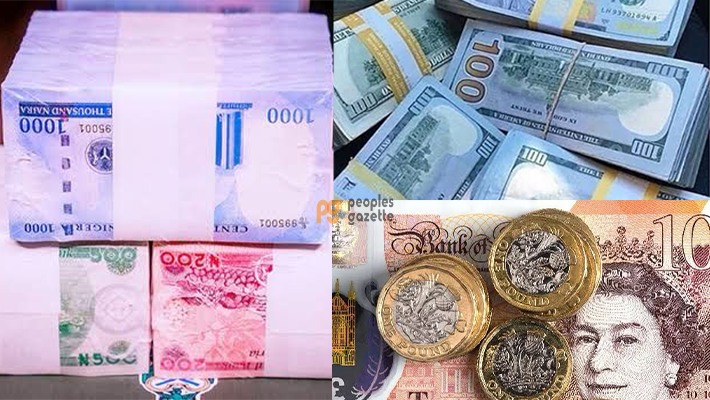
The Nigerian naira opened the new trading week on a positive note, edging higher against the US dollar at the official foreign exchange market on Monday, September 14, 2026.
The naira closed at N1,326.30 per dollar, according to data from the Central Bank of Nigeria (CBN), compared with N1,326.52/$1 recorded at the end of trading on Friday.
The latest rate represents a 22-kobo gain for the naira in a single trading session.
While the movement was modest, it extended the currency’s recent run of gains at the official foreign exchange market and kept the naira trading within the N1,300-per-dollar range.
Naira-dollar exchange rate at official market
The naira’s performance on Monday continued a recent pattern of gradual appreciation at the official market.
The currency had also strengthened against the dollar on Friday, adding to the positive movement seen in recent trading sessions.
However, the marginal improvement at the official market was not reflected in the parallel foreign exchange market.
Dollar remains at N1,390 on black market
At the parallel market, the dollar traded at N1,390 on Monday, unchanged from the previous week’s closing rate.
This left a gap of approximately N63 between the official and parallel market exchange rates.
The difference highlights the contrasting movements across Nigeria’s two major foreign exchange markets, with the official rate recording a slight gain while the parallel market remained unchanged.
Nigeria’s external reserves rise to $54.49 billion
Meanwhile, Nigeria’s external reserves continued to improve.
The country’s reserves stood at $54.49 billion as of September 11, 2026, according to the latest figure cited in the report.
The increase in external reserves comes as the naira records greater stability and modest gains at the official foreign exchange market.
Foreign exchange reserves are closely watched because they provide an important buffer for a country’s external obligations and can influence confidence in the currency and broader economy.
What a stronger naira means for Nigerians
Movements in the naira-dollar exchange rate have direct implications for businesses, consumers and investors.
A stronger naira can lower the local-currency cost of imported goods and services, while potentially reducing foreign-exchange pressure on companies that rely on imported inputs or other dollar-denominated transactions.
However, exchange rates can move in either direction from one trading session to another.
Changes in foreign-currency demand and supply, market liquidity and broader economic developments can all influence the value of the naira.
Can the naira sustain its recent gains?
The key question for the rest of the week is whether the naira can maintain its recent improvement at the official forex market.
Market watchers will also be paying attention to Nigeria’s external reserves, foreign-exchange availability and movements in the parallel market for indications of where the currency could head next.
For now, the naira has started the week with a small gain—but the coming trading sessions will determine whether that momentum can continue.