
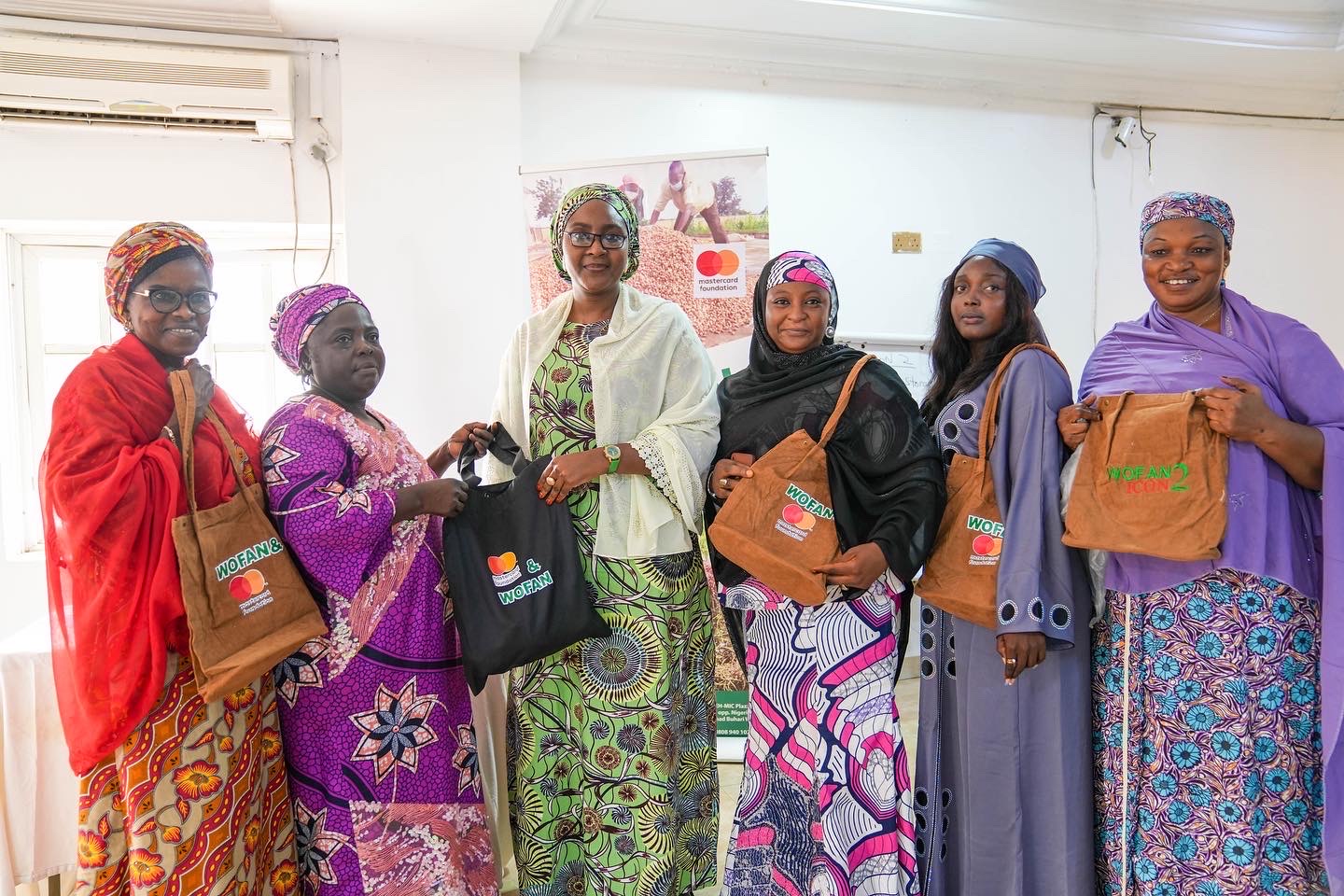
For 12 women-led cooperatives, the next step is no longer simply getting funding—it is learning how to grow it.
The Women Farmers Advancement Network (WOFAN) has provided N25.2 million in additional support to 12 high-performing cooperative clusters, strengthening its push to expand financial inclusion and build sustainable women-owned businesses at the grassroots.
Each selected cluster received N2.1 million after demonstrating strong savings habits, business growth and a commitment to collective economic development.
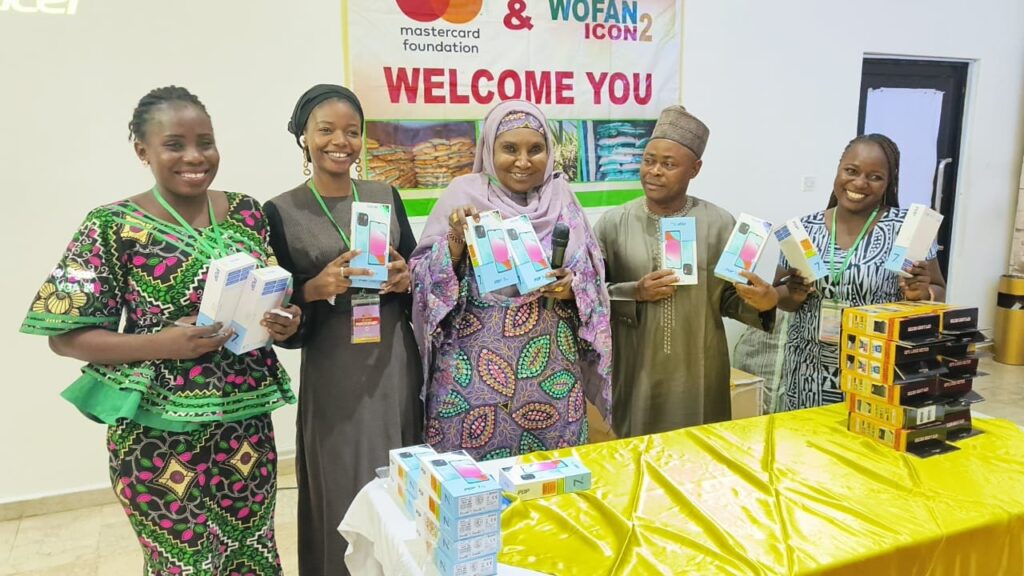
The latest funding was announced in Kano during an entrepreneurship development programme for WOFAN extension workers and trainers operating across the North-West and North-East.
You might want to read this: Japan Gives Nigeria $3.5 Million Grant to Boost Rice Seed Production
From Grants to Sustainable Businesses
WOFAN’s model goes beyond handing out capital.
The organisation is combining funding, savings, business skills and accountability to help women build enterprises that can eventually qualify for formal financial services.
Training sessions covered practical areas including:
- Business pitching and investor engagement.
- Crowdfunding.
- Marketing and sales.
- Financial management.
- Bookkeeping.
- Customer retention.
- Business planning.
- Enterprise performance monitoring.
The goal is to help beneficiaries move gradually from dependence on grants towards the responsible use of formal loans and other financial products.
How the Women Earned Additional Funding
WOFAN Global Advocate and Executive Board Chair, Dr Salamatu Garba, said the additional funding is performance-based.
Beneficiaries are assessed on factors such as:
- How consistently they save.
- How their enterprises are performing.
- How effectively they work as a cooperative.
- Their ability to use previous support responsibly.
Garba said the 12 clusters had previously received approximately N1.5 million each, while their savings and the latest injection have significantly increased the amount of capital available to them.
She cited beneficiaries who previously worked as roadside food sellers or farm labourers, including widows and women heading households, as examples of participants whose combined savings and previous and current support have grown to between N4 million and N5 million.
According to her, that stronger capital position could help the women expand their enterprises and become more attractive to formal lenders.
WOFAN: Capital Alone Is Not Enough
Garba said the organisation’s philosophy is built around giving women more than money.
The combination of capital, practical skills and collective support, she explained, can help women build businesses capable of producing lasting economic benefits for their families and communities.
She also said successful beneficiaries could eventually become peer mentors, helping other women develop the confidence and skills needed to enter or expand within the business sector.
Preparing Women for Loans
WOFAN Business Development and Coordination Manager, Taiwo Olawale, said the training was deliberately structured to prepare beneficiaries for a future beyond grants.
His sessions focused on business pitching, engaging investors, business orientation and planning.
The underlying principle is straightforward: entrepreneurs who demonstrate that they can manage grant funding responsibly may also be better positioned to manage and repay loans.
But Olawale stressed that financial institutions should not simply provide credit without ensuring that entrepreneurs understand how to manage it.
Access to money without financial-management skills can create another problem rather than solve the first one.
Training Covers the Full Business Cycle
Other WOFAN facilitators addressed different parts of running a sustainable enterprise.
Sadik Zakariya, the organisation’s Monitoring and Evaluation Officer, covered entrepreneurship, sales, customer service and loyalty, business sustainability and business-plan development.
He encouraged participants to understand what customers actually want, track business performance and use realistic plans to guide future decisions.
Meanwhile, Abdurasheed Abdulaziz, Finance Manager for WOFAN’s ICON-2 programme, focused on basic accounting and bookkeeping.
Keeping accurate financial records, he explained, is essential for entrepreneurs who want to understand how their businesses are performing and make informed decisions about expansion.
Beneficiaries Say Savings Culture Is Changing
Representatives of the supported cooperatives welcomed the decision to combine funding with training.
Hajiya Bara’ratu Baffa, a cluster leader from Tukuntawa, Hayin Kwari, said her cooperative would use the N2.1 million intervention to strengthen existing businesses while exploring additional opportunities.
She also credited WOFAN’s programmes with changing members’ attitude towards saving and reinvesting profits.
The difference, she suggested, is not simply that the women now have more money. They have a better understanding of what to do with it.
Gombe Cooperative Plans to Expand
Samira Musa, of the Tashar Dukku Women Agro-Marketers cluster in Gombe State, also expressed appreciation for the intervention.
She said the additional capital would give members room to expand existing enterprises and consider new businesses.
Musa encouraged fellow beneficiaries to make productive use of the opportunity and turn the additional resources into greater economic benefits for their households and communities.
Trainers Also Benefit From the Programme
The programme was not limited to cooperative beneficiaries.
Participants included extension workers, trainers and Super Trainers who are expected to pass the knowledge on to others.
Alhaji Harisu Sani Hayatu, one of the participants, said the sessions improved both his knowledge and confidence as a trainer.
Another participant, Hauwa Babayo, also described the programme as impactful.
Turning Short-Term Support Into Long-Term Opportunity
The N25.2 million intervention reflects a broader WOFAN strategy: use financial support as a stepping stone rather than an endpoint.
The organisation’s performance-based revolving approach connects grants with savings, skills development and accountability.
The intended progression is clear:
Grant support → stronger savings → better business management → larger enterprises → access to formal finance.
If that cycle works as designed, the impact extends beyond the original funding. Women can grow their businesses, build financial histories, access loans and eventually help other entrepreneurs follow the same path.
For the 12 beneficiary clusters, the N2.1 million received this time is therefore more than additional working capital. It is another test of whether grassroots businesses can turn structured support into sustainable growth.