Global financial markets may be more vulnerable than they appear, and the growing artificial intelligence boom could become a major source of instability if investor expectations fail to match reality.
The International Monetary Fund (IMF) has warned that a sharp correction in AI-related stocks could tighten global financial conditions, trigger wider market turmoil and potentially spill over into the real economy. Although markets have remained relatively resilient amid solid economic growth and strong corporate earnings, the international financial institution says several underlying risks deserve closer attention.
At the heart of the concern is the extraordinary scale of investment pouring into artificial intelligence. Billions of dollars are flowing into AI development, infrastructure and related technologies, while investors continue to anticipate substantial future profits. However, if companies struggle to deliver the returns expected from these investments, the consequences could extend well beyond the technology sector.
The warning comes as AI increasingly influences stock market performance, corporate financing decisions and the broader outlook for global economic stability.
IMF Warns AI Stock Correction Could Trigger Global Market Turmoil
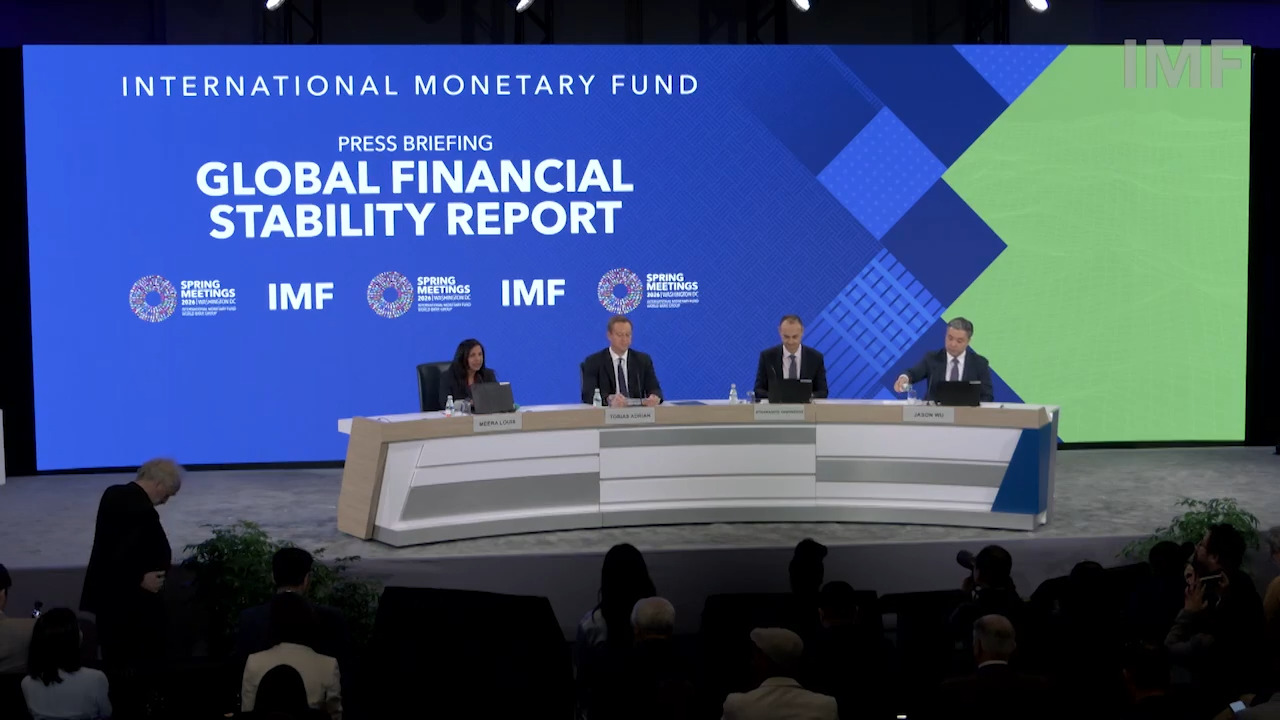
Speaking during a session titled Global Financial Stability at the 2026 IMF-World Bank Annual Meetings on Tuesday, Athanasios Vamvakidis, deputy director of the IMF’s Monetary and Capital Markets Department, highlighted the potential dangers of a sudden downturn in AI-related stocks.
Vamvakidis noted that financial markets had demonstrated resilience, supported by healthy economic growth and strong corporate earnings. Nevertheless, he stressed that financial stability risks remained elevated.
An abrupt reversal in AI valuations could create significant disruption across international markets, particularly if investors begin reassessing the profitability of companies that have attracted substantial funding based on expectations of future AI-driven growth.
The concern is not limited to falling share prices. According to the IMF, a major correction could have broader economic consequences if businesses fail to generate the returns needed to justify their substantial AI investments.
When investors lose confidence in a sector that has attracted considerable capital, the resulting adjustment can affect financing conditions, corporate spending and investor appetite for risk. If the disruption becomes widespread, companies outside the technology industry could also face more difficult borrowing conditions.
For this reason, the IMF’s warning focuses on the potential connections between an AI market correction and the stability of the wider financial system.
Why the AI Investment Boom Is Raising Financial Stability Concerns
The IMF’s Global Financial Stability Report identifies several vulnerabilities linked to the rapid expansion of AI investment.
These include ambitious profit expectations, massive capital expenditure and the increasing concentration of stock market performance in the technology sector.
The scale of investment is particularly significant. Technology companies and other businesses are committing substantial resources to AI-related infrastructure and development in anticipation of strong future demand and higher earnings.
Such spending can support innovation and create opportunities for economic growth. However, it also introduces financial risks when investment commitments are built around revenue forecasts that may prove difficult to achieve.
If expected profits fail to materialise, businesses could find themselves facing substantial costs without the cash flow needed to support their financial obligations. Investors may then reassess company valuations, potentially triggering further losses across the sector.
Market concentration adds another layer of vulnerability. When a growing share of overall market performance depends on a relatively narrow group of technology companies, a downturn affecting those businesses can have an outsized impact on broader stock market indices.
This means that even if other parts of the economy remain relatively stable, a sharp decline in major AI-related stocks could weaken investor confidence and increase volatility across financial markets.
$1.4 Trillion in AI Revenue Commitments Highlights the Scale of Exposure
One of the most striking findings highlighted by the IMF concerns the financial arrangements supporting AI investment.
An analysis of 14 publicly disclosed transactions indicates that AI-related investment involves approximately $300 billion in equity and $650 billion in debt. These arrangements are linked to future revenue commitments of as much as $1.4 trillion.
The figures illustrate the enormous financial resources being channelled into the AI ecosystem and the expectations underpinning that spending.
Equity financing provides companies with capital in exchange for ownership interests, while debt financing creates obligations that must be met regardless of whether business performance matches expectations.
The combination of substantial borrowing, equity investment and commitments tied to future revenues can create additional pressure when anticipated growth does not materialise.
If AI companies generate less revenue than forecast, investors may face losses while businesses could struggle to justify the scale of their spending. Debt obligations and other financial commitments may become harder to manage, particularly for companies that have expanded rapidly in anticipation of sustained demand.
These financing structures could also amplify market stress. When financial arrangements depend heavily on optimistic assumptions about future income, a deterioration in those expectations can affect multiple participants at once.
The IMF’s analysis does not mean that the entire $1.4 trillion in commitments will be lost or that a financial crisis is inevitable. Instead, it highlights how the scale and structure of AI financing could magnify the consequences of a significant shortfall in expected returns.
For investors, the central question is whether the revenues generated by AI will ultimately justify the capital being deployed today.
Rising Bond Yields Could Add Pressure to Global Financial Markets
AI-related risks are not the only concern identified by the IMF. The report also warns that rising bond yields could undermine financial stability by making financing conditions more restrictive.
When bond yields increase, borrowing costs can rise across financial markets, placing additional pressure on governments, businesses and other borrowers. Higher yields can also affect asset valuations, encouraging investors to reconsider the risks and potential returns associated with their portfolios.
These changes become particularly challenging when financial markets are already vulnerable to sudden shifts in sentiment.
For companies making substantial AI investments, tighter financing conditions could increase the cost of raising capital or refinancing existing debt. Businesses that depend on continued access to funding may find it more difficult to maintain ambitious spending plans if borrowing becomes more expensive.
At the same time, investors could become less willing to support high valuations when safer investments offer more attractive returns.
The interaction between rising yields and an AI-related market correction could therefore intensify financial pressure. Rather than operating as separate threats, these developments could reinforce one another and make a market downturn more difficult to contain.
Non-Bank Financial Institutions Face Growing Liquidity Risks
The IMF has also drawn attention to vulnerabilities among non-bank financial institutions, whose exposure to less-liquid assets and private credit markets has increased.
Non-bank financial institutions operate outside the traditional banking system and play an important role in providing financing and investment opportunities across the economy. However, their exposure to assets that cannot easily be sold or converted into cash may create difficulties during periods of market stress.
Liquidity becomes particularly important when investors need access to cash quickly, whether to meet financial obligations, cover losses or respond to withdrawals.
If market conditions deteriorate, selling less-liquid assets may become more difficult or require accepting lower prices. This can intensify financial pressure, especially when several institutions attempt to reduce their exposure at the same time.
Growing involvement in private credit markets adds to the concern identified by the IMF. If financial conditions tighten and borrowers encounter difficulties, losses or liquidity pressures could spread through interconnected investment and lending relationships.
These vulnerabilities could become more pronounced if an AI-driven stock market correction coincides with rising bond yields. Under such circumstances, falling asset values, tighter financing and limited liquidity could combine to increase stress across the financial system.
The IMF’s assessment underscores the importance of looking beyond conventional banking risks when evaluating global financial stability.
Cybersecurity Threats Add Another Layer of Risk
Alongside market valuations, financing pressures and liquidity concerns, the IMF has identified cybersecurity as a growing challenge.
The increasing digitalisation of financial services and businesses has created greater dependence on technology infrastructure. At the same time, reliance on a concentrated group of technology and cloud service providers can introduce risks if disruptions affect widely used systems.
A problem involving a major provider could potentially affect numerous businesses and institutions that depend on its services. Such concentration makes operational resilience an important consideration for the wider financial system.
The growing use of artificial intelligence by cybercriminals adds to these concerns. As AI becomes more widely adopted, malicious actors may also use the technology to support cybercrime, increasing the complexity of the threats facing organisations.
Cybersecurity incidents can disrupt operations, undermine confidence and create financial losses. For financial institutions, these risks extend beyond individual companies because interconnected systems and shared technology providers can create channels through which disruptions spread.
The IMF’s warning therefore highlights a broader challenge: while AI may offer substantial economic and commercial opportunities, the technology’s expansion also introduces risks that businesses and financial authorities must manage carefully.
Can the Global Economy Withstand an AI Market Correction?
The IMF’s assessment presents a more complicated picture than a simple prediction of an impending market crash.
Strong economic growth and corporate earnings have helped support financial markets, demonstrating that the current environment has important sources of resilience. However, those positive conditions do not eliminate the vulnerabilities created by elevated valuations, concentrated market performance and large investment commitments.
The critical issue is how financial markets would respond if expectations surrounding AI profitability changed sharply.
A correction could remain largely contained within the technology sector, or it could spread through borrowing costs, investor confidence, corporate investment and less-liquid financial markets. The extent of any disruption would depend on how these risks interact and how effectively businesses and financial institutions manage their exposures.
For investors, the warning reinforces the importance of looking beyond the excitement surrounding AI and examining the financial fundamentals supporting company valuations. Revenue growth, profitability, debt levels and the ability to generate sustainable returns will remain central to determining whether today’s investment commitments prove justified.
For policymakers and financial institutions, the challenge is to monitor emerging vulnerabilities without overlooking the potential economic benefits of technological innovation.
The IMF’s message is ultimately one of caution rather than certainty. Artificial intelligence may transform industries and create significant opportunities, but the financial commitments supporting that transformation are substantial.
If anticipated profits fail to materialise, the resulting adjustment could reach far beyond technology stocks. With as much as $1.4 trillion in future revenue commitments tied to the AI investment landscape examined by the IMF, the stakes extend across a financial system already facing rising yields, liquidity vulnerabilities and growing cybersecurity threats.
Whether the AI boom delivers the returns investors expect may therefore have implications not only for technology companies, but also for the resilience of global financial markets.